Personalized Medical Care & Dedicated International Patient Concierge

Endovenous Vein Ablation · Needs Clinic Confirmation
Endovenous Laser Ablation
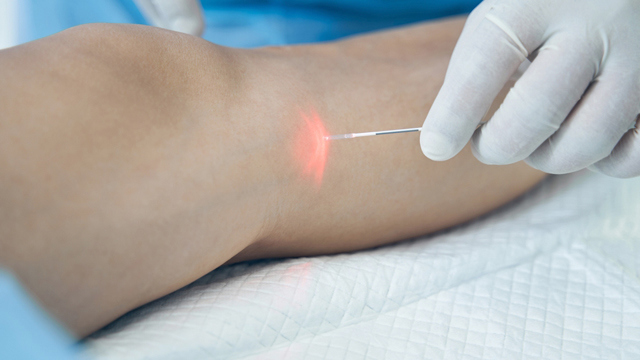
Endovenous laser ablation is the closure of an abnormal vein from the inside using laser energy delivered along a fibre placed under ultrasound guidance, used for appropriately diagnosed venous reflux and the varicose vein symptoms that follow from it.
Schedule a ConsultationEndovenous Laser Ablation
Medically reviewed by Dr. Dong-Hyuk Kim, Board-Certified General Surgeon, Medical DirectorIum Hazi Varicose Vein Clinic, Seocho-gu, Seoul
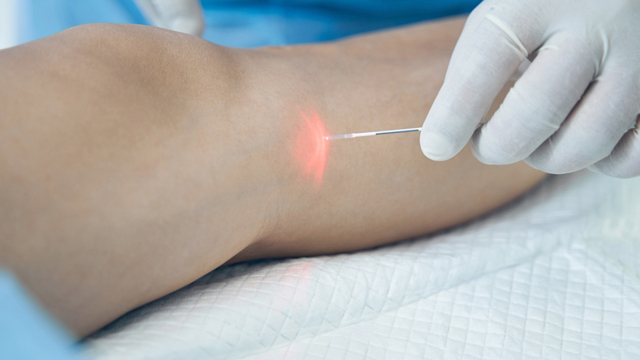
Endovenous laser ablation is a minimally invasive treatment in which a thin laser fibre is placed inside a refluxing leg vein under ultrasound guidance and laser energy heats the vein wall so that the vein closes from within. Blood is then carried by healthier veins. It treats the source of the problem — usually the great or small saphenous vein — rather than the vein visible at the surface.
What Is Endovenous Laser Ablation?
Endovenous laser ablation is the closure of an abnormal vein from the inside using laser energy delivered along a fibre placed under ultrasound guidance, used for appropriately diagnosed venous reflux and the varicose vein symptoms that follow from it.
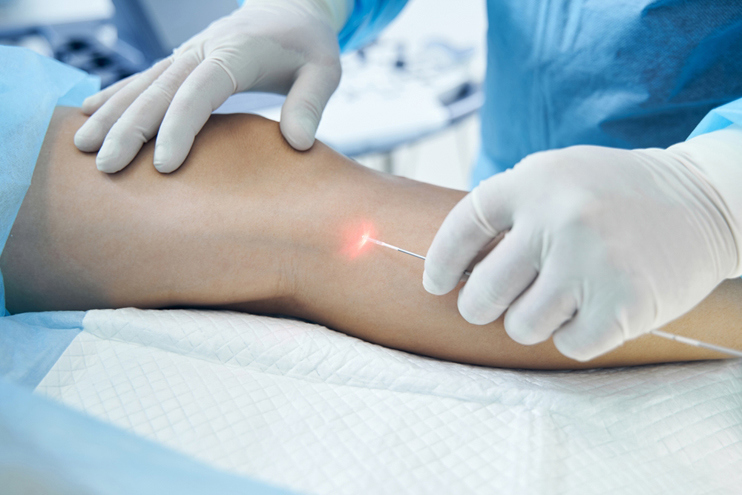
A thin laser fibre enters through a small access point rather than a surgical incision.
The fibre is positioned under ultrasound guidance, not by feel.
Energy is delivered as the fibre is withdrawn, so the vein is treated along its length rather than at one spot.
The treated vein closes and is absorbed over time; flow redirects to healthier veins.
It is commonly performed as an outpatient procedure.
At this clinic the laser system documented for this treatment is a 4th-generation 1940 nm endovenous laser, and 4th-generation 1940 nm endovenous laser surgery is one of Dr. Kim's documented core specializations. Laser wavelength and equipment vary between systems and clinics, and the clinic notes that treatment settings are selected according to the vein's anatomy, diameter, location and other patient-specific factors.
Within the wider treatment category, endothermal ablation — radiofrequency or laser — is described by the UK National Health Service as the usual first-choice specialist treatment for varicose veins, carried out under local anaesthetic through a catheter placed with ultrasound guidance as a same-day procedure. The National Institute for Health and Care Excellence identifies radiofrequency and laser as the two endothermal types in common use, and defines truncal reflux as valve incompetence in the great, small or anterior accessory saphenous vein.
Who Performs Endovenous Laser Ablation at Ium Hazi Varicose Vein Clinic
Dr. Dong-Hyuk Kim
Board-certified general surgeon
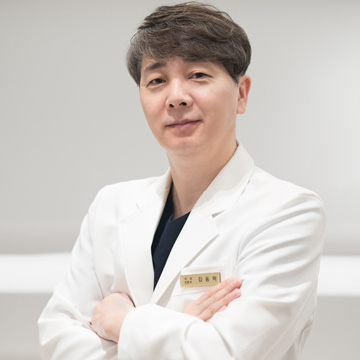
Dr. Dong-Hyuk Kim is a board-certified general surgeon and the Medical Director of Ium Hazi Varicose Vein Clinic. He completed his medical education at Sungkyunkwan University School of Medicine and serves as Executive Director of the Korean Society of Phlebology.
Ium Hazi Varicose Vein Clinic operates a single-director system: Dr. Dong-Hyuk Kim personally performs every consultation, diagnostic ultrasound, procedure and post-operative follow-up, and the clinic deliberately limits its schedule to one or two surgical cases per day.
His documented conference record includes a presentation on laser surgery for varicose veins at the UIP World Congress of Phlebology in Boston in 2013, and he is a co-translator of professional texts on ambulatory phlebectomy and on current varicose vein treatment techniques. Because the same surgeon performs the diagnostic ultrasound, the ablation and the follow-up ultrasound, the mapping that decides where the fibre goes and the assessment of what the treatment achieved are not handed between people.
This page does not cite case counts, awards, ratings or patient testimonials. Where the clinic publishes such figures they are self-reported and unaudited, and they do not describe what any individual patient should expect.
Who Is a Good Candidate for Endovenous Laser Ablation?
Patients with confirmed venous reflux involving a treatable vein, commonly the great or small saphenous vein.
Patients with symptomatic varicose veins caused by reflux in an affected vein, confirmed by vascular evaluation and ultrasound.
Patients seeking a minimally invasive alternative to traditional vein-stripping surgery for appropriately diagnosed reflux.
Suitability depends on the ultrasound findings, the vein anatomy, the symptoms, the medical history and the treatment goals.
The clinic documents who may not be suitable:
Patients whose vein anatomy is unsuitable, including veins too tortuous for safe fibre placement.
Patients with an active infection at the treatment site.
Patients with certain blood-clotting disorders or severe circulation problems.
Patients with certain other vascular or medical conditions, or a temporary medical condition that needs attention first.
Tortuosity is the constraint most specific to this technique. A catheter cannot easily negotiate a winding vessel, which is why ablation as a category is typically applied to the great, small and accessory saphenous veins, as RadiologyInfo.org from the Radiological Society of North America and the American College of Radiology explains. Final suitability is determined by a vascular specialist after examination and ultrasound.
What to Expect: Procedure, Recovery, and Results Timeline
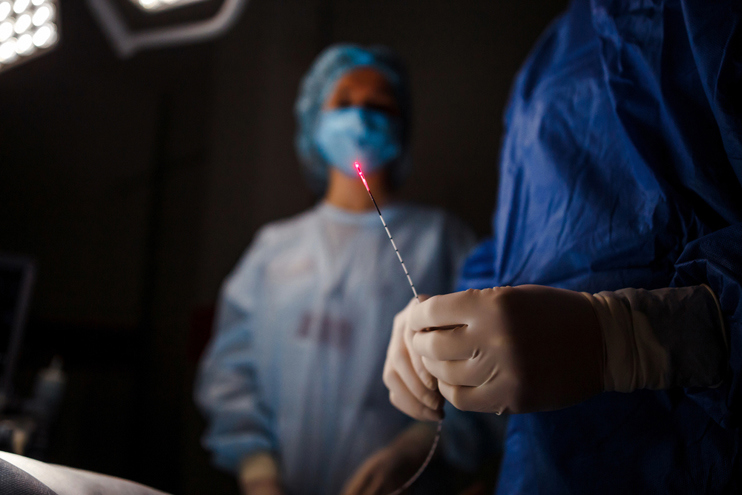
The clinic documents the sequence as: ultrasound mapping of the affected vein; local anaesthesia around the treatment vein; a small access point created and the laser fibre inserted under ultrasound guidance; laser energy delivered as the fibre is withdrawn, causing the treated vein to close; the fibre removed and the access site dressed; and post-procedure assessment and walking before discharge when appropriate.
Stage | What happens | Timing |
|---|---|---|
Before treatment | Complete medical history and list of medications and supplements including blood thinners; clinic instructions on medication, eating and drinking, and skin preparation; transport arranged if sedation is planned | Before the day |
Anaesthesia | Local anaesthesia, commonly tumescent anaesthesia around the treated vein; additional sedation considered case by case | On the day |
Treatment | Fibre placed and energy delivered under ultrasound guidance | Commonly about 30–60 minutes, depending on the vein and area |
Immediately after | Assessment and walking before discharge when appropriate | Same day |
First weeks | Bruising, tightness or tenderness may persist | Several days to a few weeks |
Follow-up | Ultrasound examination to assess vein closure | Per the physician's recommendation |
Patients may feel brief needle or pressure sensations while the anaesthesia is placed, and some warmth, pulling or mild discomfort during or after treatment. Most can walk soon afterwards and return to light daily activities relatively quickly. Aftercare follows the treating clinician's instructions on walking, activity, wound care, medication and compression garments where prescribed.
Results arrive in stages rather than at once. Closure can be confirmed by follow-up ultrasound, while symptoms and the appearance of associated varicose veins improve progressively as bruising and swelling resolve and the treated vein is absorbed. Long-term results vary, and veins that were not treated may develop reflux later. This clinic does not publish closure rates, success rates or recurrence rates, so none are stated here. Figures published for a treatment category as a whole do not describe the results of any individual clinic or patient.
For patients travelling from the United States, the required stay depends on the evaluation, the treatment plan and the follow-up schedule, and the clinic asks international patients to confirm their schedule before booking return travel. The timing of air travel is confirmed with the treating specialist afterwards, and a post-treatment check may be needed before flying, particularly because prolonged sitting during travel affects circulation. The Centers for Disease Control and Prevention notes for travellers generally that journeys over four hours raise clot risk through immobility and lists recent surgery among the contributing factors.
Combining Endovenous Laser Ablation with Other Treatments
Closing the refluxing trunk does not necessarily remove every vein a patient can see, and the clinic documents that laser ablation may be combined with procedures such as ambulatory phlebectomy when additional visible or symptomatic veins require treatment, with the combination determined by the treating physician.
Micro-Phlebectomy — removal of prominent surface veins through very small punctures, used alongside ablation where surface veins remain.
Vascular Ultrasound Examination — the mapping before treatment and the closure assessment afterwards.
Endovenous Vein Ablation — the wider family this treatment belongs to, including the non-thermal options.
Other options for the same problem include radiofrequency ablation, medical adhesive closure, mechanochemical ablation, ambulatory phlebectomy and traditional surgical vein treatment. Which is appropriate depends on the ultrasound findings, the vein anatomy, the symptoms and individual circumstances — not on which technique a page happens to describe.
Safety, Precision, and Clinic Standards
The risks below are the ones this clinic documents in its own treatment information. No procedure is free of risk, and a written list is not a substitute for the discussion of risks and alternatives that takes place during consultation.
Common and usually temporary effects include bruising, mild swelling, tenderness, tightness, redness, localized numbness or a pulling sensation along the treated vein.
The clinic's list of less common complications for this treatment runs: infection; bleeding; nerve irritation or numbness; skin changes; burns; skin injury; inflammation of the treated vein; blood clots; incomplete closure or reopening of the treated vein; and recurrence of varicose veins.
Two of those deserve naming rather than listing. Burns and thermal nerve injury are risks specific to heat-based ablation, which is why tumescent anaesthesia is placed around the vein — RadiologyInfo lists rare thermal nerve injury among the recognised category risks alongside bruising, tenderness, thrombophlebitis and very rare pulmonary embolism. Thrombotic complications are the other: the Society for Vascular Surgery describes endovenous thermal ablation as carrying a low but definite category-level risk of endovenous heat-induced thrombosis, superficial venous thrombosis and deep vein thrombosis, with major deep vein thrombosis and pulmonary embolism extremely rare, and notes that heat-induced thrombosis may require a period of anticoagulation and follow-up imaging. European guidance on chronic venous disease of the lower limbs covers thermal and non-thermal ablation of incompetent saphenous trunks in adults.
The clinic's documented risk-reduction measures for this treatment are vascular assessment, ultrasound evaluation of the affected veins, careful catheter and laser positioning, sterile technique, post-treatment monitoring, and a plan tailored to the patient's vein condition. The clinic's stated quality process is doctor-led diagnosis, consultation, surgery and post-operative care; pre-operative vascular ultrasound and clinical evaluation; a deliberately limited daily surgical caseload; strict sterilisation using autoclave and ethylene oxide gas systems; no reuse of single-use devices; and post-operative vascular ultrasound monitoring and follow-up care.
Regulatory approval, clearance or certification status for the devices used at this clinic is not documented in the clinic's source material, so no approval, clearance or certification claim is made on this page.
The clinic is a Registered Medical Institution for Attracting Foreign Patients, certified by the Republic of Korea's Ministry of Health and Welfare under the Medical Overseas Expansion and Foreign Patients Attraction Act.
This page does not quote prices and does not describe insurance coverage. Fees, what a quotation includes, and any question of reimbursement are discussed during consultation, and patients outside Korea should confirm coverage with their own insurer.
The Bottom Line
A thin laser fibre closes the refluxing vein from inside, placed and monitored under ultrasound guidance through a small access point.
Energy is delivered as the fibre is withdrawn, so the vein is treated along its length; the clinic's documented system is a 4th-generation 1940 nm laser.
It is commonly outpatient, under local and usually tumescent anaesthesia, with walking soon afterwards.
Veins that are too tortuous for safe fibre placement are the main anatomical reason this technique is not chosen.
Documented risks include bruising and numbness through to burns, nerve irritation, clotting complications, incomplete closure and recurrence.
Frequently Asked Questions
What does the laser actually do to the vein?
It heats the vein wall from inside. The fibre is drawn back along the vein while delivering energy, so the wall is treated along its length, the vein closes, and blood redirects to healthier veins. The closed vein is gradually absorbed by the body rather than removed.
Why does the fibre need ultrasound to be positioned?
Because the vein being treated is not the vein you can see. The target is usually a saphenous trunk running deeper in the leg, and both the placement of the fibre and the delivery of energy are monitored on ultrasound so the treatment stays where it is intended. The same imaging is what confirms afterwards whether the vein closed.
What will I feel during the procedure?
Brief needle or pressure sensations while the local anaesthetic is placed, and possibly some warmth, pulling or mild discomfort during or after the treatment. Local anaesthesia — commonly tumescent anaesthesia around the vein — is what keeps the procedure tolerable, and the specific plan is agreed at consultation.
How soon can I walk and go back to normal activity?
Most patients walk soon after the procedure, and the clinic includes walking before discharge in its documented sequence where appropriate. Light daily activity generally returns relatively quickly. Strenuous exercise and any activity your doctor restricts wait until you are cleared, and bruising, tightness or tenderness can persist for several days to a few weeks.
Is a follow-up ultrasound necessary?
It is the way closure is confirmed, so yes — the clinic's aftercare includes attending recommended follow-up ultrasound examinations. For an international patient this is worth planning into the trip, since it is also the check most relevant to whether travel is advisable.
What if the vein reopens?
Reopening of the treated vein and recurrence of varicose veins are both documented risks, and follow-up ultrasound is how they are detected. What can be done about it depends on what the reassessment shows, and would be decided the same way the first treatment was — from the findings rather than from the history.
Laser or radiofrequency — which is better?
Neither is presented here as better. Both are endothermal techniques in common use for the same problem, and the clinic's stated basis for choosing is the affected vein, the ultrasound findings, the anatomy, the symptoms and patient-specific factors. A page that named a winner would be answering a question that only your ultrasound can answer.
Can I have this if I was treated for varicose veins before?
Possibly, but it depends on what the current ultrasound shows: which vein is refluxing now, what was done previously, and whether the present anatomy allows safe fibre placement. The reassessment comes first.
Book a Consultation at Ium Hazi Varicose Vein Clinic

If you are considering endovenous laser ablation in Seoul, the ultrasound assessment that identifies the refluxing vein is the step that decides whether this technique is the right one.
To arrange a consultation, use the clinic's contact page or call . English-language support is available for international patients.
Ium Hazi Varicose Vein Clinic is on the 2nd floor of K-Tower, 320 Seocho-daero, Seocho-gu, Seoul 06633, Republic of Korea. More about the clinic is on its About Us page.
Disclaimer
Individual results may vary. All surgical and non-surgical procedures have potential risks and limitations. Your suitability for treatment, expected results, costs, and recovery time will be discussed with Dr. Dong-Hyuk Kim during your personal consultation. The information provided is for general educational purposes and does not guarantee a specific treatment outcome.
Sources & Further Reading
Other Services
Explore additional treatments offered by our specialists.
Endovenous Laser Ablation
Endovenous laser ablation is the closure of an abnormal vein from the inside using laser energy delivered along a fibre placed under ultrasound guidance, used for appropriately diagnosed venous reflux and the varicose vein symptoms that follow from it.
Learn More
Vascular Ultrasound Examination
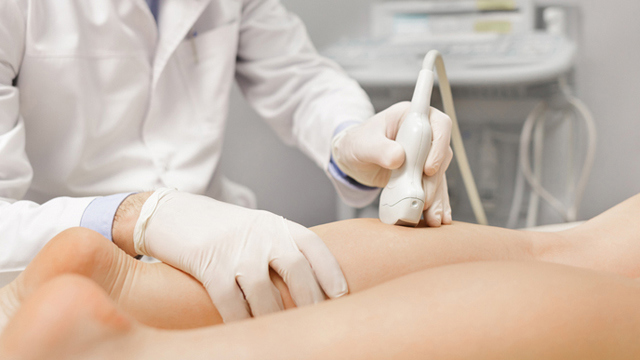
A vascular ultrasound examination evaluates the condition of the leg veins — deep, saphenous, subcutaneous and perforating — assessing their size, shape, location and blood-flow patterns, and showing reflux in real time.
Learn More
Mechanochemical Ablation
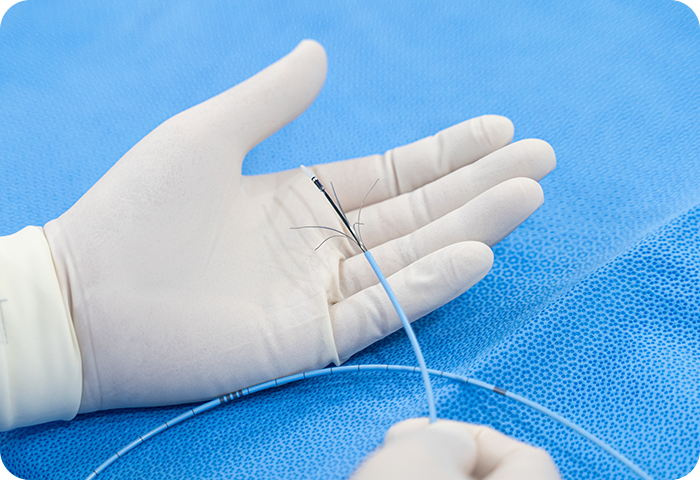
Mechanochemical ablation closes a refluxing vein by combining two actions in one catheter pass: mechanical irritation of the inner vein wall and delivery of a chemical sclerosing agent, without heat.
Learn More