Personalized Medical Care & Dedicated International Patient Concierge


Varicose Vein Surgery · Needs Clinic Confirmation
Micro-Phlebectomy
Micro-phlebectomy is the direct removal of targeted prominent varicose veins through very small punctures in the skin, using small-puncture access rather than an open incision.
Schedule a ConsultationMicro-Phlebectomy

Medically reviewed by Dr. Dong-Hyuk Kim, Board-Certified General Surgeon, Medical DirectorIum Hazi Varicose Vein Clinic, Seocho-gu, Seoul
Micro-phlebectomy is a minimally invasive technique for removing prominent superficial varicose veins through very small skin punctures rather than a conventional surgical incision. At Ium Hazi Varicose Vein Clinic it is the route for the veins a patient can actually see and feel, and the clinic refers to its own version of the technique as Point Micro-Surgery.
What Is Micro-Phlebectomy?
Micro-phlebectomy is the direct removal of targeted prominent varicose veins through very small punctures in the skin, using small-puncture access rather than an open incision.
The affected veins are assessed and the treatment points identified before anything is done.
A very small puncture is made to access and remove the targeted vein.
The specific approach depends on the location and anatomy of the veins being treated.
Small-puncture access is intended to minimise visible scarring and tissue trauma.
It addresses prominent surface veins directly, rather than closing a deeper vein from within.
It treats a different problem from catheter ablation, which is why the two are often discussed together. Ablation closes the refluxing trunk feeding the network; micro-phlebectomy removes the bulging veins that are already present at the surface. For the treatment category in general, the Society for Vascular Surgery describes microphlebectomy — also called ambulatory phlebectomy or stab avulsion — as a minimally invasive surgical technique for surface varicose veins too large for sclerotherapy, performed under local anaesthesia through incisions of around 2 to 3 mm. MedlinePlus, from the US National Library of Medicine, describes the same category practice of removing additional surface veins through small cuts.
Who Performs Micro-Phlebectomy at Ium Hazi Varicose Vein Clinic
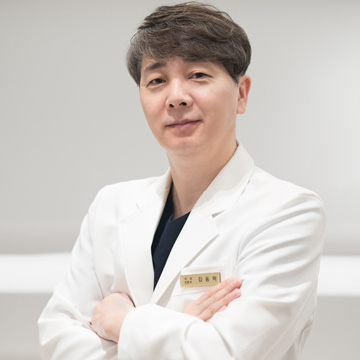
Dr. Dong-Hyuk Kim
Board-certified general surgeon
Dr. Dong-Hyuk Kim is a board-certified general surgeon and the Medical Director of Ium Hazi Varicose Vein Clinic. He completed his medical education at Sungkyunkwan University School of Medicine and serves as Executive Director of the Korean Society of Phlebology.
Ium Hazi Varicose Vein Clinic operates a single-director system: Dr. Dong-Hyuk Kim personally performs every consultation, diagnostic ultrasound, procedure and post-operative follow-up, and the clinic deliberately limits its schedule to one or two surgical cases per day.
Point micro-surgery for localized varicose veins is one of Dr. Kim's documented core specializations, and he is a co-translator of a professional text on ambulatory phlebectomy — the technique this page describes — as well as of a text on current varicose vein treatment methods. This is a technique where the mapping and the execution are hard to separate: which surface veins are removed, and through which points, follows from the same examination that identified them.
This page does not cite case counts, awards, ratings or patient testimonials. Where the clinic publishes such figures they are self-reported and unaudited, and they do not describe what any individual patient should expect.
Who Is a Good Candidate for Micro-Phlebectomy?
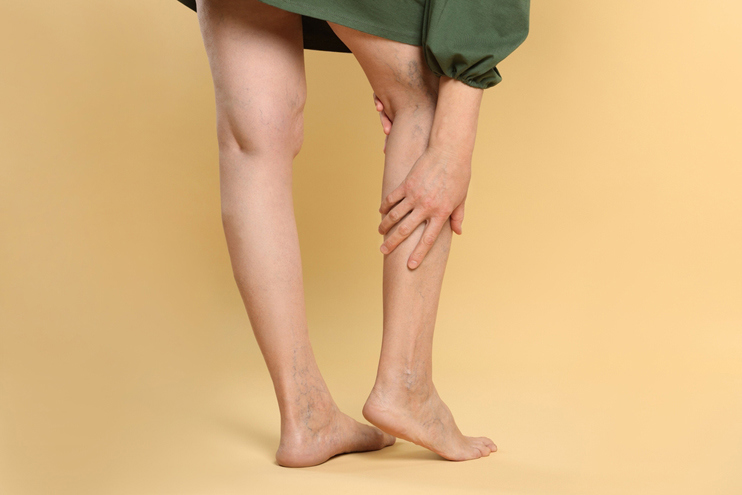
Patients with prominent or localized varicose veins that can be appropriately treated with point micro-surgery after clinical examination and vascular ultrasound.
Patients with localized bulging or symptomatic surface varicose veins treatable through small skin punctures.
Adults with visible or palpable varicose veins, particularly enlarged or symptomatic surface veins, following vascular evaluation.
Suitability is determined after examination and assessment of the affected veins.
The clinic documents who may not be suitable:
Patients whose vein anatomy or medical condition requires a different treatment approach.
Patients with certain blood-clotting problems.
Patients with an active infection.
Patients with uncontrolled medical conditions or other factors that increase procedural risk.
A medical evaluation is needed before deciding, and final suitability is determined after examination and vascular ultrasound. The ultrasound matters here even though the target veins are visible: removing surface veins without knowing whether a deeper vein is still refluxing into them addresses the symptom rather than the source.
What to Expect: Procedure, Recovery, and Results Timeline
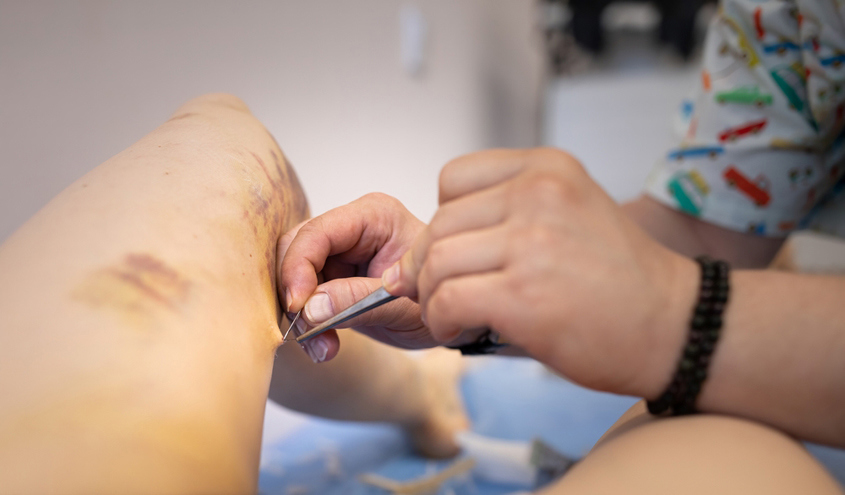
The clinic documents the sequence as: the affected veins are assessed and the treatment points are identified; a very small puncture is made to access and remove the targeted varicose vein; and the specific approach depends on the location and anatomy of the veins.
Stage | What happens | Timing |
|---|---|---|
Assessment | Medical history, physical examination and vascular ultrasound to identify the affected veins and plan treatment; additional tests when clinically indicated | Before treatment |
Preparation | Complete medical and medication history provided; fasting or other preparation instructions followed | Before the day |
Anaesthesia | Local anaesthesia may be used, with sedation considered when appropriate; the plan depends on the procedure and patient | On the day |
Treatment | Treatment points identified; targeted veins removed through very small punctures | Varies with the number and location of veins |
Early recovery | Bruising, swelling and tenderness may persist; light daily activities often resumed relatively quickly | Several days to weeks |
Follow-up | Completed according to the treating physician's instructions; used to assess healing and the treated veins | Per the plan |
The clinic documents local anaesthesia as generally used around the treatment area, which helps reduce discomfort during the procedure, with mild soreness, bruising or tenderness possible afterwards. Aftercare follows the clinic's wound-care and medication instructions, with excessive activity avoided during the initial recovery period and the physician's guidance followed on exercise, smoking, alcohol and driving.
On three details this page stays silent deliberately. The clinic's source material specifies that claims about compression, sutures, same-day discharge and recovery duration for this technique are to be used only where the clinic has directly confirmed them, and it has not confirmed them. Nor is the clinic's "3-No" description of its signature procedure repeated here for that reason. Ask about all of these at consultation; they are real questions, and the honest answer here is that this page is not the place they are answered.
The targeted prominent veins are removed during the procedure itself, so the change is immediate in that sense, but bruising and swelling take time to resolve and the final appearance becomes clearer as the treated area heals. New or recurrent varicose veins may develop over time. This clinic does not publish closure rates, success rates or recurrence rates, so none are stated here. Figures published for a treatment category as a whole do not describe the results of any individual clinic or patient.
For patients travelling from the United States, the clinic's guidance is to plan a stay of about seven days, allowing time for recovery and a follow-up before flying home. The clinic has not confirmed a specific clearance rule for air travel after this procedure, so the timing is one to settle with the physician. The Centers for Disease Control and Prevention notes for travellers generally that journeys over four hours raise the risk of deep vein thrombosis through immobility and lists recent surgery and varicose veins among the contributing factors, and the NHS gives the same category guidance for long journeys along with the symptoms that need same-day medical attention.
Combining Micro-Phlebectomy with Other Treatments
The clinic does not document a standard combination for this procedure, so nothing is asserted here about how often it is paired. What the clinic does document, from the other direction, is that its catheter treatments may be combined with phlebectomy when additional visible or symptomatic veins require treatment, with the combination determined by the treating physician.
Endovenous Vein Ablation — closure of the refluxing trunk that feeds the surface veins.
Vascular Ultrasound Examination — the mapping that identifies which surface veins to remove and whether a deeper vein is involved.
Varicose Vein Surgery — the wider treatment family this belongs to.
Depending on the vein condition, alternatives include endovenous laser ablation, radiofrequency ablation, VenaSeal, mechanochemical ablation or conventional surgical treatment. Conservative measures sit alongside these where a procedure is not indicated: MedlinePlus describes the general self-care measures for lower-limb venous problems, including compression stockings, walking, leg elevation and avoiding long periods of sitting or standing.
Safety, Precision, and Clinic Standards
The risks below are the ones this clinic documents in its own treatment information. No procedure is free of risk, and a written list is not a substitute for the discussion of risks and alternatives that takes place during consultation.
Common and usually temporary effects include bruising, swelling, tenderness, mild pain, temporary discomfort and small marks at the treatment sites.
Documented risks include bleeding, infection, nerve irritation or numbness, sensory changes, skin changes, scarring, blood clots and recurrence of varicose veins. Individual risk depends on the patient's health, the veins treated and the vein condition.
Small marks at the puncture sites are worth naming rather than glossing: the technique uses very small puncture access specifically to minimise visible scarring and tissue trauma compared with an open incision, but minimising is not eliminating, and the treatment points remain visible for a period. For the surgical category in general, MedlinePlus lists bruising or scarring, nerve injury and the return of varicose veins over time among the risks; those are category-level statements, not this clinic's outcome data.
The clinic's documented risk-reduction position for this treatment is that treatment should be selected according to the individual's symptoms and that specialist diagnosis is important before choosing between surgical and non-surgical options. The clinic's stated quality process is doctor-led diagnosis, consultation, surgery and post-operative care; pre-operative vascular ultrasound and clinical evaluation; a deliberately limited daily surgical caseload; strict sterilisation using autoclave and ethylene oxide gas systems; no reuse of single-use devices; and post-operative vascular ultrasound monitoring and follow-up care.
Regulatory approval, clearance or certification status for the devices used at this clinic is not documented in the clinic's source material, so no approval, clearance or certification claim is made on this page.
The clinic is a Registered Medical Institution for Attracting Foreign Patients, certified by the Republic of Korea's Ministry of Health and Welfare under the Medical Overseas Expansion and Foreign Patients Attraction Act.
This page does not quote prices and does not describe insurance coverage. Fees, what a quotation includes, and any question of reimbursement are discussed during consultation, and patients outside Korea should confirm coverage with their own insurer.
The Bottom Line
Prominent surface varicose veins are removed through very small skin punctures rather than an open incision.
It treats visible surface veins, not the deeper refluxing trunk, which is why the ultrasound assessment comes first.
Local anaesthesia may be used, with sedation considered when appropriate.
Small marks at the treatment points are expected; the technique minimises rather than eliminates visible scarring.
Compression, sutures, same-day discharge and recovery duration are not described here because the clinic has not confirmed them — ask at consultation.
Frequently Asked Questions
How is this different from having the vein closed with a catheter?
Different target. Catheter ablation closes a deeper refluxing vein — usually a saphenous trunk — from the inside and leaves it in place to be absorbed. Micro-phlebectomy removes prominent surface veins directly, through very small punctures. One addresses the source of the backward flow, the other the veins you can see, and which you need depends on what the ultrasound shows.
How big are the punctures, and will they leave marks?
They are very small punctures rather than a surgical incision, and for the technique as a category the Society for Vascular Surgery describes incisions of around 2 to 3 mm. The clinic states that small-puncture access is intended to minimise visible scarring and tissue trauma. Small marks at the treatment sites are listed among the common temporary effects, so expect them to be visible for a period.
What anaesthesia is used?
The clinic documents local anaesthesia around the treatment area as generally used, with sedation considered when appropriate. The exact plan depends on the procedure and the patient, and is agreed at consultation.
How long does it take and how many visits will I need?
Treatment time varies with the number and location of the veins being treated, and the number of visits depends on your condition and plan. The clinic's position is that both are confirmed during consultation rather than quoted in advance — which is honest, but it does mean an itinerary cannot be finalised before the assessment.
How long should I stay in Korea?
The clinic's guidance for international patients is around seven days, to allow for recovery and a follow-up before flying home. When exactly it is appropriate to fly is a decision for the physician, since long-haul travel carries its own clot risk after any procedure.
What can I do afterwards, and what should I avoid?
Follow the clinic's wound-care and medication instructions, avoid excessive activity during the initial recovery period, and follow the physician's guidance on exercise, smoking, alcohol and driving. Many patients resume light daily activities relatively quickly, though bruising, swelling and tenderness can persist for several days or weeks.
Can the veins come back?
New or recurrent varicose veins may develop over time, and recurrence is on the documented risk list. Removing a surface vein does not change the venous pressure that produced it, which is the reason the underlying reflux is assessed and treated rather than the visible veins alone.
Is this the same as the clinic's Point Micro-Surgery?
Point Micro-Surgery is the clinic's name for its micro-phlebectomy technique, and the Foundation record treats them as the same service. The clinic's additional descriptions of that signature technique are not repeated on this page, because they fall into the group of claims it has asked to be used only where it has directly confirmed them.
Book a Consultation at Ium Hazi Varicose Vein Clinic
If you are considering micro-phlebectomy in Seoul, the assessment establishes both which surface veins would be removed and whether a deeper vein needs treating first.
To arrange a consultation, use the clinic's contact page or call . English-language support is available for international patients.
Ium Hazi Varicose Vein Clinic is on the 2nd floor of K-Tower, 320 Seocho-daero, Seocho-gu, Seoul 06633, Republic of Korea. More about the clinic is on its About Us page.
Disclaimer
Individual results may vary. All surgical and non-surgical procedures have potential risks and limitations. Your suitability for treatment, expected results, costs, and recovery time will be discussed with Dr. Dong-Hyuk Kim during your personal consultation. The information provided is for general educational purposes and does not guarantee a specific treatment outcome.
Sources & Further Reading
Other Services
Explore additional treatments offered by our specialists.
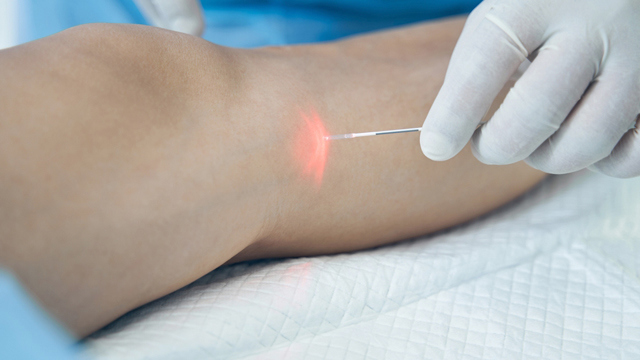
Endovenous Laser Ablation
Endovenous laser ablation is the closure of an abnormal vein from the inside using laser energy delivered along a fibre placed under ultrasound guidance, used for appropriately diagnosed venous reflux and the varicose vein symptoms that follow from it.
Learn More
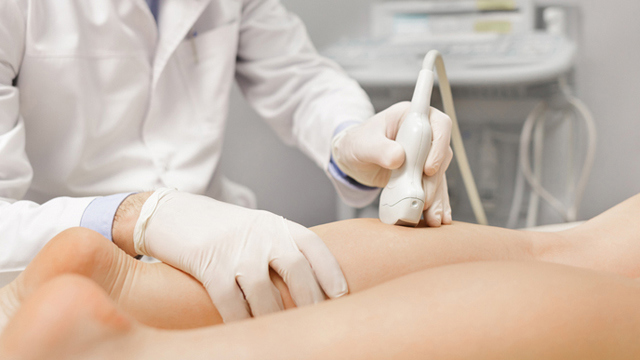
Vascular Ultrasound Examination
A vascular ultrasound examination evaluates the condition of the leg veins — deep, saphenous, subcutaneous and perforating — assessing their size, shape, location and blood-flow patterns, and showing reflux in real time.
Learn More
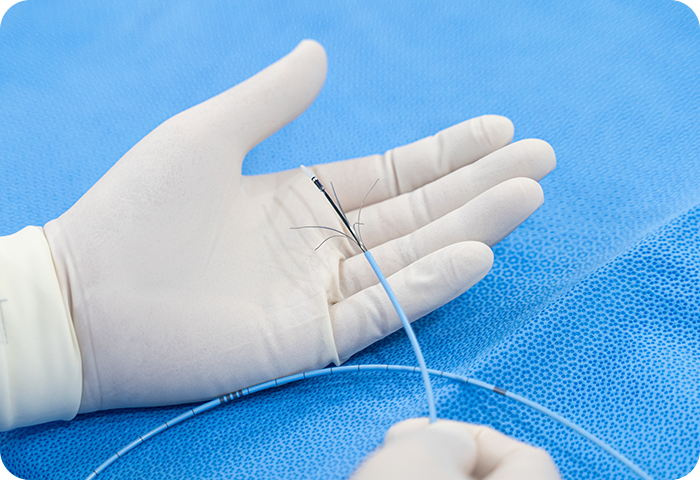
Mechanochemical Ablation
Mechanochemical ablation closes a refluxing vein by combining two actions in one catheter pass: mechanical irritation of the inner vein wall and delivery of a chemical sclerosing agent, without heat.
Learn More