Personalized Medical Care & Dedicated International Patient Concierge

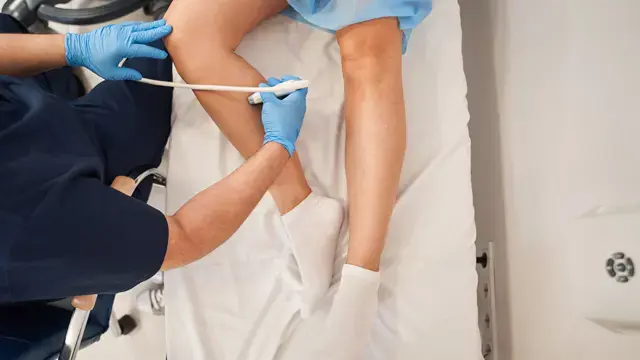
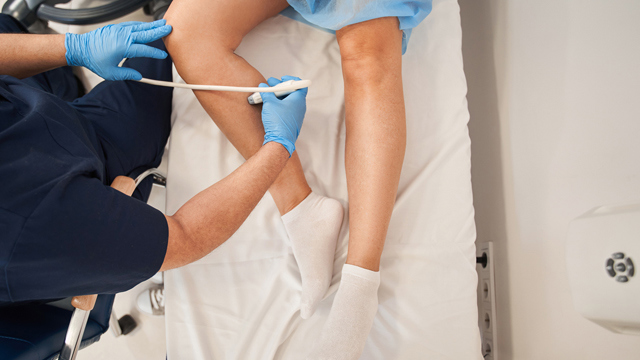
Specialty Overview
Diagnosis & Evaluation
Diagnosis and evaluation for varicose veins is a medical assessment that establishes the cause, location and extent of venous reflux in the legs and produces the findings on which a treatment plan is based.
Schedule a ConsultationDiagnosis & Evaluation for Varicose Veins
Medically reviewed by Dr. Dong-Hyuk Kim, Board-Certified General Surgeon, Medical DirectorIum Hazi Varicose Vein Clinic, Seocho-gu, Seoul
Varicose vein diagnosis and evaluation is the assessment process that identifies which leg veins are failing, where the failure begins, and how severe it is, before any treatment is chosen. At Ium Hazi Varicose Vein Clinic it combines a symptom and medical history review, a physical examination of the legs, and a vascular ultrasound examination that shows the veins and their blood flow in real time. The purpose is a specific answer about your own legs, not a general answer about varicose veins.
What Is Diagnosis & Evaluation for Varicose Veins?
Diagnosis and evaluation for varicose veins is a medical assessment that establishes the cause, location and extent of venous reflux in the legs and produces the findings on which a treatment plan is based.
It reviews your symptoms and medical history, and examines the legs directly.
It uses vascular ultrasound to look at the deep veins, the saphenous veins, the subcutaneous veins and the perforating veins.
It records the size, shape and location of the veins, and assesses blood flow and reflux as they happen rather than from a still image.
It is a diagnostic process, not a treatment: its output is information and a plan.
At this clinic the findings are explained to the patient during the examination, using both the static ultrasound images and the moving reflux flow.
Leg veins carry blood upward against gravity and rely on one-way valves and the calf muscle pump to do it; when those valves stop closing properly, blood flows backwards and pools, which is the mechanism behind varicose veins and the symptoms that come with them, as the American Venous Forum explains for the condition generally. Because that backward flow is a movement rather than an appearance, it cannot be confirmed by looking at the leg. Both the UK National Health Service and the US National Heart, Lung, and Blood Institute describe duplex ultrasound as the test ordinarily used to confirm the diagnosis and plan treatment in specialist care.
Who Performs Diagnosis & Evaluation at Ium Hazi Varicose Vein Clinic
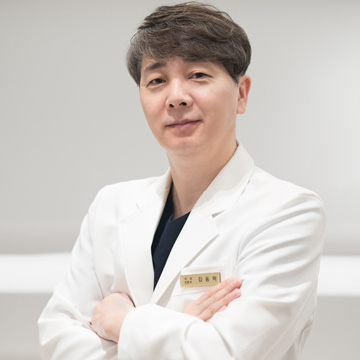
Dr. Dong-Hyuk Kim
Board-certified general surgeon
Dr. Dong-Hyuk Kim is a board-certified general surgeon and the Medical Director of Ium Hazi Varicose Vein Clinic. He completed his medical education at Sungkyunkwan University School of Medicine and serves as Executive Director of the Korean Society of Phlebology.
Ium Hazi Varicose Vein Clinic operates a single-director system: Dr. Dong-Hyuk Kim personally performs every consultation, diagnostic ultrasound, procedure and post-operative follow-up, and the clinic deliberately limits its schedule to one or two surgical cases per day.
For an assessment appointment, that means the person holding the ultrasound probe is the same person who will discuss the findings with you and, if you go on to treatment, the same person who will carry it out and see you afterwards. Dr. Kim's documented areas of focus include vascular ultrasound diagnosis and evaluation alongside the treatments that follow from it. His teaching record includes serving as a tutor on a varicose vein ultrasonography hands-on course at the Spring Conference of the Society of Surgical Ultrasound in 2014, and he holds an adjunct professorship at Samsung Medical Center, Sungkyunkwan University School of Medicine. He is also a founding member of the Venous Disease Research Society.
This page does not cite case counts, awards, ratings or patient testimonials. Where the clinic publishes such figures they are self-reported and unaudited, and they do not describe what any individual patient should expect.
Diagnosis & Evaluation Options and Types Available
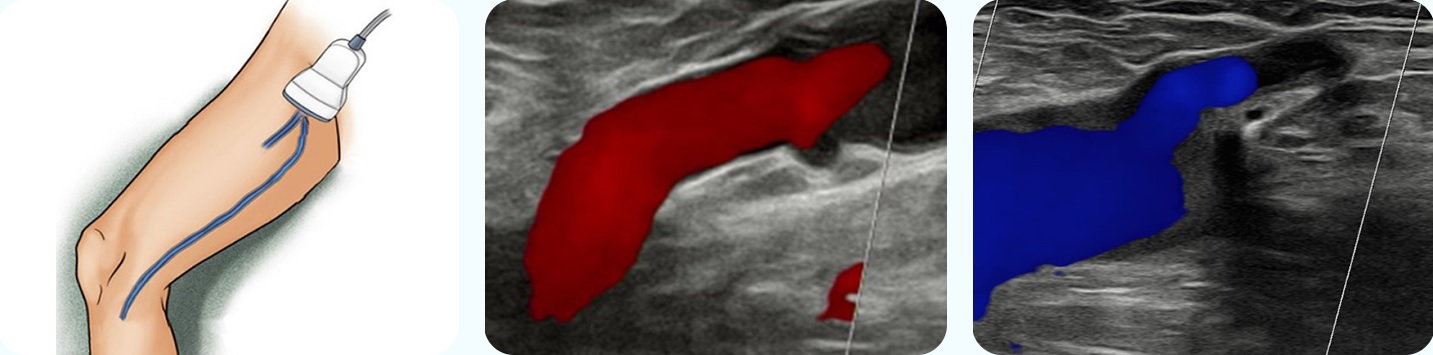
An assessment is not a single fixed test. What it includes depends on what the consultation finds, and the clinic states that the evaluation method varies according to the patient's symptoms, medical history and suspected condition.
Component | What it establishes | Typical experience |
|---|---|---|
Symptom and history review | What you notice, when it started, what worsens it, and relevant medical background | Conversation; bring records, previous results and a current medication list |
Physical examination of the legs | Visible veins, swelling, skin changes and tenderness | Standing and lying examination of both legs |
Vascular ultrasound examination | Deep, saphenous, subcutaneous and perforating veins; size, shape, location; direction and duration of reflux | Non-invasive scanning with a probe and gel; findings shown as they appear |
Review of findings and planning | Which veins are involved, how severe the reflux is, and which treatment options follow | Discussion with the doctor at the same visit |
The vascular ultrasound examination is the part that distinguishes a specialist venous assessment from a general one. The clinic documents that it examines reflux in the inguinal, thigh, popliteal and calf regions, and that patients can ask for their examination images to be saved directly to a USB drive. Venous ultrasound as a category is non-invasive, uses no ionizing radiation and no contrast agent, and can identify damaged valves and abnormal flow, according to RadiologyInfo.org from the Radiological Society of North America and the American College of Radiology; the same source notes that image quality depends heavily on the skill of the person performing the scan. The Society for Vascular Surgery describes duplex ultrasound as a painless, radiation-free vascular test that typically takes around thirty minutes.
Who Is a Good Candidate for Diagnosis & Evaluation?
Anyone with visible varicose veins on the legs who wants to know what is causing them.
People with leg swelling, aching, heaviness or discomfort that may be venous in origin.
People who suspect abnormal venous blood flow or reflux and need the superficial and deep veins assessed.
Patients who need a diagnosis established before deciding between treatment options.
Patients who were treated for varicose veins elsewhere and want their current venous anatomy reassessed.
Patients planning treatment abroad who want the assessment and the treatment plan to come from the same surgeon.
There are generally no major contraindications to a diagnostic vascular ultrasound, because it is non-invasive. The clinic notes that an examination may need to be modified or postponed if the area to be examined cannot be adequately accessed. A separate point applies to anyone who does not have symptoms or a suspected venous condition at all: an evaluation exists to answer a question, and if there is no question, there is nothing for it to answer. The clinic's stated philosophy is to identify the underlying cause accurately and then recommend only the treatment appropriate to that finding, without unnecessary procedures.
Nothing on this page is a self-assessment tool. Whether these findings apply to your legs is a question for the consultation, not for a list.
What to Expect: Procedure, Recovery, and Results Timeline
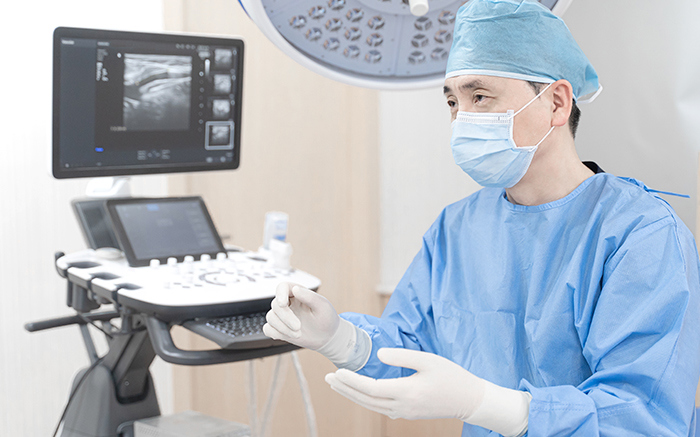
An assessment appointment is built around one visit rather than a series of them, and the sequence below is what that visit contains. The scanning itself is described in detail on the Vascular Ultrasound Examination page; what matters at this level is that the examination, its interpretation and the resulting plan all happen while you are there.
Stage | What happens | Timing |
|---|---|---|
Before the visit | Usually no special preparation for a leg vascular ultrasound; bring medical history, previous results and current medications | — |
Consultation | Symptoms and history reviewed; legs examined | Same visit |
Vascular ultrasound | Veins and reflux assessed and shown to you | Same visit; duration depends on how many areas are examined |
Explanation of findings | Venous condition and reflux discussed using the images and the live flow | Immediately, during the examination |
Treatment planning | Options discussed if treatment is indicated | Same visit |
Afterwards | No specific recovery period; normal activities generally resumed at once | Immediate |
Anesthesia is generally not required, because the examination is non-invasive, and most patients feel little or no discomfort — occasionally mild pressure from the probe, particularly over a tender area. No special aftercare is generally needed. If an invasive test were ever required, pain control and travel timing would be discussed separately and would follow the doctor's advice rather than the timeline above.
For patients travelling from the United States, the clinic's guidance is that diagnosis and evaluation for varicose veins generally needs one day in Seoul for the consultation, the vascular ultrasound and the treatment planning. How much longer you stay depends on the findings and on whether treatment is recommended and scheduled. After a diagnostic examination alone, patients can generally travel once the examination and consultation are complete; if treatment follows, the appropriate timing for flying is a different question and is answered by the doctor in relation to that treatment.
Results are not a report that arrives later. Because the assessment is performed and interpreted at the same visit, the venous condition and the reflux flow are explained while the examination is happening, and the plan is discussed the same day.
Combining Diagnosis & Evaluation with Other Treatments
If reflux or varicose veins are identified, the vascular ultrasound examination becomes part of the sequence that leads into treatment rather than a separate event. The clinic documents that it may be performed before or alongside appropriate varicose vein treatment, with the specific combination depending on the findings. In practice that means the assessment determines which of the clinic's treatment routes is appropriate, and the same examination provides the baseline against which blood flow can be compared afterwards.
Endovenous Vein Ablation — catheter-based closure of a refluxing saphenous trunk, where the ultrasound identifies which trunk is involved.
Varicose Vein Surgery — removal of surface varicose veins, where the ultrasound maps what is to be removed.
Post-treatment vascular ultrasound examinations, which the clinic includes in its aftercare.
Which combination applies is decided from the findings, not chosen in advance. Nationally published guidance describes a general order in which venous treatments are considered once truncal reflux is confirmed, and the National Institute for Health and Care Excellence sets out that order for the treatment category as a whole.
Safety, Precision, and Clinic Standards
The risks below are the ones this clinic documents in its own treatment information. No procedure is free of risk, and a written list is not a substitute for the discussion of risks and alternatives that takes place during consultation.
A diagnostic vascular ultrasound is generally considered a safe, non-invasive examination, and significant complications are uncommon. The effect patients most often report is mild pressure or temporary discomfort where the probe passes over the leg. The examination involves no ionizing radiation.
The more consequential risk in this area is not a complication of the scan but an error of interpretation. The clinic states the point directly: diagnosis and evaluation can miss or misinterpret the underlying cause, which leads to delayed or inappropriate treatment, and accurate vascular ultrasound assessment is what guards against it. That is also why operator skill matters more here than equipment alone, as the radiology source cited above notes for venous ultrasound in general.
The clinic's documented equipment includes a Samsung Medison V8 high-resolution vascular ultrasound system, a VeinViewer Flex vein visualisation device, a 4th-generation 1940 nm endovenous laser system and a Medtronic ClosureRFG and RFG 3D radiofrequency system. Instruments are sterilised by autoclave and ethylene oxide gas, and single-use devices are not reused.
Regulatory approval, clearance or certification status for the devices used at this clinic is not documented in the clinic's source material, so no approval, clearance or certification claim is made on this page.
The clinic is a Registered Medical Institution for Attracting Foreign Patients, certified by the Republic of Korea's Ministry of Health and Welfare under the Medical Overseas Expansion and Foreign Patients Attraction Act. The clinic's stated quality process is doctor-led diagnosis, consultation, surgery and post-operative care; pre-operative vascular ultrasound and clinical evaluation; a deliberately limited daily surgical caseload; strict sterilisation using autoclave and ethylene oxide gas systems; no reuse of single-use devices; and post-operative vascular ultrasound monitoring and follow-up care.
This clinic does not publish closure rates, success rates or recurrence rates, so none are stated here. Figures published for a treatment category as a whole do not describe the results of any individual clinic or patient.
This page does not quote prices and does not describe insurance coverage. Fees, what a quotation includes, and any question of reimbursement are discussed during consultation, and patients outside Korea should confirm coverage with their own insurer.
The Bottom Line
Varicose veins are caused by backward blood flow that cannot be seen from the outside, so an assessment, not an inspection, is what establishes the diagnosis.
At this clinic the assessment is a consultation, a physical examination and a vascular ultrasound of the deep, saphenous, subcutaneous and perforating veins, completed and explained in one visit.
The findings are shown to you as they are taken, as still images and as moving reflux flow, and can be saved to a USB drive on request.
The examination is non-invasive, generally painless, uses no radiation and normally requires no recovery time.
The same surgeon performs the assessment, the treatment if any, and the follow-up.
Frequently Asked Questions
Do I need an ultrasound, or can the doctor tell from looking at my legs?
Looking at the legs shows which veins are visible; it does not show which valves have failed or where the backward flow starts. Those are the findings a treatment plan is built on, and they come from the ultrasound. The examination assesses the deep veins, the saphenous veins, the subcutaneous veins and the perforating veins together, because a visible vein on the surface can be the downstream consequence of a problem higher up the leg.
How long does the assessment take, and how many visits will I need?
The examination is generally completed during a single clinic visit, with the exact time depending on how many veins and areas are being assessed. A basic evaluation may be finished in one visit; additional tests or follow-up consultations would add visits. For international patients the clinic's guidance is to allow one day in Seoul for consultation, ultrasound and planning.
Is the examination painful, and will I need anesthesia?
Vascular ultrasound is generally painless, and anesthesia is not required because the examination is non-invasive. Some patients notice mild pressure or brief discomfort as the probe moves over the leg, particularly across a tender area. No pain control is normally needed.
When will I get my results?
During the examination. Because the findings are produced and interpreted in real time, the venous condition and the reflux flow are explained to you at the time they are seen, using both the static images and the live blood-flow view, and the treatment discussion follows in the same visit.
Can I fly home after the assessment?
After a diagnostic vascular ultrasound on its own, patients can generally travel once the examination and the consultation are complete. If a treatment is performed at the same visit, the timing for flying is set by that treatment and by the doctor's advice, not by the examination.
How should I prepare?
Usually no special preparation is needed for a leg vascular ultrasound. Bring relevant medical records, any previous test results, and a list of current medications, and describe your symptoms fully — including anything you might be inclined to leave out, since an incomplete history is the one preparation failure that affects the result.
I had varicose vein treatment before and it did not settle. Can I still be assessed?
Yes, a reassessment of the current venous anatomy is exactly what an evaluation does, and previous treatment elsewhere does not prevent it. What the clinic can offer after the reassessment depends on what the ultrasound shows, and that is a question for the consultation rather than one that can be answered in advance.
Can I take the ultrasound findings away with me?
Yes. The clinic has a system for saving examination images directly to a USB drive when a patient asks for it, so the record of what was seen does not stay behind in Seoul. That matters more for an overseas patient than for a local one: if you later discuss your legs with a physician at home, the images and the reflux findings are the part of the visit that travels, and they are also the baseline against which any future comparison would be made.
Book a Consultation at Ium Hazi Varicose Vein Clinic
If you are considering varicose vein diagnosis and evaluation in Seoul, the assessment is the first step and can usually be completed, explained and turned into a plan in a single visit.
To arrange a consultation, use the clinic's contact page or call . English-language support is available for international patients.
Ium Hazi Varicose Vein Clinic is on the 2nd floor of K-Tower, 320 Seocho-daero, Seocho-gu, Seoul 06633, Republic of Korea. The clinic is open Monday, Tuesday, Wednesday and Friday from 9:30 AM to 7:00 PM and Saturday from 9:30 AM to 2:00 PM, with a weekday lunch break from 1:00 to 2:00 PM, and is closed Thursdays, Sundays and the fourth Friday and Saturday of each month. More about the clinic is on its About Us page.
Disclaimer
Individual results may vary. All surgical and non-surgical procedures have potential risks and limitations. Your suitability for treatment, expected results, costs, and recovery time will be discussed with Dr. Dong-Hyuk Kim during your personal consultation. The information provided is for general educational purposes and does not guarantee a specific treatment outcome.
Sources & Further Reading
Related Services
Procedures available within our clinical departments.
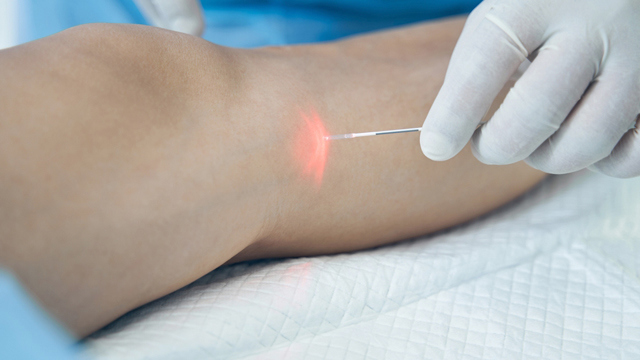
Endovenous Laser Ablation
Endovenous laser ablation is the closure of an abnormal vein from the inside using laser energy delivered along a fibre placed under ultrasound guidance, used for appropriately diagnosed venous reflux and the varicose vein symptoms that follow from it.
Learn More
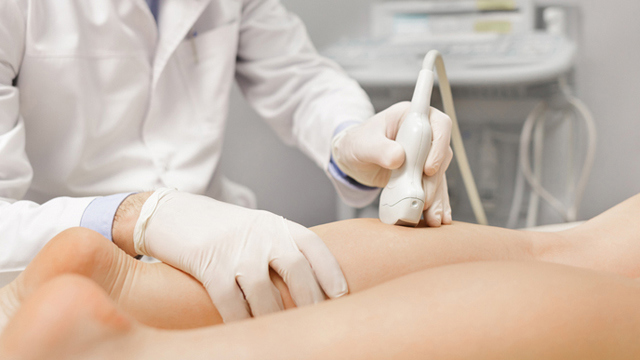
Vascular Ultrasound Examination
A vascular ultrasound examination evaluates the condition of the leg veins — deep, saphenous, subcutaneous and perforating — assessing their size, shape, location and blood-flow patterns, and showing reflux in real time.
Learn More
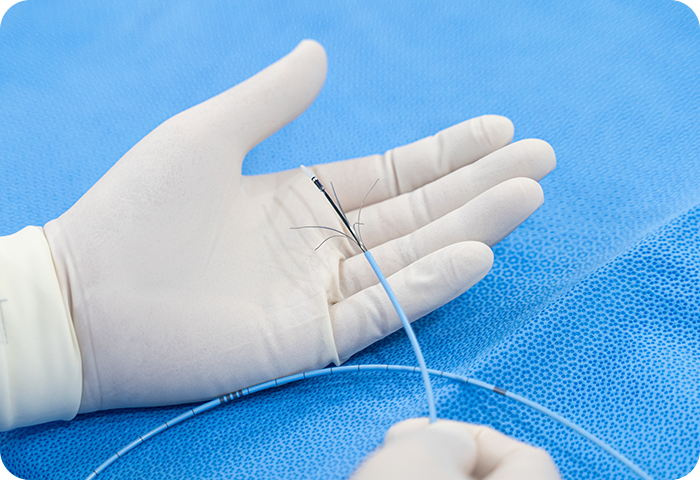
Mechanochemical Ablation
Mechanochemical ablation closes a refluxing vein by combining two actions in one catheter pass: mechanical irritation of the inner vein wall and delivery of a chemical sclerosing agent, without heat.
Learn More