Personalized Medical Care & Dedicated International Patient Concierge

Medical Guide
Will My Varicose Veins Come Back After Treatment?
A closed vein and a new varicose vein are different events. Here is what recurrence after vein treatment in Korea means and how follow-up imaging detects it.
Schedule a ConsultationWill My Varicose Veins Come Back After Treatment in Korea?
Medically reviewed by Dr. Dong-Hyuk Kim, Board-Certified General Surgeon, Medical Director of Ium Hazi Varicose Vein Clinic
If you are asking whether your varicose veins will come back after treatment in Korea, the useful answer separates two events that patients tend to merge. A vein that was successfully closed is generally intended to stay closed, and Ium Hazi Varicose Vein Clinic uses follow-up ultrasound to confirm that. A completely different vein developing reflux years later is a separate event, and it remains possible for anyone, anywhere, because treating veins does not remove the tendency that produced them.
Two Different Events With One Confusing Name
Patients use "came back" for both situations, which is why the answers people find online feel contradictory. Pulling them apart makes the picture clearer.
The first event is the treated vein failing to stay shut. Among the less common complications of its endovenous ablation treatments, Ium Hazi Varicose Vein Clinic includes a treated vein that reopens. This is uncommon but real, and it is exactly what post-treatment imaging looks for.
The second is a vein that was healthy at the time of your procedure developing reflux later. The clinic states plainly that new or untreated veins may develop reflux in the future and that long-term results vary. Nothing about closing one vein immunizes the others.
What Happens to a Vein That Stays Closed
Ium Hazi Varicose Vein Clinic describes the treated vein as intended to remain closed after successful ablation, with blood redirected through healthier veins, while symptoms and the appearance of the varicose veins improve progressively as the body adapts. The clinic notes that the closed vein is gradually absorbed by the body and that the final outcome is assessed at follow-up examinations.
This matters for expectation setting. The leg you see two weeks after a procedure is not the final result. The clinic states that improvement develops progressively as bruising and swelling resolve, which means an early impression of "it did not work" is often just an impression made too early.
Why the Underlying Condition Does Not Disappear
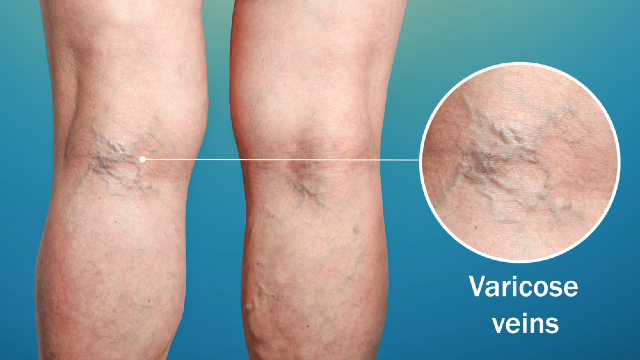
The National Heart, Lung, and Blood Institute traces varicose veins back to valves inside the vein that stop closing properly, which lets blood collect and the vessel swell and twist. Among the contributors it identifies are heredity, getting older, pregnancy, and hours spent on your feet or in a chair. A procedure closes an affected vein; it does not change your genetics, your job, or the passage of time.
MedlinePlus, the consumer health service of the US National Library of Medicine, describes pregnancy as a period when increased blood volume and pressure on the leg veins can bring out varicose veins. A pregnancy after treatment is a plausible reason for new veins that has nothing to do with the quality of the procedure you had.
MedlinePlus also groups varicose veins within the broader family of vascular diseases affecting the circulatory system, and that framing is useful: you are managing a condition of your venous system over decades, not repairing a single broken object once.
What the Clinic Documents About Follow-Up
Follow-up is how recurrence gets detected rather than guessed at, and Ium Hazi Varicose Vein Clinic documents a specific rhythm for its surgical pathway. Patients go home on the afternoon of the operation, and the clinic brings them back for an examination roughly a week later. An ultrasound check follows at around one to two months to assess the small veins that remain, and the clinic notes this timing shifts from patient to patient. For its endovenous ablation treatments the clinic states that successful vein closure can be confirmed by follow-up ultrasound and instructs patients to attend the recommended follow-up ultrasound examinations.
Where circumstances call for it, the clinic may also ask a patient back the day after treatment. Its aftercare package covers scheduled vascular ultrasound checks and individual guidance on medical compression stockings.
Why Imaging, Not Appearance, Answers the Question
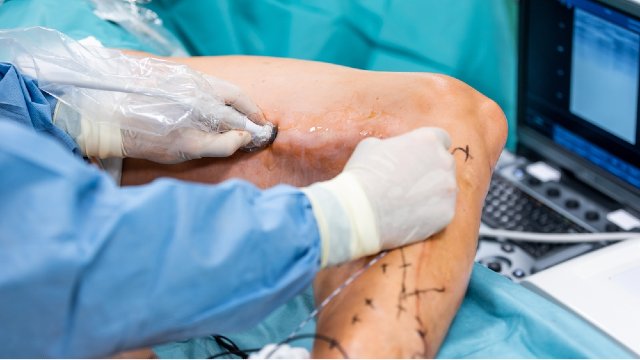
Whether a vein closed is not something you can see. The FDA explains that ultrasound builds its pictures from sound waves and involves no ionizing radiation, which is part of why the scan can be repeated whenever it is clinically useful. A duplex scan shows whether blood is still moving through a vein that was meant to be shut, and whether reflux has appeared somewhere new.
A leg can look excellent while a segment has quietly reopened, and can look disappointing at six weeks while the underlying result is exactly as planned. That gap between appearance and physiology is the reason the follow-up scan exists.
What Raises Your Chance of Needing Treatment Again
Several things move the odds, and none of them are a verdict:
- Family history and age. Both are listed by the NHLBI among the factors associated with varicose veins, and neither can be altered by treatment.
- Pregnancy after treatment. MedlinePlus describes pregnancy as a time when leg veins come under additional pressure.
- Long hours standing or sitting. The NHLBI names prolonged standing or sitting among contributing factors.
- How much of the problem was treated. Ium Hazi Varicose Vein Clinic notes that residual small veins may remain after surgery and that additional injection treatment may be considered for cosmetic reasons if they persist. Residual veins that were always there are not the same as new disease.
- Skipping the follow-up scan. A reopened segment found early is a smaller problem than one found years later.
What You Can Actually Do
Some of the influence is yours. Ium Hazi Varicose Vein Clinic instructs patients to follow the physician's guidance on walking and activity, to avoid strenuous activity or prolonged standing for the recommended period, to use compression as prescribed, and to attend the scheduled follow-up examinations. It also asks patients to get in touch quickly if leg pain or swelling turns severe or worsens, if the skin changes markedly, or if fever, chest pain, or breathlessness appears.
Beyond the recovery window, general circulatory health is worth attention. MedlinePlus notes that regular physical activity supports circulation and overall cardiovascular health. Its guidance on recovery after surgery also emphasizes following your discharge instructions and keeping scheduled appointments rather than judging your own progress. Walking is the least glamorous and most consistently recommended item on any vein aftercare list.
Following Up From the United States
Distance complicates the follow-up rhythm, and it is better to plan for that than to discover it. The CDC's Yellow Book advises travelers seeking care abroad to arrange continuity of care in advance and to obtain their medical records, noting that follow-up after returning home is a predictable weak point in medical travel. Ask before you fly what imaging will be done before you leave Korea, what records you will receive, and how the clinic prefers to be contacted afterward. Ium Hazi Varicose Vein Clinic states that English communication is available online and that post-operative aftercare includes scheduled vascular ultrasound examinations; its contact page is the route for scheduling and follow-up questions.
If varicose veins do return in a leg already treated somewhere else, that is a distinct clinical situation requiring its own re-assessment and mapping rather than a repeat of the original plan.
Documented outcomes are worth looking at directly rather than taking on trust. The clinic publishes patient-facing before and after results, and reviewing real cases is a fairer basis for expectation than any general statement about longevity.
The Bottom Line
- A successfully closed vein is intended to stay closed, and Ium Hazi Varicose Vein Clinic confirms closure with follow-up ultrasound rather than by appearance.
- Reopening of a treated vein is listed by the clinic among the less common complications, which is why post-treatment imaging is part of the plan.
- New or previously untreated veins can develop reflux later; the clinic states this plainly and links it to the fact that long-term results vary.
- The NHLBI associates varicose veins with family history, age, pregnancy, and prolonged standing or sitting — none of which a procedure changes.
- The clinic documents a follow-up examination within about one week and a follow-up ultrasound within approximately one to two months, with timing varying by patient.
Frequently Asked Questions
Does a closed vein ever open again?
The clinic counts a reopened vein among the less common complications that can follow endovenous ablation. It is infrequent, which is precisely why follow-up ultrasound is used to confirm closure rather than assuming it. Detecting it early gives more options than finding it years later.
How does the clinic check whether treatment worked?
The clinic states that successful vein closure can be confirmed by follow-up ultrasound. Its surgical pathway includes a follow-up examination within about one week and a follow-up ultrasound within approximately one to two months to assess remaining small veins, with timing varying by patient.
Why do new varicose veins appear even after a good result?
Because the tendency that produced the first ones persists. The National Heart, Lung, and Blood Institute associates varicose veins with faulty vein valves and with factors such as family history, age, pregnancy, and long periods of standing or sitting. Treatment closes affected veins; it does not remove those factors.
Will pregnancy after treatment cause veins to return?
Pregnancy is a recognized period of increased pressure on the leg veins, and MedlinePlus describes it as a time when varicose veins may become more noticeable. New veins appearing during or after a pregnancy are not evidence that a previous procedure failed. Discuss timing with your physician if you are planning a pregnancy.
What can I do to reduce the chance of new veins?
Follow the clinic's instructions on walking, activity, and compression, and attend the scheduled follow-up appointments. MedlinePlus notes that regular physical activity supports circulation and general cardiovascular health. Report new leg swelling, pain, or skin changes rather than waiting for a scheduled visit.
How is follow-up handled once I am back in the United States?
Ium Hazi Varicose Vein Clinic states that English communication is available online and that aftercare includes scheduled vascular ultrasound examinations. The CDC's Yellow Book advises arranging continuity of care and obtaining your medical records before leaving. Agree on the imaging and the records you will take home before you fly.
This article is for general informational purposes and does not constitute individualized medical advice. Candidacy, technique, and expected outcomes can only be determined through a consultation with a qualified physician, and this article is not a self-diagnosis tool.
References
- NHLBI: Varicose Veins
- MedlinePlus: Varicose Veins
- MedlinePlus: Vascular Diseases
- MedlinePlus: Pregnancy
- MedlinePlus: Exercise and Physical Fitness
- MedlinePlus: After Surgery
- FDA: Ultrasound Imaging
- CDC Yellow Book: Medical Tourism
More Articles
Continue reading our clinical guides.
Will My Varicose Veins Come Back After Treatment?
A closed vein and a new varicose vein are different events. Here is what recurrence after vein treatment in Korea means and how follow-up imaging detects it.
Learn More
What to Pack Before Flying to Korea for Vein Surgery
What to pack before flying to South Korea for vein surgery: documents, medication and supplement lists, clothing, compression, and what to arrange at home.
Learn More
What Are Varicose Veins? Causes, Symptoms, and Signs
Varicose veins are enlarged, twisted leg veins caused by valve dysfunction. Learn the causes, the symptoms they produce, and when to see a vein specialist.
Learn More