Personalized Medical Care & Dedicated International Patient Concierge

Medical Guide
What to Pack Before Flying to Korea for Vein Surgery
What to pack before flying to South Korea for vein surgery: documents, medication and supplement lists, clothing, compression, and what to arrange at home.
Schedule a ConsultationWhat to Pack and Prepare Before Flying to South Korea for Vein Surgery
Medically reviewed by Dr. Dong-Hyuk Kim, Board-Certified General Surgeon, Medical Director of Ium Hazi Varicose Vein Clinic
What you pack for vein surgery abroad falls into four piles: documents that describe your health, medications and the written list that goes with them, clothing that works for a leg procedure and the days after it, and a small kit of ordinary supplies. Preparing is the fifth pile and the one people forget — the arrangements you make at home before you leave. This is a practical checklist for a trip to South Korea for vein treatment, built around what Ium Hazi Varicose Vein Clinic asks patients to bring and disclose, and around the CDC's general advice for travelers.
Documents: The Packet That Describes You
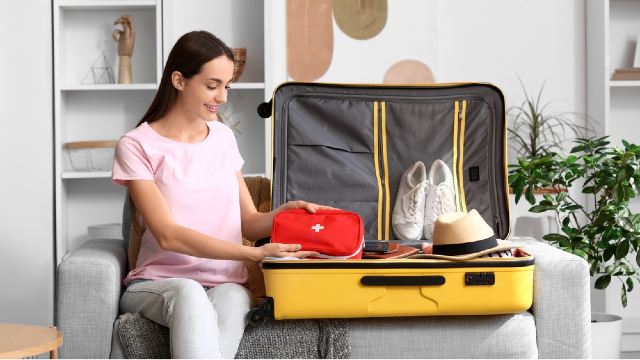
Bring paper, and bring a copy of the paper somewhere else.
For diagnosis and evaluation, Ium Hazi Varicose Vein Clinic asks patients to arrive carrying pertinent medical records, whatever earlier test results they have, and an account of the medications they take and the symptoms they notice. For a vein trip, that means:
- Any previous duplex or vascular ultrasound report of your legs, and the images if you have them.
- Documentation of any previous blood clot, including when it happened and how it was treated.
- Records of any previous vein treatment, including injections, ablation or surgery, and where it was done.
- A summary of relevant conditions — diabetes, arterial disease, neuropathy, clotting disorders, skin conditions, previous ulcers.
- A written symptom history: which leg, how long, what makes it worse.
Bring your passport and your travel documents in the same organized place, and keep a digital copy of each accessible to you and to someone at home. Entry requirements for South Korea are set by Korean authorities and change, so confirm your own situation with the Korean embassy or consulate serving your part of the United States rather than relying on any article.
The CDC's Yellow Book advises travelers to carry documentation of their health history and any care they receive abroad, and its guidance on becoming unwell while traveling makes the point that another clinician can only act on what you can show them. A folder you can hand over is worth more than a memory you have to reconstruct.
Medications and Supplements: The List Matters More Than the Bottles
Bring the medicines themselves, and bring the written list separately.
Ium Hazi Varicose Vein Clinic instructs patients repeatedly to provide a complete medical history and medication list, including blood-thinning medicines and supplements, and to inform the medical team about allergies, previous blood clots, vascular conditions, pregnancy, and previous vein treatments. It also states, without qualification, that prescribed medication should not be stopped unless the treating clinician specifically instructs it. Do not adjust anything on your own before you fly.
Supplements count. Several widely used supplements affect bleeding or interact with other medicines, and the clinic asks for them by name in its preparation instructions alongside blood thinners. Write down the actual product and dose rather than a general category.
Some of the clinic's procedure-specific instructions also touch on medication timing. For several of its procedures it instructs patients to fast before treatment, to rest adequately, and to follow its specific guidance regarding diabetes medication, while disclosing other medications and relevant health conditions to staff. Those instructions come from the clinic for your particular procedure and date; carry them with you rather than relying on a general rule.
Practical packing points:
- Keep prescription medicines in your carry-on, in their original labeled containers.
- Bring enough for the full trip plus a margin for a changed return date.
- Carry the written list in English, with generic drug names as well as brand names.
- Keep a copy of any prescription documentation with the medicines.
A pre-travel consultation, which the CDC recommends several weeks ahead of any international trip, exists partly to review exactly this: what you take and why. That appointment is the natural place to produce the written list.
The Travel Health Kit
Pack a small kit of ordinary supplies rather than assuming you will find everything easily while tired and jet-lagged.
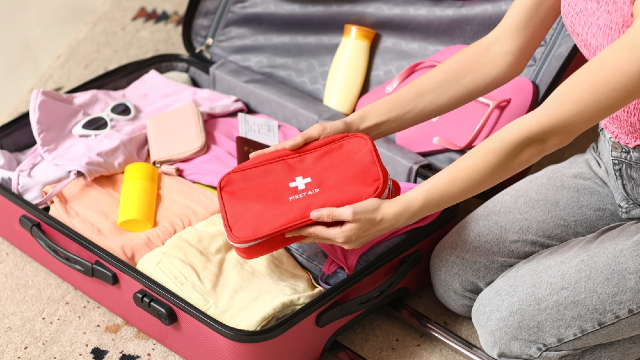
The CDC's Yellow Book recommends that travelers assemble a travel health kit covering prescription and routine over-the-counter medicines, basic first-aid supplies, and items specific to the traveler's own health needs and destination. For a trip built around a leg procedure, a sensible version includes:
- Your prescription medicines and the written list.
- Basic wound-care supplies such as adhesive bandages and gauze.
- Any routine over-the-counter medicine you actually use, including something for pain if your clinician approves it.
- Hand sanitizer and a small supply of any personal-care item you rely on.
- Copies of your documents.
Do not add a medicine you have not discussed. What is appropriate for pain or for swelling after a vein procedure is a question for the clinic, partly because some pain relievers affect bleeding and partly because your procedure determines the answer.
Clothing for a Leg Procedure
Pack for access to your legs and for comfort afterward, not for how you would normally dress on a trip.
Ium Hazi Varicose Vein Clinic states across several of its treatments that patients should wear comfortable clothing to the appointment, and for one of its treatments it specifies that comfortable, loose clothing makes the visit easier. The reasoning is straightforward: the examination and the procedure need your legs exposed and unconstricted, and pressure on a treated leg afterward is unhelpful.
A workable clothing list:
- Loose pants or a skirt that can be removed and put back on easily, ideally something that does not press at the knee or calf.
- Shorts or loose lounge clothing for the recovery days.
- Shoes you can put on without bending far and without a struggle — slip-on or easily adjustable, with a flat sole and reliable grip.
- Enough socks to change daily; the clinic notes that anesthetic fluid may seep from the puncture site for a few days after some procedures.
- A change of clothes that can tolerate a small amount of leakage or antiseptic staining.
- A jacket or layers appropriate to the season, since you will be moving between transit, the clinic and your lodging repeatedly.
Skip anything with a tight band at the thigh, knee or ankle for the treatment days, and leave the shoes that need a shoehorn and a full bend at home.
Compression: What to Pack and What to Wait For
Bring compression only if you already own garments that were fitted for you, and expect the clinic to direct the rest.
Compression is part of this clinic's care, but it is a fitted medical item rather than a packing-list commodity. Ium Hazi Varicose Vein Clinic describes compression stocking therapy as using elastic garments that apply graduated pressure, strongest around the ankle and decreasing higher up the leg, to support venous return and reduce pooling in the lower legs. It states that the appropriate compression level and stocking length depend on the patient's condition and should be determined after clinical assessment, that accurate leg measurements matter for selecting the correct size, and that legs should be clean and free of products that could interfere with fitting.
It also states two safety points worth knowing before you buy anything at an airport. Compression should not be used without appropriate assessment in people with suspected or significant peripheral arterial disease, and it lists further situations calling for care or a specialist opinion: marked peripheral neuropathy, skin that is fragile or damaged, certain ulcers, heavy swelling, an unusual leg shape, or any case where a safe fit is hard to obtain. The clinic advises against wearing stockings that are not appropriate for your condition or are poorly fitted, and against folding, rolling or bunching a stocking, because that concentrates pressure in one place.
Note one scheduling detail specific to this practice: the '3-No' protocol the clinic describes for its signature procedures leaves out spinal anesthesia, leaves out any later stitch removal, and leaves the compression stocking off on the surgery date. Post-operative aftercare, as it describes it, includes individualized guidance on medical compression stockings, so the instruction about when and how long to wear them is something you receive there rather than something you decide in advance.
If you already wear fitted medical compression at home, pack it, bring the sizing information, and show it to the clinic.
Skin and Leg Preparation in the Days Before
Small preparations make the visit itself easier.
The clinic instructs patients to follow its guidance on skin preparation, and for some treatments it advises keeping the legs clean and avoiding creams or lotions on the legs immediately before treatment. For one of its laser treatments it specifies avoiding skin lotions or creams on the legs in the twenty-four hours beforehand, along with avoiding alcohol and blood-thinning medications as instructed. Follow the instruction you are given for your own procedure.
Rest is part of preparation too. The clinic lists getting sufficient rest among its pre-procedure instructions for several treatments, which is easier to achieve if your itinerary allows a recovery day between a long flight and your appointment.
What to Arrange at Home Before You Leave
The preparation that does not fit in a suitcase.
Time away. Plan for more time than the procedure itself occupies. The clinic describes early walking and a relatively quick return to light daily activity after many of its treatments, while also telling patients to stay clear of overexertion, of strenuous activity, and of standing for long stretches until their physician lifts the restriction. Depending on what was treated, bruising, tenderness, tightness or swelling may linger anywhere from a few days to a few weeks.
Someone who knows the plan. Leave a copy of your itinerary, your clinic contact route and your medication list with someone at home.
Your return-side logistics. Decide in advance how you will get from your arrival airport to your own door. The clinic advises avoiding driving on the day of surgery and recommends public transportation instead, and it advises arranging transportation in advance when sedation is planned; the same thinking applies to the tired end of a long flight home.
Your own clinician. Tell them you are going, and agree what they want to see afterward. The CDC's Yellow Book tells people who get treatment overseas to settle who provides aftercare once they are back, and what would happen if a complication appeared, before departure rather than afterward.
Your insurer. Ask your plan directly, in writing, what it does and does not cover for care received outside the United States. Coverage depends on the insurer and the diagnosis, and only your plan can answer for itself.
Your questions. MedlinePlus, the patient information service of the US National Library of Medicine, recommends writing questions down in advance of an appointment. Pack the list.
You can raise any of the preparation questions above with Ium Hazi Varicose Vein Clinic through its contact page, and its about-us page describes how the practice is organized.
The Bottom Line
- Pack a documents folder: previous ultrasound reports, records of any prior clot or vein treatment, a symptom history, and copies stored separately.
- Bring your medicines in their labeled containers and a separate written list that includes supplements and blood-thinning medicines; do not stop prescribed medication unless your treating clinician instructs it.
- Dress for access and comfort: loose pants, easy shoes, spare socks, and nothing tight at the knee, calf or ankle on treatment days.
- Do not buy compression garments to bring with you; the clinic assesses, measures and fits compression, and states that improper compression can be unsafe in people with significant arterial disease.
- Before you fly, arrange time off, a contact at home, a plan for the trip from your arrival airport to your door, and a conversation with your own clinician and your insurer.
Frequently Asked Questions
What medical documents should I bring to the clinic?
The clinic asks patients to arrive with pertinent records, any earlier test results, and an account of their current medications and symptoms. For a vein consultation, the most useful items are any previous leg ultrasound report, documentation of any previous blood clot or vein treatment, and a written summary of your symptoms. Keep copies separately from the originals.
How should I prepare my medication list?
Write it out rather than relying on memory, and include every prescription medicine, every over-the-counter medicine you take regularly, and every supplement, with doses. The clinic specifically asks about blood-thinning medicines and supplements and about allergies, previous clots and other vascular conditions. It also states that you should not stop prescribed medication unless your treating clinician tells you to.
What clothing works best for a vein procedure?
Loose, comfortable clothing that allows your legs to be examined and treated easily, and shoes you can put on without bending far. Ium Hazi Varicose Vein Clinic advises comfortable clothing for several of its treatments and notes that loose clothing makes the visit easier. Pack extra socks, since it notes that anesthetic fluid can seep from the puncture site for a few days after some procedures.
Should I buy compression stockings before I travel?
Bring the fitted medical compression you already own, but do not buy new garments on your own. The clinic selects compression level and stocking length after clinical assessment and accurate leg measurement, and it warns that poorly fitted compression can create concentrated pressure and that compression may be unsafe in people with significant peripheral arterial disease. Its aftercare includes individualized guidance on medical compression stockings.
What belongs in a travel health kit for this trip?
The CDC's Yellow Book recommends a kit built around your prescription medicines, routine over-the-counter medicines, basic first-aid supplies and items specific to your own health needs. For a leg procedure, add simple wound-care supplies and copies of your documents. Ask the clinic before adding any pain medicine, since some affect bleeding.
Do I need to do anything to my skin before treatment?
Follow the clinic's instructions for your specific procedure. It advises keeping the legs clean, following its skin-preparation guidance, and in some cases avoiding creams or lotions on the legs immediately beforehand — for one laser treatment it specifies avoiding lotions, alcohol and blood-thinning medications in the twenty-four hours before the session. It also asks patients to rest adequately before treatment.
Who should I tell at home before I go?
Leave your itinerary, the clinic's contact route and your medication list with someone you trust, and tell your own clinician about the planned procedure. The CDC recommends a pre-travel consultation several weeks before departure and advises arranging in advance how follow-up and any complication would be handled once you are home. That conversation is easier before the trip than after it.
This article is for general informational purposes and does not constitute individualized medical advice. Candidacy, technique, and expected outcomes can only be determined through a consultation with a qualified physician, and this article is not a self-diagnosis tool.
References
- CDC Yellow Book: Travel Health Kits
- CDC Yellow Book: The Pre-Travel Consultation
- CDC Yellow Book: Medical Tourism
- CDC Yellow Book: What To Do When Sick Abroad
- MedlinePlus: Traveler's Health
- MedlinePlus: Talking With Your Doctor
- MedlinePlus: Surgery
- NHLBI: Varicose Veins
More Articles
Continue reading our clinical guides.
Will My Varicose Veins Come Back After Treatment?
A closed vein and a new varicose vein are different events. Here is what recurrence after vein treatment in Korea means and how follow-up imaging detects it.
Learn More
What to Pack Before Flying to Korea for Vein Surgery
What to pack before flying to South Korea for vein surgery: documents, medication and supplement lists, clothing, compression, and what to arrange at home.
Learn More
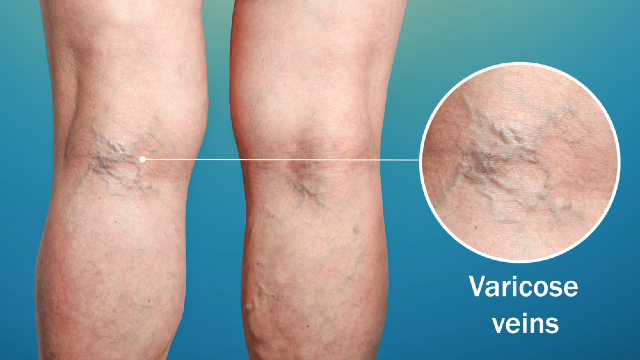
What Are Varicose Veins? Causes, Symptoms, and Signs
Varicose veins are enlarged, twisted leg veins caused by valve dysfunction. Learn the causes, the symptoms they produce, and when to see a vein specialist.
Learn More