Personalized Medical Care & Dedicated International Patient Concierge

Medical Guide
Walking, Exercise, and Work After Vein Treatment
Walking resumes almost immediately after vein treatment, desk work within a day or two for lighter procedures, and exercise last, on your surgeon's timetable.
Schedule a ConsultationHow Soon Can I Walk, Exercise, and Return to Work After Vein Treatment?
Medically reviewed by Dr. Dong-Hyuk Kim, Board-Certified General Surgeon, Medical Director of Ium Hazi Varicose Vein Clinic
Return to activity after vein treatment happens in three stages, and they do not arrive together. Walking resumes almost immediately — Ium Hazi Varicose Vein Clinic builds a walk into the discharge process itself. Everyday activity and desk work follow within a day or two for its lighter procedures. Exercise is the last to come back, and the clinic sets that date individually rather than publishing a number. This article works through all three, treatment by treatment.
Walking Is the First Thing, Not the Last
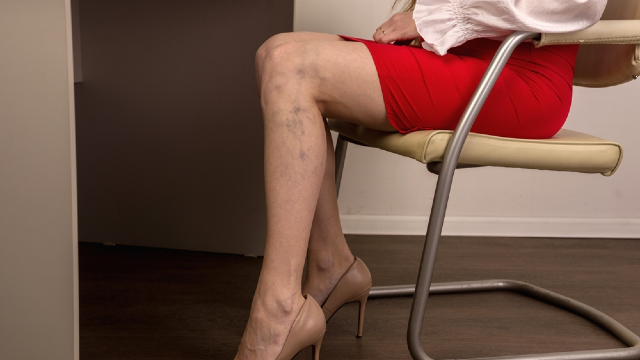
Walking after vein treatment is encouraged early rather than delayed. In the clinic's own procedure sequences for endovenous vein ablation and endovenous laser ablation, the final step before you go home is a post-procedure assessment and a walk, carried out when appropriate. Getting you upright is part of the treatment day, not something you attempt later at the hotel.
For VenaSeal vein closure, the clinic describes recovery as generally quick, with most patients walking immediately after the procedure and returning to light activities within a day. After cosmetic vein treatment it puts it even more simply: patients walk out immediately after treatment. For endovenous ablation more broadly, the clinic says most patients can walk soon after treatment and gradually return to normal daily activities.
The reasoning is circulatory. Walking engages the calf muscles that help push venous blood up the leg, which is exactly the function a refluxing vein had been undermining. MedlinePlus, the consumer health service of the US National Library of Medicine, notes that regular physical activity supports circulation and cardiovascular health, and the clinic's aftercare for cosmetic vein treatment asks for a daily walking routine outright.
Everyday Activity in the First Days
Ordinary daily life generally resumes within a day or two of the lighter treatments, and progressively after the deeper ones.
For radiofrequency ablation, the clinic states that same-day discharge is possible and most people can resume normal life the next day. For spider vein laser treatment, it describes same-day discharge with normal daily activities generally resuming from the following day. For VenaSeal, the clinic states that recovery is shorter than with other treatments and that the physician advises when normal daily activities can be resumed.
For micro-phlebectomy — the clinic's point micro-surgery for removing prominent surface veins — many patients resume light daily activities relatively quickly, while bruising, swelling, and tenderness may persist for several days or weeks. After cryoablation, the clinic describes walking soon after treatment and a gradual return to normal activities over several days, with bruising and swelling settling over a few weeks. For varicose vein surgery, discharge comes on the afternoon of the operative day, and a follow-up examination is set for roughly a week later.
Two qualifications apply throughout: recovery varies with the treated vein, the number of veins treated, and individual healing, and "normal activity" here means light everyday movement rather than your full pre-treatment routine.
Returning to Work
Desk work comes back fastest. The clinic's recovery description for cosmetic vein treatment is specific: patients resume desk work on day one. Its FAQ for the same pathway states that normal daily walking and light office activities can be resumed on the same day.
For the catheter-based and surgical procedures the clinic sets time away from work individually rather than by a fixed number of days, because a job is not a single variable. What matters is what your work asks of your legs. The clinic's aftercare repeatedly asks patients to avoid prolonged standing and prolonged sitting during the recovery period, and to avoid strenuous activity for the period the treating physician recommends. A role that keeps you standing on a shop floor for eight hours and a role that keeps you at a keyboard sit on opposite sides of that instruction, even after the same procedure.
Two practical points belong in your planning. Heavy lifting counts as strenuous activity and may be restricted temporarily. And you should not drive yourself on the treatment day — the clinic states this for both VenaSeal and its laser vein treatment, recommending public transportation instead. Plan time off by asking at the consultation, once the ultrasound has shown what needs treating, then confirming again before discharge.
Exercise Comes Back Last
Strenuous exercise is the activity the clinic restricts most consistently, and the one it leaves to the treating physician to time.
Across endovenous ablation, laser ablation, varicose vein surgery, micro-phlebectomy, and cryoablation, the clinic's guidance is the same in structure: avoid strenuous exercise and other restricted activities until cleared by the treating physician, and follow the instructions given on walking, wound care, compression, and follow-up. For its non-surgical treatments it states that strenuous exercise and heavy lifting may need to be avoided for several days or longer, depending on the procedure. After sclerotherapy, the clinic notes the same temporary restriction on strenuous exercise and heavy lifting while encouraging walking.
For cosmetic vein treatment the clinic names specific things to stay away from during recovery: direct sun exposure, hot baths, saunas, and high-impact exercise. High-impact is the operative word — a brisk walk and a run are not the same request of a healing leg.
There is one more caution worth noting, because it cuts against the "more is better" instinct. For radiofrequency ablation and for VenaSeal, the clinic advises avoiding excessive walking or overexertion, particularly if it causes discomfort. Early activity is encouraged; pushing through pain is not.
What You Will Still Feel While You Are Back on Your Feet
Being cleared to move does not mean the leg feels finished. The clinic lists temporary bruising, swelling, tenderness, tightness, and sometimes localized numbness among the expected effects of its ablation and surgical procedures, persisting for several days to a few weeks. After cosmetic vein treatment it describes bruising fading over two to three weeks.
MedlinePlus explains that a bruise appears when small blood vessels break and blood seeps into surrounding tissue, and that the mark changes color and fades as the body reabsorbs it. On discomfort, MedlinePlus notes that pain is a signal worth attention rather than dismissal, and that new or worsening pain should be discussed with a clinician. The useful test during recovery is direction of travel: soreness that eases week by week is expected, soreness that escalates is not. MedlinePlus adds, in its guidance on recovering after surgery, that following your written instructions and keeping your follow-up appointments matter more than any general timetable found online.
Why Sitting Still Is the Bigger Risk
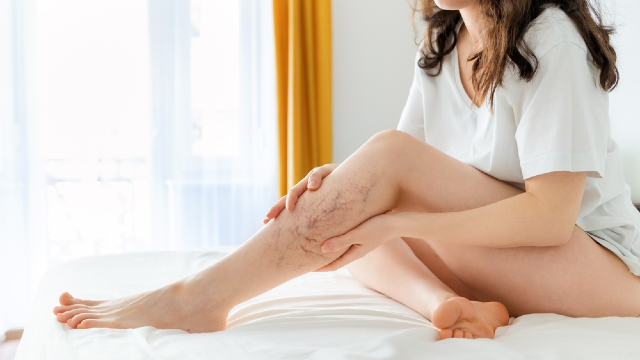
If you take one thing from the activity instructions, make it this: prolonged immobility is what the clinic warns against, not movement. Its guidance asks patients to remain mobile after treatment rather than sitting for long uninterrupted stretches.
The CDC explains that blood clots can form in the deep veins of the legs when a person is immobile for long periods, and lists recent surgery and reduced mobility among the factors raising venous thromboembolism risk. The National Heart, Lung, and Blood Institute describes venous thromboembolism as covering both a clot in a deep vein and one that travels to the lungs. Regular walking, breaking up long periods of sitting, and following your compression instructions are the practical response.
Symptoms That Should Stop You
Some symptoms mean you pause and seek advice rather than push on with the schedule. Ium Hazi Varicose Vein Clinic asks patients to make prompt contact about chest pain, shortness of breath, fever, significant changes in the skin, and leg pain or swelling that is severe or getting worse.
MedlinePlus describes the signs of a deep vein clot as swelling, pain, tenderness, warmth, or red or discolored skin in one leg, and the signs of a clot reaching the lungs as sudden breathlessness, chest pain that worsens on breathing in, a racing heartbeat, or coughing up blood. Chest pain and breathlessness are emergencies. If you are already back in the United States, that means local emergency care immediately.
The Follow-Up Sets the Real Timeline
Your return-to-activity schedule is confirmed at follow-up, not fixed in advance. On its surgical pathway, Ium Hazi Varicose Vein Clinic sets an examination around seven days out and an imaging review somewhere in the following one to two months to check the treated veins, with the exact timing differing from patient to patient. The clinic adds that an examination the day after treatment may be advised where circumstances call for it.
That schedule is delivered by the same physician throughout. Dr. Dong-Hyuk Kim, a board-certified general surgeon, is the clinic's Medical Director, and its single-director arrangement keeps every consultation, diagnostic scan, and procedure with him — so your activity clearance comes from the person who treated you. Varicose vein care has been the clinic's only focus since 2009, and it reports a figure of 7,300+ saphenous vein surgeries across 2009 to 2024 as its own published statistic. If you are planning time away from work or a training schedule around a trip to Seoul, raise it before you book. You can start that conversation through the clinic's contact page, and read about how the practice is organized on its about page.
The Bottom Line
- Walking comes first: the clinic builds a post-procedure walk into discharge and describes patients walking immediately after VenaSeal and cosmetic vein treatment.
- Everyday activity resumes within about a day after radiofrequency ablation and spider vein laser treatment, and progressively over several days after micro-phlebectomy, cryoablation, or vein surgery.
- Desk work is documented from day one after cosmetic vein treatment; for deeper procedures the clinic sets return to work individually and asks patients to avoid prolonged standing and sitting.
- Strenuous exercise, high-impact activity, and heavy lifting are restricted until the treating physician clears them; excessive walking or overexertion that causes discomfort is also discouraged.
- Severe or increasing leg pain or swelling, significant skin changes, fever, chest pain, or breathlessness mean seek medical care rather than continue the schedule.
Frequently Asked Questions
How soon after treatment can I walk?
Almost immediately for most of the clinic's procedures. Ium Hazi Varicose Vein Clinic includes a post-procedure assessment and a walk in the discharge sequence for its endovenous ablation treatments, describes patients walking immediately after VenaSeal vein closure and after cosmetic vein treatment, and asks for regular walking during recovery.
When can I go back to a desk job?
For cosmetic vein treatment the clinic states desk work from day one, and light office activities on the same day. For catheter-based and surgical procedures the date is set individually, because the answer depends on the extent of treatment and on how much standing or sitting your job involves. Confirm your own date before discharge.
When can I exercise again?
After the treating physician clears you. Across its ablation and surgical procedures the clinic asks patients to avoid strenuous exercise until cleared, and for cosmetic vein treatment it names high-impact exercise, saunas, and hot baths among the things to avoid during recovery. Walking in the meantime is encouraged.
Is it possible to walk too much after a vein procedure?
Yes. For radiofrequency ablation and VenaSeal vein closure the clinic advises avoiding excessive walking or overexertion, particularly if it causes discomfort. The instruction is regular gentle movement rather than endurance, and discomfort is the signal to ease off rather than push through.
Can I drive home after my procedure?
Not on the treatment day. The clinic states for both VenaSeal vein closure and its laser vein treatment that patients should not drive themselves on the day of the procedure, and recommends public transportation instead. Arrange that in advance, particularly if sedation is part of your anesthesia plan.
How long will bruising and tightness last?
The clinic lists bruising, swelling, tenderness, and tightness among the temporary effects of its ablation and surgical procedures, persisting for several days to a few weeks, and describes bruising fading over two to three weeks after cosmetic vein treatment. MedlinePlus explains that bruises change color and fade as the body reabsorbs the leaked blood.
This article is for general informational purposes and does not constitute individualized medical advice. Candidacy, technique, and expected outcomes can only be determined through a consultation with a qualified physician, and this article is not a self-diagnosis tool.
References
- MedlinePlus: Varicose Veins
- MedlinePlus: Exercise and Physical Fitness
- MedlinePlus: After Surgery
- MedlinePlus: Bruises
- MedlinePlus: Pain
- MedlinePlus: Deep Vein Thrombosis
- CDC: Risk Factors for Blood Clots
- NHLBI: Venous Thromboembolism
More Articles
Continue reading our clinical guides.
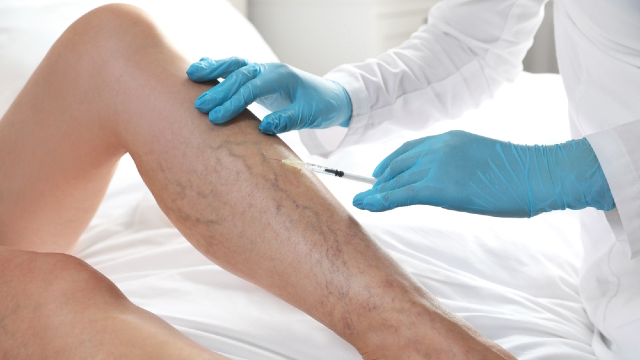
Will My Varicose Veins Come Back After Treatment?
A closed vein and a new varicose vein are different events. Here is what recurrence after vein treatment in Korea means and how follow-up imaging detects it.
Learn More
What to Pack Before Flying to Korea for Vein Surgery
What to pack before flying to South Korea for vein surgery: documents, medication and supplement lists, clothing, compression, and what to arrange at home.
Learn More
What Are Varicose Veins? Causes, Symptoms, and Signs
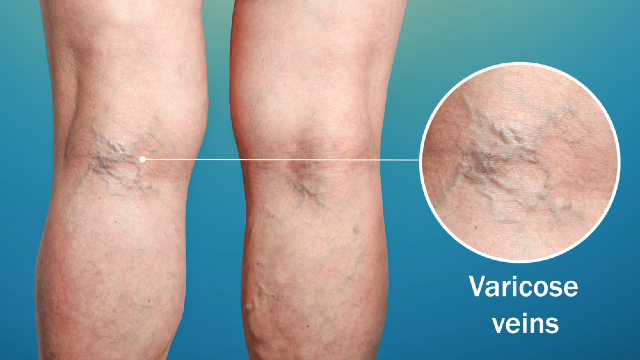
Varicose veins are enlarged, twisted leg veins caused by valve dysfunction. Learn the causes, the symptoms they produce, and when to see a vein specialist.
Learn More