Personalized Medical Care & Dedicated International Patient Concierge

Medical Guide
Venous Reflux Explained: Why Leg Vein Valves Fail
Venous reflux is blood falling backward down a leg vein because a valve no longer seals. Here is how valves work, why they fail, and what follows.
Schedule a ConsultationUnderstanding Venous Reflux: Why Leg Veins Fail and How It Leads to Varicose Veins
Medically reviewed by Dr. Dong-Hyuk Kim, Board-Certified General Surgeon, Medical Director of Ium Hazi Varicose Vein Clinic
Venous reflux is blood falling backward down a leg vein instead of continuing toward the heart, and it happens because a one-way valve inside that vein has stopped sealing. Everything a patient can see — the rope-like bulge behind the knee, the ankle that thickens by evening, the skin that darkens after years — sits downstream of that single mechanical failure. This article is about the mechanism itself: what the valves do, what makes them stop doing it, and how one leaking valve turns into the condition people recognize as varicose veins.
The Hydraulic Problem a Leg Vein Has to Solve
A leg vein has to move blood upward against a column of fluid that is constantly pulling it back down. When you stand, the blood in your foot veins is at the bottom of a vertical column reaching to the heart, and the weight of that column presses downward. Nothing in the vein wall pushes blood against it. Veins have thin walls and very little muscle of their own; unlike arteries, they are not pressurized from behind by a pump.
What moves the blood instead is the leg itself. Every time the calf muscle contracts during a step, it squeezes the deep veins running through it and ejects a volume of blood upward. When the muscle relaxes, pressure inside those veins drops sharply, and blood is drawn in from the smaller veins nearer the skin to refill them. Walking, in other words, is a pump, and the calf is its chamber. MedlinePlus, published by the US National Library of Medicine, notes that staying physically active supports circulation and heart health broadly; in the leg veins the connection is unusually direct, because the muscle is literally part of the plumbing.
The system only works in one direction, and it only works in one direction because of the valves.
What a Venous Valve Actually Is
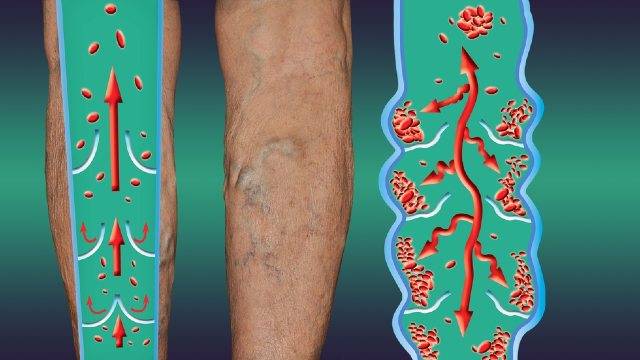
A venous valve is a pair of thin flaps anchored to the inside of the vein wall, facing upward like two cupped hands. Blood traveling toward the heart pushes them flat against the wall and passes freely. Blood that starts to fall back fills the cups, forces them together in the middle, and seals the channel. The whole structure is passive: it is driven by the direction of flow, with no nerve supply and no muscular effort.
These valves are spaced along the length of the leg veins. Their effect is to break that tall vertical column of blood into a stack of short segments, so that no single valve ever has to hold the full weight of blood from the ankle to the heart. As long as each one closes, the pressure any individual segment of vein has to tolerate stays modest, and the pressure at the ankle falls substantially every time you take a few steps.
The vein wall at the level of a valve is normally slightly wider than the vein above and below it, giving the flaps room to open out. That detail matters, because it explains the most common way the mechanism breaks.
Why Valves Stop Sealing
Valves usually fail not because the flaps tear but because the vein around them stretches. If the wall of a vein dilates, the two anchor points move apart. The flaps are a fixed length; once the diameter of the vessel exceeds what they can span, they can no longer meet in the middle, and a gap opens even though the flaps themselves are intact. The National Heart, Lung, and Blood Institute (NHLBI) describes varicose veins as arising when the walls or valves of leg veins weaken or become damaged, allowing blood to pool rather than return efficiently.
Vein wall stretch has several drivers. Sustained high pressure inside the vein is one; prolonged standing keeps the pressure elevated for hours at a time, and long periods without calf movement remove the mechanism that would otherwise lower it. Changes in the strength and elasticity of the connective tissue in the wall are another, and those changes are influenced by inherited traits, by hormonal state, and by age.
Valves can also be damaged directly. A clot that forms inside a vein and then organizes can scar the valve flaps and fix them open, leaving that segment permanently incompetent. MedlinePlus uses the term deep vein thrombosis for a clot arising inside the deep venous system, the leg being its usual site. Reflux that follows an episode of deep vein thrombosis is a different clinical problem from reflux that arises in a vein that has simply dilated over years, and the distinction matters when a treatment is chosen.
Reflux Has a Direction and a Duration
Reflux is not a yes-or-no property of a vein. It is a measurable event with two dimensions, and a physician assessing you is interested in both.
The first dimension is direction: is blood in this named vein, at this level, moving toward the heart or away from it during the moment the valve should be closed? The second is duration: how long does the backward movement last before it stops? A tiny reverse movement as the valve cusps swing shut is normal mechanical behavior and happens in healthy legs. Backward flow that persists is a valve that is not sealing at all.
Ium Hazi Varicose Vein Clinic describes its vascular assessment as identifying the size, shape, and location of the leg veins together with the direction and duration of reflux, evaluated dynamically rather than from a still picture. Ultrasound is the only practical way to obtain either number. The US Food and Drug Administration (FDA) explains that ultrasound imaging produces pictures of structures inside the body using sound waves rather than ionizing radiation, and that it can show internal structures in motion, including blood moving through vessels. That is exactly the property reflux assessment depends on: the finding exists only while flow is changing.
The Recirculation Loop: One Leak Becomes a Circuit
This is the step that explains why a single failed valve does not stay a single failed valve.
When a valve high in a superficial vein stops sealing, blood that the calf pump has just sent upward through the deep system finds a route back down. It leaves the deep veins, travels down the incompetent superficial trunk, and re-enters the deep system lower in the leg through a connecting vein. Then the next contraction of the calf sends it up again. A portion of the blood in that leg is no longer completing a circuit to the heart and back; it is circling within the leg.
Two consequences follow. The first is volume: the deep system now has to move the same blood repeatedly, so its workload rises. The second is pressure. The descending column in the leaking superficial vein is no longer broken into short segments, so the pressure it exerts at the bottom is the pressure of the whole height it falls through. That pressure is transmitted to every smaller vein draining into it.
Those smaller veins then dilate under the load. When they dilate, their own valves are pulled apart and stop sealing. The failure propagates downward and outward, recruiting tributaries that were previously normal. This is why venous disease tends to involve a progressively larger territory over time rather than staying where it started, and why the visible veins usually appear some distance below the valve that actually failed.
Venous Hypertension and What It Does to Tissue
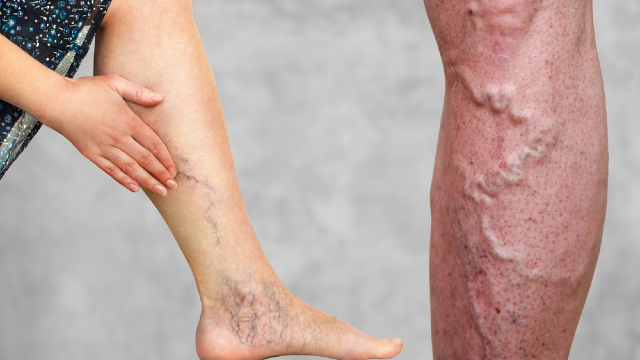
The sustained pressure produced by that loop has a name — venous hypertension — and it is the agent behind nearly every symptom and sign of the condition.
Raised pressure inside the smallest vessels pushes fluid out into the surrounding tissue faster than the lymphatic system can carry it away, which produces the swelling that appears through the day and partly resolves overnight. It causes the aching, heaviness, and fatigue that patients typically describe as worst in the evening and after long periods of standing. Ium Hazi Varicose Vein Clinic lists swelling, heaviness, pain, visible veins, cramps, itching, and skin changes among the reasons patients present for venous assessment.
Over years, the same pressure alters the skin of the lower leg. Pigment leaks from red cells that escape into the tissue and stains the skin above the ankle. The tissue becomes firmer and less pliable. At the far end of that process the skin can break down. The clinic names pain, swelling, thrombosis and skin ulcers among the things varicose veins may be associated with, and states that where the condition goes untreated or advances, circulation problems can follow, with thrombosis and ulceration of the skin among the complications of more severe cases. Those are not decorative warnings; they are the endpoint of untreated venous hypertension, and they are the reason this is classified among vascular diseases rather than among cosmetic complaints.
Why the Leg's Appearance Does Not Measure the Reflux
Patients reasonably assume that a dramatic-looking leg has severe reflux and a smooth-looking leg does not. Neither inference is reliable.
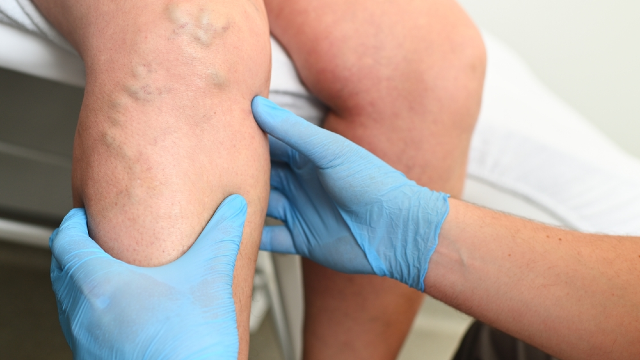
A person can have a large volume of reflux in a saphenous trunk with almost nothing visible at the surface, because the trunk itself lies below the layer of fat under the skin and does not bulge. That person may have significant aching and swelling and no obvious veins to point at. Conversely, a person can have prominent, twisted surface veins with modest reflux behind them.
This is why a treatment plan built on appearance alone is a guess. Dr. Dong-Hyuk Kim states his approach as identifying the underlying cause of varicose veins accurately through precise vascular ultrasound examination, and then providing only the treatment or combination of treatments that the individual patient needs, without adding unnecessary procedures. That principle depends entirely on the reflux having been located and quantified first.
It also explains why the clinic's documented practice is to assess several categories of vein — the deep veins, the saphenous veins, the subcutaneous veins, and the perforating veins that connect the superficial system to the deep one — rather than only the vessels a patient can see. A perforating vein whose valve has failed transmits pressure outward from the deep system to the surface, and it can keep a surface problem running after other veins have been dealt with.
Reflux Is a Chronic Property of the Venous System
Closing a refluxing vein addresses that vein. It does not change the inherited wall characteristics, the hormonal history, or the daily loading pattern that allowed the vein to dilate in the first place, and it does nothing to the veins that were normal on the day of the assessment.
The clinic is direct about this. Its published statements on results note that long-term outcomes vary and that new or previously untreated veins may develop reflux in the future, and that venous disease can be progressive. Follow-up imaging exists for that reason: it confirms that a treated vein is closed and it detects reflux appearing somewhere new. A realistic frame is management of a chronic venous system rather than a single corrective event.
Who Would Assess Reflux in Your Legs
Ium Hazi Varicose Vein Clinic sits in Seocho-gu, Seoul, and has treated one condition and nothing else since 2009. Its structure is a single-director system, which in practice means one physician owns the whole sequence: Dr. Dong-Hyuk Kim conducts the consultation, performs the ultrasound himself, carries out any procedure, and sees you at follow-up. For a condition defined by a dynamic measurement, that continuity is not incidental. The person who watched the backward flow on the screen is the person deciding what to do about it.
Dr. Dong-Hyuk Kim holds board certification in general surgery and took his medical degree at Sungkyunkwan University School of Medicine. The clinic's own published count is 7,300+ saphenous vein surgeries carried out between 2009 and 2024, and it took the varicose vein category prize at Medical Asia 2024. Its working method and equipment are described on the clinic's about page, and an assessment can be arranged through the contact page.
MedlinePlus publishes general guidance on choosing a doctor or health care service that applies here as anywhere: ask about credentials, and ask how much experience the clinician has with your specific condition.
The Bottom Line
- Leg veins move blood upward using the calf muscle as a pump and one-way valves to stop it falling back; reflux is what happens when a valve no longer seals.
- Valves most often fail because the vein wall around them stretches and the flaps can no longer meet, not because the flaps themselves tear; a previous clot can also scar them open.
- Reflux is described by direction and duration, and both are obtained from dynamic ultrasound rather than from looking at the leg.
- One incompetent valve creates a recirculation loop that raises pressure in every vein draining into it, which is how the problem spreads to previously normal tributaries.
- Sustained venous hypertension produces the swelling, aching, and skin changes of the condition, and at its extreme the clinic names thrombosis and skin ulcers among the complications of untreated disease.
Frequently Asked Questions
Is venous reflux the same thing as varicose veins?
No. Reflux is the flow abnormality — blood moving backward in a vein because a valve is not sealing. Varicose veins are one visible consequence of it. You can have measurable reflux with few or no visible veins, which is why the diagnosis is made from ultrasound findings rather than from appearance.
Can a failed venous valve repair itself?
A valve that has stopped sealing because the vein around it has widened does not return to competence on its own, and a valve scarred by a previous clot stays scarred. Treatment for venous disease is therefore directed at the consequences of the leak, usually by closing or removing the refluxing vein so that blood is routed through healthier vessels.
Why does my leg feel worse in the evening?
Standing and sitting keep the pressure in the leg veins high for hours, and without calf contraction there is little to lower it. Fluid accumulates in the tissue through the day, which produces the heaviness, aching, and ankle swelling that peak by evening and partly settle overnight once the leg is horizontal.
Does walking help venous reflux?
Walking does not repair a valve, but it activates the calf muscle pump, which is the mechanism that lowers pressure in the leg veins. MedlinePlus again: staying physically active supports circulation and heart health broadly. Interrupting long periods of sitting or standing and elevating the legs when you can are sensible measures at any stage of venous disease.
How is the amount of reflux actually measured?
With dynamic ultrasound. The examiner watches blood flow inside a named vein and records both the direction it moves and how long any backward movement lasts. Ium Hazi Varicose Vein Clinic documents assessment of the deep, saphenous, subcutaneous, and perforating veins and explains the findings using real-time images and moving flow rather than static pictures alone.
If one vein is treated, will reflux appear somewhere else?
It can. The clinic states that new or previously untreated veins may develop reflux in the future and that long-term results vary, which is why scheduled follow-up imaging is part of its aftercare. Treating a refluxing vein addresses that vein rather than the underlying tendency of the venous system to dilate.
This article is for general informational purposes and does not constitute individualized medical advice. Candidacy, technique, and expected outcomes can only be determined through a consultation with a qualified physician, and this article is not a self-diagnosis tool.
References
- NHLBI: Varicose Veins
- MedlinePlus: Varicose Veins
- MedlinePlus: Vascular Diseases
- MedlinePlus: Deep Vein Thrombosis
- MedlinePlus: Exercise and Physical Fitness
- MedlinePlus: Choosing a Doctor or Health Care Service
- FDA: Ultrasound Imaging
More Articles
Continue reading our clinical guides.
Will My Varicose Veins Come Back After Treatment?
A closed vein and a new varicose vein are different events. Here is what recurrence after vein treatment in Korea means and how follow-up imaging detects it.
Learn More
What to Pack Before Flying to Korea for Vein Surgery
What to pack before flying to South Korea for vein surgery: documents, medication and supplement lists, clothing, compression, and what to arrange at home.
Learn More
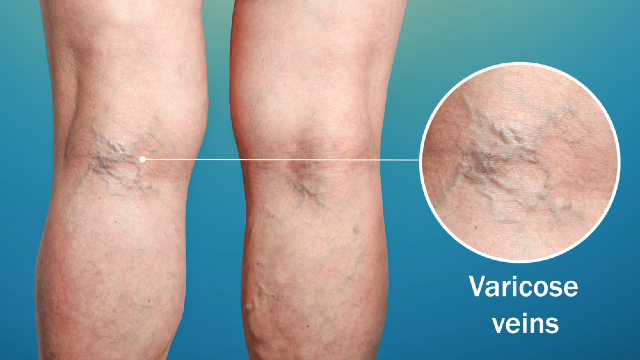
What Are Varicose Veins? Causes, Symptoms, and Signs
Varicose veins are enlarged, twisted leg veins caused by valve dysfunction. Learn the causes, the symptoms they produce, and when to see a vein specialist.
Learn More