Personalized Medical Care & Dedicated International Patient Concierge

Medical Guide
Varicose Veins in Standing Jobs: Nurses, Teachers, Retail
A standing job loads your leg veins all shift. Here is what prolonged standing does to them, what helps at work, and when to have your legs assessed.
Schedule a ConsultationVaricose Veins in Standing Jobs: Nurses, Teachers, Retail
Medically reviewed by Dr. Dong-Hyuk Kim, Board-Certified General Surgeon, Medical Director of Ium Hazi Varicose Vein Clinic
If you work a standing job, varicose veins are a recognized occupational concern rather than a coincidence. The National Heart, Lung, and Blood Institute (NHLBI) lists long periods spent standing among the factors associated with damaged vein valves, and a nursing shift, a teaching day, and a retail rotation all supply that exposure in large amounts. This article looks at what standing work does to the venous system, how the exposure differs between these jobs, which measures genuinely help during a shift, and the point at which leg symptoms stop being an occupational nuisance and become a reason to have the leg examined.
What Standing Does to the Venous System
Standing removes the help your leg veins depend on. Blood in a leg vein has to travel upward against gravity, and it does that mainly because the calf muscles squeeze the deep veins with every step while one-way valves stop the blood from sliding back down between squeezes. This arrangement is often called the calf muscle pump, and its output depends entirely on the calf moving.
When you stand without walking, the calf is holding a posture rather than pumping. The column of blood between the foot and the heart is then supported almost entirely by the valves and the vein walls, and the pressure inside the lower leg veins stays elevated for as long as you remain upright. Ium Hazi Varicose Vein Clinic describes varicose veins as leg veins that have become enlarged or twisted where the valves fail to work properly and blood pools or travels backward, a state the clinic calls reflux. Sustained high pressure is one of the conditions under which valves are worked hardest.
MedlinePlus, the patient information service of the US National Library of Medicine, groups varicose veins with the wider set of vascular diseases that affect the circulatory system, and both it and the NHLBI describe the consequences of raised venous pressure in the lower leg: pooling, aching, swelling, and, over longer periods, changes in the skin. Standing work is not the only route to that state, and most people who stand for a living do not develop significant venous disease. What a standing job does is add a daily, repeated load to whatever vein structure you inherited.
Standing Still and Moving Around Are Different Exposures
The relevant variable is not hours upright but hours upright without calf movement. Two jobs with identical shift lengths can place very different demands on the veins depending on how much walking the work involves.
A shift spent walking corridors keeps the calf pump working through most of the day. A shift spent largely stationary behind a counter, at a bedside, or in front of a class does not, even though it feels no easier. The most demanding pattern is static standing in a confined space, where the feet stay planted and small weight shifts replace actual steps. Sitting for long stretches without moving loads the veins in a related way, which is why the advice for an office worker and the advice for a cashier converge on the same instruction: interrupt the posture.
Nurses, Teachers, and Retail Workers Face Different Versions of It
These three occupations are usually grouped together, but their exposure profiles diverge in ways that matter when you are deciding what to change.
Nursing combines long shifts with an unpredictable mix of walking and prolonged stationary work, often with no reliable opportunity to sit or to elevate the legs, and frequently with night rotations that shift the rest of the day around. The walking portion works in your favor; the stretches spent standing at a bedside or a table do not, and the lack of control over when breaks happen is itself part of the exposure.
Teaching tends to involve standing in a small area for extended blocks, with movement limited to a few paces, followed by periods of sitting. The stationary component is high even though total distance covered is low. Voice and attention are on the class, so the early leg symptoms are easy to set aside until the end of the day.
Retail work often means a fixed station, a hard floor, and a shift structure that discourages sitting even when the work would allow it. Footwear is frequently chosen for uniform policy rather than support. None of these three jobs is worse than the others in any absolute sense, but each creates a specific pattern, and the countermeasures that fit a nursing rota are not the ones that fit a classroom. Treatment, if it is needed at all, addresses the vein that was treated; the clinic states that untreated veins, and veins affected later, can cause problems in the future, so the occupational exposure still has to be managed afterward.
Symptoms That Get Written Off as Part of the Job
The symptoms of venous overload are ordinary enough that people working these jobs routinely attribute them to the work rather than to the legs. The presenting picture Ium Hazi Varicose Vein Clinic describes is swelling, heaviness in the leg, pain, cramping, itching, veins you can see, and changes in the skin, with the case that matters being the one where those findings interfere with daily activities.
In an occupational setting the pattern usually looks like this. The legs feel normal at the start of the shift. Heaviness and aching accumulate through the afternoon. Shoes feel tighter by the end of the day and sock marks stay visible at the ankle. Cramping arrives at night. The legs feel markedly better after a day off, which is precisely why the symptoms get filed as fatigue rather than as circulation.
Two observations are worth separating from that picture. First, symptoms that resolve completely with rest and symptoms that persist into the next morning are not the same finding. Second, how a leg looks does not indicate how much reflux it has. Ium Hazi Varicose Vein Clinic evaluates venous findings by ultrasound rather than by appearance, and a leg with unremarkable surface veins can have a significantly refluxing trunk beneath it.
What Genuinely Helps During a Shift
The useful measures all come back to restoring calf movement and reducing the time spent motionless upright.
Short, frequent interruptions of static standing do more than one long break. Calf raises at a counter, a deliberate walk to the far end of the ward or the classroom, shifting weight from foot to foot with an actual heel lift, and using a low footrest to alternate which leg carries the load all put the calf pump back to work briefly. Anti-fatigue matting, where the workplace allows it, reduces the rigidity of the standing surface. Supportive footwear that permits the ankle to move through its range matters more than cushioning alone, because an ankle locked in place limits the calf action that drives the pump.
Off shift, elevating the legs above the level of the heart for a period in the evening reduces the pooled volume that accumulated during the day. Regular walking outside work belongs in the same category rather than being a contradiction of it: MedlinePlus notes that regular physical activity supports circulation and general cardiovascular health, and the calf pump works only when the calf works. Hydration and weight management are general contributors; the NHLBI names excess body weight among the factors that increase venous load.
These measures manage the daily load. None of them repairs a valve that has already failed, and it is worth being clear about that distinction rather than expecting a change of shoes to reverse a structural problem.
Compression at Work, and Where the Limits Are
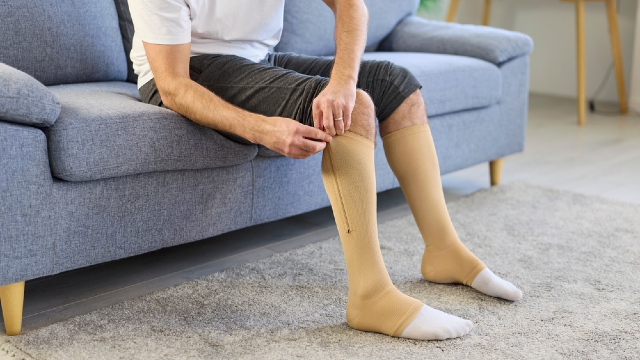
Graduated compression is the measure most often recommended for people who stand for a living, and Ium Hazi Varicose Vein Clinic applies compression stocking therapy where varicose veins, chronic venous insufficiency, swelling, heaviness, or aching call for it, choosing the pressure grade and the length of the garment after examining and measuring the leg rather than off a shelf.
The clinic also states the limits plainly. Compression manages symptoms while it is worn; it does not correct the underlying venous problem and does not prevent new vein problems from developing. It states that where peripheral arterial disease is suspected or significant, compression is not applied until the leg has been properly assessed, and that caution or a specialist opinion may be needed with severe peripheral neuropathy, fragile or damaged skin, certain ulcers, recent skin grafts, severe leg swelling, an unusual leg shape, or any leg where a safe fit is hard to obtain. MedlinePlus describes peripheral arterial disease as a narrowing of the arteries that carry blood into the limbs, with less blood reaching the lower leg and the foot as a result. That is the reason arterial circulation has to be established before external pressure is put on a leg.
The clinic adds that a garment of the wrong size or the wrong type can damage skin or restrict circulation, and that a foot which turns severely painful, numb, discolored, or cold needs prompt medical assessment. Accurate leg measurement is part of using compression correctly, which is why fitting is a clinical step rather than a purchase.
When Occupational Leg Symptoms Warrant an Assessment
The threshold that Ium Hazi Varicose Vein Clinic applies is whether symptoms affect daily activities. Translated into working life, an assessment is reasonable when you are arranging your day around your legs: leaving the evening walk out, choosing footwear for swelling, taking analgesics before a shift rather than after one, or losing sleep to cramps.
Several findings move past that threshold and should be evaluated without being folded into the usual end-of-shift picture. Skin around the ankle that darkens, thickens, or itches in the same patch repeatedly indicates that raised pressure has begun to affect tissue rather than only producing sensations. A segment of surface vein that becomes firm, warm, red, and tender needs medical evaluation. Bleeding from a leg vein, and any open area on the lower leg that does not close, should be assessed by a physician. Thrombosis and skin ulceration both appear on Ium Hazi Varicose Vein Clinic's own list of what varicose veins that go untreated, or that continue to progress, can be associated with.
Sudden swelling of one leg with pain, tenderness, or warmth, and any chest pain or shortness of breath, are emergency symptoms and call for emergency care. The Centers for Disease Control and Prevention (CDC) lists prolonged immobility, recent surgery or injury, pregnancy, older age, certain cancers, and a personal or family history of clots among the factors that raise the risk of venous thromboembolism.
What the Assessment Actually Establishes
An assessment answers a question that no amount of workplace adjustment can answer: whether a specific vein in your leg is refluxing, and which one.
Ium Hazi Varicose Vein Clinic examines the deep veins, the saphenous veins, the subcutaneous veins, and the perforating veins with vascular ultrasound, recording their size, shape, and position while showing blood flow and backward flow as they happen. The examination is non-invasive, needs no anesthesia, and is usually finished inside one clinic visit. Ultrasound imaging works by sending sound into the body and reading what comes back, and the US Food and Drug Administration (FDA) points out that no ionizing radiation is involved in doing so.
The findings determine what follows. Dr. Dong-Hyuk Kim states his approach as identifying the underlying cause precisely through vascular ultrasound and then providing only the treatment or combination of treatments a patient actually needs, without unnecessary procedures. A result showing no significant reflux is a useful result: it tells you that your leg symptoms have another explanation and that the workplace measures above are the appropriate response. Where reflux is confirmed in a treatable vein, the clinic documents options including endovenous laser ablation, radiofrequency ablation, adhesive-based closure, mechanochemical ablation, point micro-surgery, and cryoablation, with the choice made by the physician after imaging. A diagnostic consultation is the step that opens that conversation, and it can be arranged through the clinic's contact page.
Returning to a Standing Job After Treatment
If treatment does go ahead, the return to a job spent upright is governed by the treating physician rather than by a general rule. Ium Hazi Varicose Vein Clinic's stated aftercare is to follow the physician's instructions on walking, activity, medications, wound care, and compression, and specifically to avoid strenuous activity or prolonged standing for the period the treating physician recommends. Recommended follow-up examinations and ultrasound assessments are part of the same instruction set; the clinic's stated schedule is a review at about one week and an ultrasound check at roughly one to two months.
For someone whose work is the exposure, that period needs planning rather than improvisation. A phased return, a temporary change of duties, or scheduling around a quieter part of the rota are practical questions to raise at the consultation, because the answer depends on the extent of treatment and on how much of your shift is spent standing still.
Who Would Carry Out the Assessment
One physician handles the whole sequence at Ium Hazi Varicose Vein Clinic, which matters when the question you are asking is occupational and needs following over time. The practice, in Seocho-gu, Seoul, has worked on nothing but varicose vein diagnosis and treatment since 2009, and its single-director system means Dr. Dong-Hyuk Kim conducts the consultation, reads the imaging, performs any procedure, and sees you afterward. There is no handover between whoever interprets your ultrasound and whoever treats you.
He is a board-certified general surgeon, trained in medicine at Sungkyunkwan University School of Medicine, and holds an adjunct professorship at Samsung Medical Center. His society work includes an Executive Director role with the Korean Society of Phlebology and participation in the Venous Disease Research Society. Experience is stated as more than 15 years devoted to varicose vein care, and the practice publishes the figure 7,300+ saphenous vein surgeries performed between 2009 and 2024 as its own record. Surgical volume is deliberately held to one or two cases a day so that attention is not divided. How the practice is organized is described further on the about page.
MedlinePlus publishes general guidance on talking with your doctor that fits an appointment of this kind: note your questions before you go, describe the pattern of your symptoms across a working week rather than a single day, and ask what happens if nothing is done.
The Bottom Line
- Prolonged standing is listed by the NHLBI among the factors associated with weakened or damaged vein valves, because a calf that is not contracting is not pumping blood out of the leg.
- Time spent stationary matters more than time spent upright, so a mostly static shift can load the veins more than a shift spent walking.
- End-of-shift heaviness, ankle swelling, night cramps, and itching are the symptoms most often attributed to the work rather than to the circulation.
- Frequent calf movement, supportive footwear, evening elevation, and clinically fitted compression manage the daily load; they do not repair a valve that has already failed.
- Skin change at the ankle, a firm and painful vein segment, bleeding, or an open area on the lower leg should be assessed by a physician rather than absorbed into the usual end-of-day picture.
Frequently Asked Questions
Does a standing job cause varicose veins on its own?
Prolonged standing is one recognized contributing factor among several. The NHLBI also names family history, age, pregnancy, and excess body weight, and inherited vein wall and valve structure is a large part of why two people in the same job have different outcomes. Standing work raises the load on the venous system rather than acting as a sole cause.
Is sitting all day better for my legs than standing all day?
Both postures share the same problem, which is a calf that is not moving. The useful distinction is movement rather than posture, so a job that alternates walking with periods of standing generally loads the veins less than a job spent motionless in either position. Interrupting the posture regularly is the measure that applies to both.
Should I buy compression stockings for work myself?
Compression level and garment length are determined after clinical assessment, and accurate leg measurement is part of selecting the right garment. Ium Hazi Varicose Vein Clinic states that compression should not be used without appropriate assessment where peripheral arterial disease is suspected or significant, and that an incorrectly fitted garment can cause skin injury or compromise circulation. Having the fitting done clinically is the safer route.
My legs only ache at work and feel fine on days off. Is that still worth checking?
It is worth describing to a physician, because the pattern itself is informative. Symptoms that build with standing and settle with rest fit venous overload, and an assessment can establish whether a refluxing vein is behind them. A finding of no significant reflux is a useful answer that redirects attention to the workplace measures.
Will a vein procedure let me keep working a standing job?
Ium Hazi Varicose Vein Clinic advises avoiding strenuous activity and prolonged standing for the period the treating physician recommends after treatment, and structures follow-up with an examination within about one week and ultrasound within roughly one to two months. How your specific job fits that period is a question for the consultation, since it depends on the extent of treatment. Outcomes vary between patients and cannot be predicted in advance.
Do anti-fatigue mats and better shoes make a measurable difference?
They address the mechanical side of standing work by reducing the rigidity of the surface and allowing the ankle to move more freely, which supports the calf pump. They sit alongside frequent calf movement and evening elevation as ways to manage the daily load. They are not a substitute for assessment when symptoms persist or when the skin at the ankle starts to change.
This article is for general informational purposes and does not constitute individualized medical advice. Candidacy, technique, and expected outcomes can only be determined through a consultation with a qualified physician, and this article is not a self-diagnosis tool.
References
- NHLBI: Varicose Veins
- MedlinePlus: Varicose Veins
- MedlinePlus: Vascular Diseases
- MedlinePlus: Exercise and Physical Fitness
- MedlinePlus: Peripheral Arterial Disease
- CDC: Risk Factors for Blood Clots
- MedlinePlus: Talking With Your Doctor
- FDA: Ultrasound Imaging
More Articles
Continue reading our clinical guides.
Will My Varicose Veins Come Back After Treatment?
A closed vein and a new varicose vein are different events. Here is what recurrence after vein treatment in Korea means and how follow-up imaging detects it.
Learn More
What to Pack Before Flying to Korea for Vein Surgery
What to pack before flying to South Korea for vein surgery: documents, medication and supplement lists, clothing, compression, and what to arrange at home.
Learn More
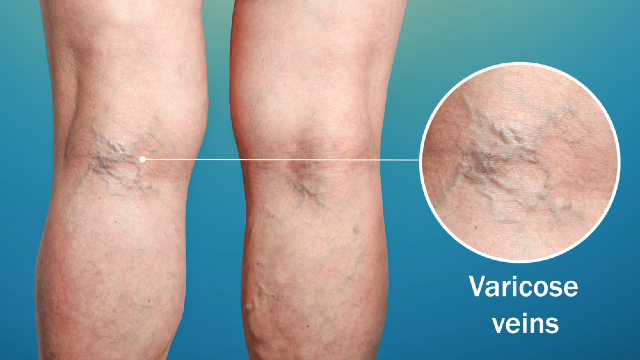
What Are Varicose Veins? Causes, Symptoms, and Signs
Varicose veins are enlarged, twisted leg veins caused by valve dysfunction. Learn the causes, the symptoms they produce, and when to see a vein specialist.
Learn More