Personalized Medical Care & Dedicated International Patient Concierge

Medical Guide
Varicose Veins in Athletes and Runners: Limiting Downtime
Athletes with varicose veins face a specific question: how long before training resumes. Here is what sets downtime, and how to tell veins from reflux.
Schedule a ConsultationVaricose Veins in Athletes and Runners: Treatment Without Long Downtime
Medically reviewed by Dr. Dong-Hyuk Kim, Board-Certified General Surgeon, Medical Director of Ium Hazi Varicose Vein Clinic
Varicose veins in athletes and runners raise a question most patients never ask: not whether treatment works, but how many training days it takes. The honest answer is that no clinic publishes a fixed return-to-running date, because the interval depends on what is treated and how much of it. What an active patient can do is understand which variables move that date, and separate a genuinely varicose vein from the prominent veins that trained legs develop anyway. Ium Hazi Varicose Vein Clinic in Seocho-gu, Seoul, works from minimally invasive techniques and a same-day admission-and-discharge model, and this article explains what that means for a training schedule.
Visible Veins in a Trained Leg Are Not Automatically a Problem
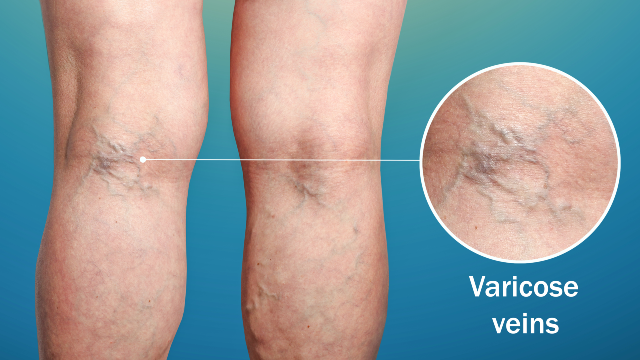
Many endurance athletes have conspicuous leg veins that are entirely healthy. Low subcutaneous fat leaves superficial vessels close to the surface with little tissue covering them, and trained muscle pushes them further forward. Vessels also widen during and after exercise as the body moves heat and blood to working tissue, which is why the veins on a runner's calf look most dramatic twenty minutes after a hard session and far less so the next morning.
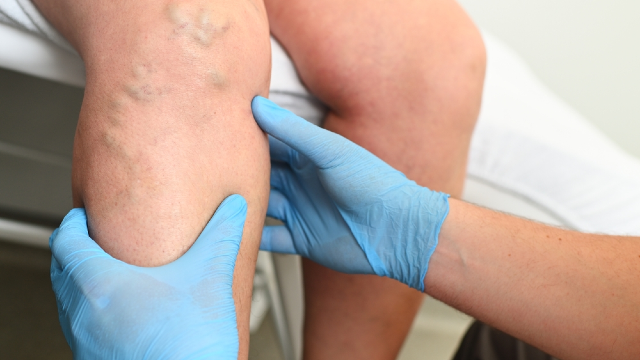
None of that is disease. The distinction that matters is structural. The National Heart, Lung, and Blood Institute describes varicose veins as veins that have become enlarged and twisted because valves inside them no longer keep blood moving in one direction. MedlinePlus, the patient education service of the US National Library of Medicine, adds that they commonly appear dark blue or purple, look swollen and raised, and may be accompanied by aching, heaviness, burning, throbbing, muscle cramping, or swelling in the lower leg.
Three rough contrasts help an athlete decide whether to get assessed. A healthy prominent vein tends to run relatively straight and flatten when the leg is elevated; a varicose vein tends to be rope-like, tortuous, and stays raised. A healthy prominent vein is most obvious right after training; a varicose vein is often most obvious at the end of a long day on your feet. And a healthy prominent vein does not ache. None of these is diagnostic on its own — only imaging distinguishes a dilated but competent vein from one carrying backward flow — but together they tell you whether the question is worth taking to a physician.
Does Running Cause Varicose Veins?
Running is not among the recognized drivers of venous valve failure. The National Heart, Lung, and Blood Institute lists factors such as older age, family history, pregnancy, being overweight, and work or habits that involve standing or sitting still for long stretches. Regular movement sits on the other side of that ledger: MedlinePlus notes that physical activity supports circulation and cardiovascular health generally.
The mechanism is worth knowing because it explains the aftercare instructions later in this article. Every time your calf contracts, it squeezes the deep veins inside the muscle compartment and drives blood upward — the calf muscle pump. Running exercises that pump continuously. Standing at a start line for forty minutes, sitting through a long flight to a race, or driving four hours to a trailhead does the opposite.
So the common athlete assumption — that training caused this — is usually misplaced. What training does is make the veins easier to see, and what an athlete's lifestyle sometimes does is combine heavy leg use with long immobile stretches around competition and travel. If a parent or sibling has varicose veins, that inheritance matters more than your weekly mileage.
Symptoms That Should Send an Athlete for Assessment
The symptoms worth acting on are the ones that track with venous load rather than with training load. Aching or heaviness that builds through a day of standing and eases when you put your legs up fits a venous pattern. So does swelling around the ankle by evening, night cramping, restlessness in the legs at night, and itching or skin changes over a prominent vein.
A pattern that runs the other way deserves attention for a different reason. MedlinePlus and the National Heart, Lung, and Blood Institute both describe peripheral artery disease as narrowed arteries reducing blood supply to the limbs, typically causing leg pain or cramping that appears during walking or exercise and settles with rest. Pain that arrives reliably at a certain distance and disappears when you stop is not the venous pattern, and it needs its own evaluation. Ium Hazi Varicose Vein Clinic also lists severe peripheral arterial disease among the conditions that can make someone unsuitable for endovenous ablation, and notes that significantly reduced arterial circulation may call for alternatives to compression stockings.
One more scenario belongs here because athletes travel. The CDC explains that extended immobility raises the risk of clots forming in the deep veins of the legs. A calf that becomes painful, swollen, warm, or discolored on one side after a long flight to an event is not a training niggle, and it should be assessed promptly rather than run off.
What Actually Determines Downtime
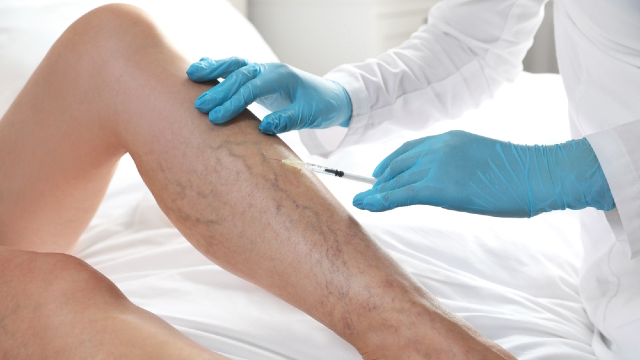
Downtime is set by the extent of treatment, not by the name of the technology. Ium Hazi Varicose Vein Clinic states that recovery after endovenous ablation varies according to the method used, the number of veins treated, and individual response — three variables that no article can settle in advance of your imaging.
Some of the clinic's documented figures give a sense of scale. For radiofrequency ablation it lists a procedure time of roughly 30 minutes to an hour, describes same-day discharge as possible, and states that most people can resume normal life the following day. For VenaSeal vein closure it lists a similar procedure time with same-day admission and discharge, and states that recovery is shorter than with other treatments, with the physician advising when normal activities may resume. Mechanochemical ablation is likewise described as commonly taking about 30 minutes to an hour on an outpatient basis with same-day discharge possible. For varicose vein surgery, discharge comes on the afternoon of the operative day, with an examination about a week later and imaging within roughly one to two months.
Two things follow for an active patient. First, "normal life the following day" refers to ordinary daily movement, not to a tempo run. Second, a plan that combines closing a saphenous trunk with removing prominent surface veins in the same visit treats more tissue than closure alone, and the clinic notes that bruising, tenderness, and tightness after its ablation and surgical procedures may continue for several days to a few weeks.
The clinic's structural choices work in an active patient's favor at the margins. It describes a same-day admission-and-discharge model, and a "3-No" protocol for its signature procedures: no spinal anesthesia, no stitch removal, and no compression stocking on the day of surgery. No stitch removal in particular takes one return visit out of a travel itinerary.
Returning to Training Happens in Stages
Movement comes back in a fixed order, and only the first stage is immediate. Walking is encouraged from the outset — the clinic builds a post-procedure assessment and a walk into the discharge sequence for its endovenous ablation treatments, and asks patients to walk regularly during recovery rather than sit still. Light daily activity follows over the next day or days depending on the procedure.
Strenuous and high-impact exercise is the last stage, and the clinic does not attach a number to it. Across its ablation and surgical procedures the instruction is to leave strenuous exercise alone until the treating physician says otherwise, alongside whatever has been specified about walking, wound care, compression, and follow-up visits. On the non-surgical side, the clinic puts heavy lifting in the same category as hard exercise and describes a restriction lasting several days or more, varying with the procedure. For cosmetic vein treatment it names specific things to stay away from during recovery — direct sun exposure, hot baths, saunas, and high-impact exercise.
That last list deserves a flag for athletes, because saunas and hot baths are standard recovery tools in many training programs, and they are named as things to avoid rather than as neutral choices during that window.
There is also a caution that cuts against an endurance athlete's instincts. After radiofrequency ablation and VenaSeal vein closure, the clinic advises against excessive walking or overexertion, particularly when it causes discomfort. The instruction is regular, moderate movement — not a volume target you can attack. MedlinePlus makes the general point in its guidance on recovering after surgery: following your written instructions and keeping your follow-up appointments does more for recovery than any timetable found online. On discomfort, MedlinePlus notes that pain is information rather than something to be pushed through, and that new or worsening pain should be discussed with a clinician. Soreness that fades week by week is expected; soreness that escalates is a reason to stop and ask.
Planning Treatment Around a Season
Because the return-to-sport date is set individually, the sensible approach is to build slack into the calendar rather than to aim for a deadline. A few points make that practical.
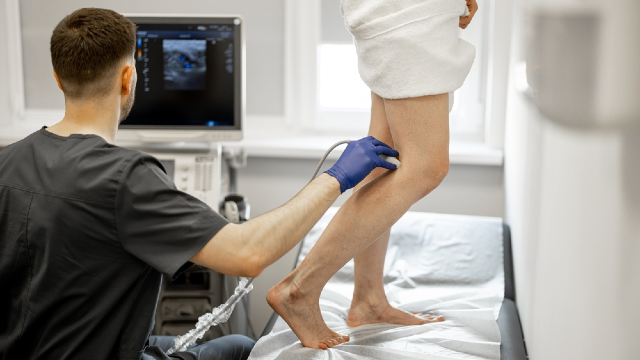
Raise your training schedule at the consultation, not afterward. The clinic determines candidacy after examination and vascular ultrasound, so what is going to be treated — and therefore what recovery looks like — is only known once imaging is done. That is the right moment to ask what a realistic staged return looks like for your specific plan.
Treat the trip as part of the recovery. The clinic states that air travel should be planned only after the treating physician confirms it is appropriate, and that the timing depends on the extent of treatment, recovery, and individual clot risk factors. It also advises against driving yourself on the day of the procedure, recommending public transportation instead. For international patients it describes generally needing one day in Korea for the initial consultation, vascular ultrasound, and treatment planning, with the overall stay depending on the findings and the follow-up schedule.
Book early rather than late. The clinic operates a single-director system in which Dr. Dong-Hyuk Kim personally handles each consultation, diagnostic scan, procedure, and follow-up, with a deliberately limited caseload of one to two surgeries per day. A calendar built that way is not easily rearranged at short notice, which matters if you are trying to fit a procedure into a specific gap between seasons.
Plan the compression question in advance too. The clinic prescribes compression individually rather than automatically, notes that a stocking is not worn on the day of surgery under its "3-No" protocol, and states elsewhere that graduated compression controls symptoms rather than correcting the underlying venous problem. Fit is assessed at the clinic rather than guessed at, and people with significantly reduced arterial circulation may need a different approach entirely.
What Treatment Does Not Promise
No responsible account of vein treatment offers an athlete a performance outcome, and none is documented here. What the clinic describes is closing or removing an abnormal vein so that blood is redirected through healthier ones, which may improve symptoms associated with reflux and may reduce the appearance of the treated veins.
Recurrence remains possible. The clinic states that new or untreated veins can develop problems in the future and that long-term results vary, and that venous disease can be progressive. Training hard afterward neither causes nor prevents that; follow-up imaging is how it gets detected. The clinic's post-procedure aftercare includes scheduled vascular ultrasound examinations along with individualized compression guidance, and it notes that a next-day examination may be recommended when circumstances call for it.
Risks are stated plainly rather than minimized. For its ablation procedures the clinic lists bruising, swelling, tenderness, tightness, temporary numbness, skin irritation, or discomfort along the treated vein as possible effects, and less commonly infection, nerve irritation, blood clots, skin injury, allergic reaction to certain materials, or reopening of the treated vein. Prompt contact is requested for leg pain or swelling that is severe or increasing, for marked changes in the skin, and for fever, chest pain, or breathlessness.
Dr. Dong-Hyuk Kim is a board-certified general surgeon and the clinic's Medical Director, educated at Sungkyunkwan University School of Medicine. Varicose vein care has had more than 15 years of the clinic's dedicated attention by its own account, and the figure it publishes for itself is 7,300+ saphenous vein surgeries across 2009 to 2024. Business registration 135-91-93104 covers the practice, the Ministry of Health and Welfare certifies it as a Registered Medical Institution for Attracting Foreign Patients, and the varicose vein category of the Medical Asia 2024 Grand Prize went to it. Documented cases are shown on its before and after page, and a diagnostic consultation can be arranged through its contact page.
The Bottom Line
- Prominent veins are common in trained legs; the structural signs of a varicose vein are a rope-like, twisted vessel that stays raised and is accompanied by aching, heaviness, cramping, or swelling.
- Running is not a recognized cause of valve failure; family history, age, pregnancy, weight, and long immobile periods are the factors usually cited.
- Downtime is governed by the extent of treatment, the number of veins treated, and individual response rather than by the technology alone.
- Return happens in stages: walking almost immediately, light daily activity within about a day for the lighter procedures, and strenuous or high-impact exercise only once the treating physician clears it.
- Saunas, hot baths, and high-impact exercise are named among the things to avoid during recovery from cosmetic vein treatment, which affects routines many athletes take for granted.
Frequently Asked Questions
Does running make varicose veins worse?
Running is not listed among the recognized causes of venous valve failure, and MedlinePlus notes that regular physical activity supports circulation generally. If running produces aching, heaviness, or swelling in a leg with visible veins, that is a reason for a vascular assessment rather than an argument for stopping training on your own.
How do I tell athletic veins from varicose veins?
Athletic prominence usually means straight, soft vessels that stand out after exercise and flatten with elevation. Varicose veins tend to be twisted and rope-like, stay raised, and often bring aching, heaviness, night cramping, or ankle swelling by evening. Vascular ultrasound is what distinguishes the two definitively.
How soon can I run again after vein treatment?
There is no published number, because the answer depends on what was treated. Ium Hazi Varicose Vein Clinic asks patients to avoid strenuous exercise until the treating physician clears them, while encouraging regular walking in the meantime. Ask for a staged plan at your consultation once imaging has shown what needs treating.
Which of the clinic's procedures involves the least time away?
The clinic describes same-day discharge as possible for radiofrequency ablation, VenaSeal vein closure, and mechanochemical ablation, each commonly taking about 30 minutes to an hour, with most people resuming normal daily life the following day after radiofrequency ablation. Which of these suits you is determined by your ultrasound findings and vein anatomy rather than by preference.
Can I use the sauna or an ice bath during recovery?
For cosmetic vein treatment the clinic specifically names hot baths and saunas among the things to avoid during recovery, alongside direct sun exposure and high-impact exercise. Ask the treating physician about your own recovery routines before resuming them, since the answer depends on the procedure performed.
Will treatment improve my running performance?
No performance benefit is claimed or documented. What the clinic describes is closing or removing an abnormal vein so blood is redirected through healthier ones, which may improve symptoms linked to reflux. Symptom relief and athletic performance are separate questions, and new veins can still develop later.
This article is for general informational purposes and does not constitute individualized medical advice. Candidacy, technique, and expected outcomes can only be determined through a consultation with a qualified physician, and this article is not a self-diagnosis tool.
References
- NHLBI: Varicose Veins
- MedlinePlus: Varicose Veins
- MedlinePlus: Exercise and Physical Fitness
- NHLBI: Peripheral Artery Disease
- CDC: About Venous Thromboembolism
- MedlinePlus: After Surgery
- MedlinePlus: Pain
More Articles
Continue reading our clinical guides.
Will My Varicose Veins Come Back After Treatment?
A closed vein and a new varicose vein are different events. Here is what recurrence after vein treatment in Korea means and how follow-up imaging detects it.
Learn More
What to Pack Before Flying to Korea for Vein Surgery
What to pack before flying to South Korea for vein surgery: documents, medication and supplement lists, clothing, compression, and what to arrange at home.
Learn More
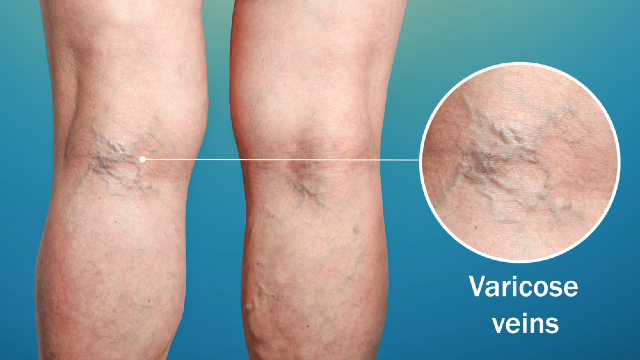
What Are Varicose Veins? Causes, Symptoms, and Signs
Varicose veins are enlarged, twisted leg veins caused by valve dysfunction. Learn the causes, the symptoms they produce, and when to see a vein specialist.
Learn More