Personalized Medical Care & Dedicated International Patient Concierge

Medical Guide
Varicose Vein Risk Factors: Genetics, Pregnancy, Age
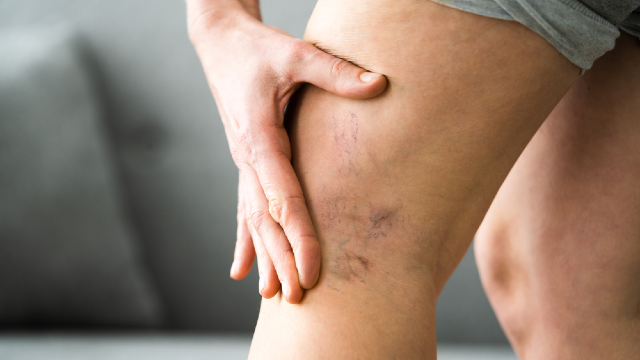
Family history, pregnancy, age, occupation, and weight all raise the odds of varicose veins. Here is how each one acts on the leg veins, and what it means.
Schedule a ConsultationRisk Factors for Varicose Veins: Genetics, Pregnancy, Occupation, and Age
Medically reviewed by Dr. Dong-Hyuk Kim, Board-Certified General Surgeon, Medical Director of Ium Hazi Varicose Vein Clinic
The recognized varicose vein risk factors are family history, age, sex and hormonal state, pregnancy, body weight, occupations that keep you upright or seated for long stretches, and any previous injury or clot involving the leg veins. The National Heart, Lung, and Blood Institute (NHLBI) identifies weakened or damaged vein walls and valves as the mechanism behind the condition, and every item on that list acts on the same two structures. This article explains how each one works, which ones are fixed, which ones are modifiable, and what any of it should prompt you to do.
A Risk Factor Is Not a Diagnosis
Before the list, one distinction is worth setting straight, because it shapes how the rest should be read.
A risk factor shifts the odds across a population. It does not determine an individual outcome in either direction. Plenty of people with several of these factors never develop significant venous disease, and plenty of people with none of them do. Nothing on this list can confirm that you have varicose veins, and nothing on it can rule them out.
What the list is good for is calibration. If you have leg symptoms and several of these factors, the probability that a venous cause is behind those symptoms is higher, and it is more reasonable to have the legs assessed rather than to attribute the heaviness to a long week. If you have visible veins and no symptoms, the list still tells you something about the direction the condition is likely to travel over the next decade.
Family History
Family history is the strongest and most consistently reported risk factor for varicose veins, and the NHLBI lists it among the factors that raise the chance of developing the condition.
What is inherited is not the vein itself but the material it is made of. Vein walls depend on connective tissue for their strength and elasticity, and the composition of that tissue varies between people for genetic reasons. A wall that dilates more readily under a given pressure reaches the point where its valves can no longer seal sooner than a stiffer wall does. Vein valves fail most often because the vessel around them widens and the flaps can no longer meet, so anything that makes the wall more distensible is acting directly on the mechanism.
Ium Hazi Varicose Vein Clinic reflects this in its published statements about results: it notes that new veins may form over time because of genetics or lifestyle, and that new vessels may develop with natural aging or genetics even after existing veins have been treated successfully. That is an important framing. An inherited tendency is a property of your venous system, not of any one vein, and treating a vein does not alter it.
If both of your parents had varicose veins, your own likelihood is meaningfully higher than average. That is a reason to take early symptoms seriously and to know what the early signs look like, not a reason to expect an inevitable outcome.
Age
Risk climbs with age, and the NHLBI names older age among the contributing factors.
The mechanism is cumulative rather than sudden. Vein walls and valve flaps lose elasticity over decades of loading. The connective tissue that holds the wall's shape becomes less resilient. Valve flaps themselves thin and stiffen. Meanwhile the calf muscle, which is the pump that lowers pressure in the leg veins with every step, tends to lose bulk and strength in later life, so the pressure-relieving mechanism weakens at the same time as the structure it protects.
Age is also simply exposure time. A vein that dilates slowly under everyday loading takes years to reach the diameter at which its valves stop sealing, and more years for the consequences of that leak to show at the skin. This is why varicose veins are uncommon in the very young and why the skin changes at the ankle that mark long-standing disease usually appear decades after the first visible vein.
Sex and Hormonal Influence
Varicose veins are reported more often in women than in men, and the NHLBI identifies being female as a factor that raises risk.
The main reason is hormonal. Hormones affecting the smooth muscle and connective tissue of the vein wall make the wall more relaxed and more easily distended. That effect fluctuates across the menstrual cycle, which is why some women notice their legs feel heaviest at particular points in the month, and it is pronounced during pregnancy. Hormone-containing medications are relevant for a related reason: the US Centers for Disease Control and Prevention (CDC) lists estrogen-containing medicines among the factors that raise the risk of venous blood clots, which is a separate venous problem but one that shares the same vessels.
Men are not exempt. Men present with varicose veins regularly and often later, with more advanced disease, partly because the visible changes attract less attention early on.
Pregnancy
Pregnancy is a risk factor in its own right and it combines three separate mechanisms at once, which is why its effect on leg veins is so noticeable.
The first is blood volume. Circulating volume rises substantially during pregnancy, so the veins carry more. The second is hormonal: the same wall-relaxing effect described above is at its strongest, allowing veins to dilate more readily under that increased volume. The third is mechanical. As the uterus enlarges, it presses on the pelvic veins that leg blood must pass through to return to the heart, raising the pressure in every vein below.
Each pregnancy adds to the cumulative exposure, which is why risk tends to rise with the number of pregnancies. Veins that appeared during pregnancy often improve in the months after delivery as volume, hormones, and mechanical pressure return toward baseline, but improvement is not always complete, and veins that persist beyond that window are unlikely to resolve on their own.
Timing of any assessment or treatment during and after pregnancy is a clinical decision. Ium Hazi Varicose Vein Clinic documents that treatment may be deferred during pregnancy and, depending on the procedure and circumstances, during breastfeeding, and that pregnancy or plans for pregnancy should be disclosed when vein treatment is being discussed. MedlinePlus, the patient information service of the US National Library of Medicine, publishes general guidance on pregnancy and prenatal care that is worth reading alongside anything specific to the veins.
Occupation: Standing, Sitting, and the Calf Pump
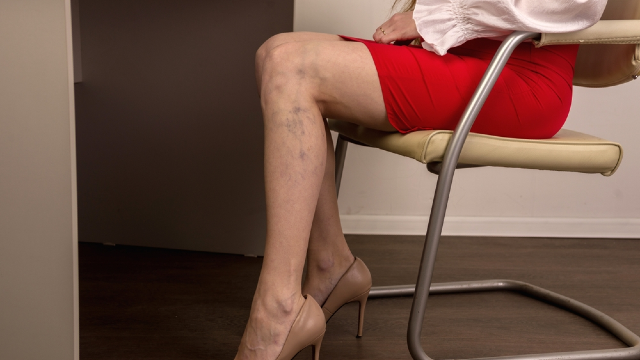
Occupations that involve long hours on your feet are on the NHLBI's list, and the reason is the calf muscle pump.
Blood leaves the leg because the calf contracts and squeezes the deep veins inside it. Standing still does not contract the calf. Sitting does not either. Either posture, sustained, leaves the pressure in the leg veins high for hours with none of the relief that walking provides, and that sustained pressure is what stretches vein walls over time.
This makes the relevant distinction not standing versus sitting, but moving versus not moving. Nurses, surgeons, teachers, retail and hospitality staff, hairdressers, and factory workers spend hours upright with little walking. Office workers, drivers, and long-haul flight crew spend hours seated with the same result. A job that involves walking around all day loads the veins far less than one that involves standing in one place all day, even though both are "on your feet."
Nothing about this is a reason to change career. MedlinePlus notes that regular physical activity supports circulation and general cardiovascular health, and in practical terms the countermeasure is to interrupt the static posture: walk for a minute or two at regular intervals, shift weight and flex the ankles when you cannot walk, and elevate the legs when you get the chance. None of this reverses a failed valve, but it addresses the loading pattern that contributes to valve failure.
Body Weight
Excess body weight raises the risk of varicose veins and the NHLBI includes it among the contributing factors. The effect is partly mechanical — greater abdominal pressure impedes venous return from the legs, and greater tissue volume increases the venous load — and partly a matter of activity, since reduced mobility removes calf-pump activity from the day.
Weight also affects the assessment and the treatment of veins once they exist, because deeper veins can be harder to image and harder to access. Where weight is a modifiable factor, addressing it is one of the few interventions that acts on the underlying loading rather than on an individual vein. It is not a treatment for existing varicose veins, and it should not be presented as one.
Previous Clot or Leg Injury
Any previous event that damaged the deep venous system belongs on a personal risk list, and it carries different weight from the factors above.
A clot inside the deep venous system, which MedlinePlus calls deep vein thrombosis, most commonly forms in a leg. When such a clot organizes and resolves, it can leave the valve flaps in that segment scarred and fixed open. The result is reflux in a vein whose walls were never especially distensible — a fundamentally different situation from a vein that dilated slowly over decades, and one that changes what treatment options are appropriate.
Significant leg trauma or previous vein surgery can have comparable effects on local venous anatomy. This is why a first vein consultation asks about previous clots, previous vein treatment, and leg injuries. Ium Hazi Varicose Vein Clinic documents that a history of deep vein thrombosis, current medications, allergies, and overall vascular health should be discussed at consultation and that the treating physician determines suitability after examination.
Immobility and Long-Distance Travel
Prolonged immobility deserves a separate mention because it is the one exposure most people can identify precisely in their own lives.
The CDC explains that remaining seated for extended periods during long-distance travel slows blood flow in the leg veins and raises the chance of a clot forming, with journeys of several hours the commonly cited threshold. That risk concerns clots rather than varicose veins as such, but the two share a mechanism: blood not being moved by the calf pump sits in the leg at elevated pressure. The CDC's list of factors raising venous thromboembolism risk also overlaps heavily with the varicose vein list, including recent surgery, limited mobility, pregnancy and the period after childbirth, estrogen-containing medicines, obesity, older age, and a personal or family history of clots.
Ium Hazi Varicose Vein Clinic's own note on this is that long-haul travel carries a risk of venous thrombosis in its own right, that anyone with varicose veins or other risk factors should raise travel plans with their physician, and that on flights lasting several hours, movement at intervals, hydration, and correctly fitted compression hosiery may reduce that travel-related risk in suitable patients.
Risk Factors Add Up
No single item on this list usually explains a leg by itself. Venous disease is typically the product of several factors acting over years on the same structures: an inherited wall composition that dilates readily, a job that keeps the calf still, two pregnancies, and three decades of loading.
The NHLBI describes risk as cumulative in this sense, and the practical consequence is that counting factors is more informative than weighing any one of them. Someone with a strong family history who works standing and has had children has a materially different profile from someone with one of those three, even though no individual factor is dramatic.
Sorting the fixed from the modifiable is the useful exercise. Family history, age, sex, and a previous clot cannot be changed. Body weight, activity pattern, how long you stay static, and how you handle long journeys can be. And whether symptoms get assessed early or late is entirely within your control, which matters because the clinic's published position is that vein disease which is ignored, or which is permitted to advance, may produce impaired circulation together with pain and swelling, and in severe cases thrombosis or ulceration of the skin.
What Recognizing Yourself in This List Should Prompt
Not a purchase, and not alarm. What it should prompt is attention to symptoms and, if symptoms are present, an assessment.
The complaints that warrant a look are the ones Ium Hazi Varicose Vein Clinic lists among the reasons patients seek venous care: leg swelling, heaviness, aching, pain, cramps, itching, visible veins, and skin changes, particularly when they interfere with daily activities. Symptoms that worsen through the day and ease when the legs are raised fit the venous pattern especially well.
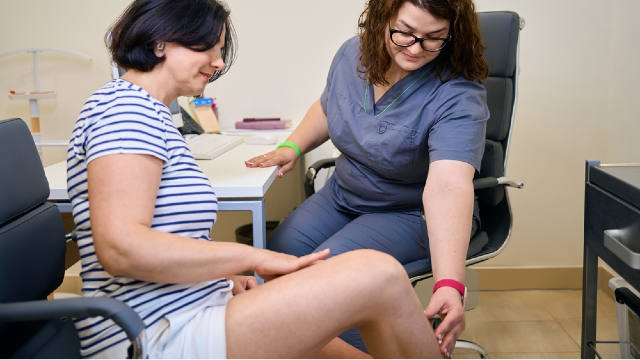
Risk factors cannot be imaged and a leg cannot be diagnosed from a list. What the clinic documents is an assessment that establishes the state of the deep, saphenous, subcutaneous and perforating veins and demonstrates any backward flow directly, after which a plan is built on those findings. Dr. Dong-Hyuk Kim's stated philosophy is to identify the underlying cause accurately through precise vascular ultrasound and then provide only the treatment or combination of treatments each patient needs, without unnecessary procedures. A diagnostic consultation can be arranged through the contact page, and the clinic's approach is described on its about page.
Who Would Assess You
Varicose veins have been the only thing this practice treats since it opened in 2009, in Seocho-gu, Seoul. It runs on a single-director model, so Dr. Dong-Hyuk Kim personally takes the history, performs the scan, and carries out and follows up any treatment. That matters here in particular, because risk factors are gathered in conversation and then have to be tested against what the imaging actually shows.
He is a board-certified general surgeon, a founding member of the Venous Disease Research Society, and Executive Director of the Korean Society of Phlebology, with more than 15 years given to varicose vein care. The clinic received the Medical Asia 2024 Grand Prize in the varicose vein category and is certified by the Ministry of Health and Welfare as a Registered Medical Institution for Attracting Foreign Patients. English-language support is provided to international patients. What an insurer pays toward venous care depends on the plan and on the diagnosis recorded, so put that question to your own insurer.
The Bottom Line
- The recognized risk factors — family history, age, female sex and hormonal state, pregnancy, excess weight, static occupations, and previous leg clots or injury — all act on the same two structures: the vein wall and the valves inside it.
- Family history is the strongest of them, because what is inherited is the composition of the connective tissue that determines how readily a vein wall stretches.
- Pregnancy combines three mechanisms at once: raised blood volume, hormonal relaxation of the vein wall, and mechanical pressure on the pelvic veins.
- The occupational risk is about immobility rather than posture; standing still and sitting still both remove the calf muscle pump that lowers pressure in the leg veins.
- Risk factors accumulate, some are modifiable and some are not, and none of them diagnoses a leg — persistent symptoms call for a diagnostic consultation with vascular assessment.
Frequently Asked Questions
If varicose veins run in my family, will I definitely get them?
No. A family history raises your likelihood and the NHLBI lists it among the recognized risk factors, but it does not determine the outcome. What it does justify is paying attention to early symptoms such as evening heaviness or ankle swelling, and having them assessed rather than waiting for the appearance of the leg to change.
Do varicose veins that appear in pregnancy go away afterward?
Many improve in the months following delivery as blood volume, hormone levels, and pressure on the pelvic veins return toward their previous state. Improvement is not always complete, and veins still present well after that period are unlikely to resolve without treatment. Ium Hazi Varicose Vein Clinic documents that elective vein treatment may be deferred during pregnancy and, depending on circumstances, during breastfeeding.
Which is worse for my veins, standing all day or sitting all day?
Both remove the calf muscle pump, which is the mechanism that lowers pressure in the leg veins, so both sustain high pressure for hours. The more useful comparison is between static and moving: a job that involves walking loads the veins considerably less than one that involves standing in one spot. Interrupting either posture regularly is the practical countermeasure.
Can losing weight or exercising reverse varicose veins that already exist?
No. A valve that has stopped sealing does not regain competence, so neither weight loss nor exercise removes an established varicose vein. Both act on the loading pattern that contributes to vein wall stretch, and MedlinePlus notes that regular physical activity supports circulation generally, so both remain worthwhile alongside whatever treatment is chosen.
Why do varicose veins appear more often in women?
Hormonal influence on the vein wall is the main reason, since hormones affecting smooth muscle and connective tissue allow the wall to distend more readily, and that effect is strongest during pregnancy. The NHLBI includes female sex among the factors that raise risk. Men develop varicose veins too and sometimes present later with more advanced disease.
Does a previous blood clot in my leg change anything?
Yes, and it should be disclosed at any vein consultation. A clot that organizes can scar the valves in that segment and leave them fixed open, which produces reflux by a different route than gradual vein wall dilation and affects which treatments are appropriate. The clinic documents that a history of deep vein thrombosis, current medications, and overall vascular health are discussed before suitability is determined.
This article is for general informational purposes and does not constitute individualized medical advice. Candidacy, technique, and expected outcomes can only be determined through a consultation with a qualified physician, and this article is not a self-diagnosis tool.
References
- NHLBI: Varicose Veins
- MedlinePlus: Varicose Veins
- MedlinePlus: Pregnancy
- MedlinePlus: Deep Vein Thrombosis
- MedlinePlus: Exercise and Physical Fitness
- CDC: Risk Factors for Blood Clots
- CDC Yellow Book: Deep Vein Thrombosis and Pulmonary Embolism
More Articles
Continue reading our clinical guides.
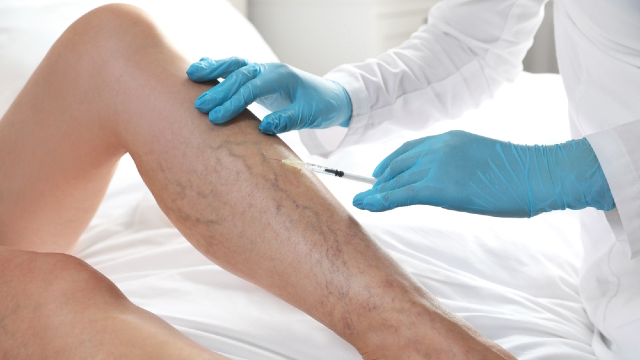
Will My Varicose Veins Come Back After Treatment?
A closed vein and a new varicose vein are different events. Here is what recurrence after vein treatment in Korea means and how follow-up imaging detects it.
Learn More

What to Pack Before Flying to Korea for Vein Surgery
What to pack before flying to South Korea for vein surgery: documents, medication and supplement lists, clothing, compression, and what to arrange at home.
Learn More
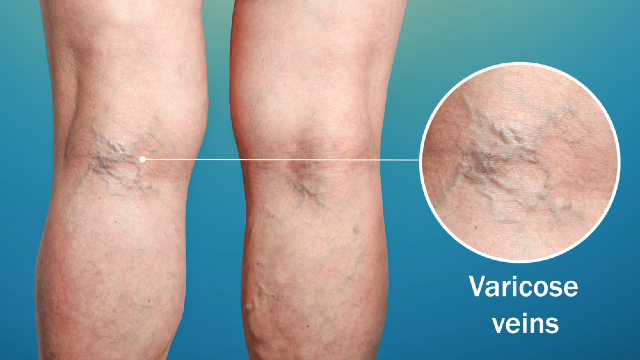
What Are Varicose Veins? Causes, Symptoms, and Signs
Varicose veins are enlarged, twisted leg veins caused by valve dysfunction. Learn the causes, the symptoms they produce, and when to see a vein specialist.
Learn More