Personalized Medical Care & Dedicated International Patient Concierge

Medical Guide
Ultrasound-Guided Foam Sclerotherapy for Small Veins
Ultrasound-guided foam sclerotherapy injects a foamed sclerosant into selected veins under imaging. Learn how it fits into a vein care plan, and its real risks.
Schedule a ConsultationUltrasound-Guided Foam Sclerotherapy: Treating Spider and Small Varicose Veins Without Surgery
Medically reviewed by Dr. Dong-Hyuk Kim, Board-Certified General Surgeon, Medical Director of Ium Hazi Varicose Vein Clinic
Foam sclerotherapy is a minimally invasive treatment in which a sclerosant, foamed rather than used as a plain liquid, is injected into a selected vein so that the vein wall reacts and the vein closes. Ultrasound guidance lets the physician see the target vein and the injection in real time, which matters when the vein is not visible at the surface. At Ium Hazi Varicose Vein Clinic in Seocho-gu, Seoul, sclerotherapy is one option within a treatment plan built on vascular ultrasound findings rather than a treatment chosen before the legs have been assessed. This article explains how the technique works, who it suits, where it sits in a broader care pathway, and what the documented risks are.
What a Sclerosant Is and What Foaming Changes
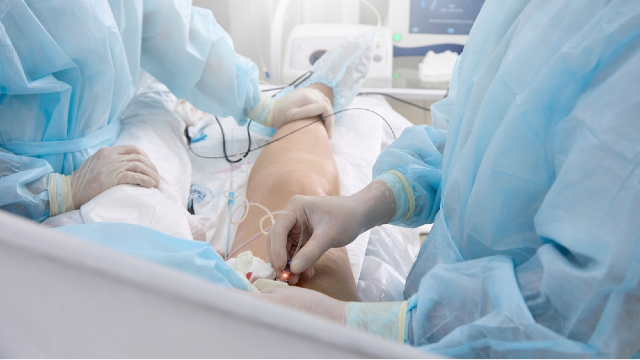
A sclerosant is a solution injected into a vein to irritate the vein wall deliberately so that the vessel closes. Ium Hazi Varicose Vein Clinic describes sclerotherapy as a minimally invasive treatment for selected spider veins and small varicose veins in which a sclerosant solution or foam is injected into the targeted vein, causing the vein to close. Over time, the treated vein is gradually reabsorbed or becomes less visible.
Foaming means mixing the sclerosant with gas so that it becomes a dense, bubbly preparation rather than a plain liquid. Two practical consequences follow. A foam displaces blood inside the vein instead of mixing with it and being diluted, so the agent stays in contact with the vein wall. And because foam reflects ultrasound strongly, the physician can watch it fill the target vessel on the screen. Which specific agent is used, at what concentration, and in what volume are clinical decisions made by the treating physician for the individual patient and vein.
The clinic states that foam sclerotherapy is commonly used for selected varicose veins when other treatments are unsuitable. That framing is worth holding on to: it is a technique chosen for a particular anatomical situation, not a default.
Why Imaging Is Used During the Injection
Ultrasound guidance exists because many veins worth treating cannot be seen or reliably felt. Duplex ultrasound combines an image of the vein with information about how blood is moving inside it, so the physician can identify the vessel, place the needle accurately, and watch the foam distribute where it is intended to go.
The clinic describes ultrasound guidance as part of how risk is reduced in sclerotherapy: it helps identify and target the appropriate veins during the foam procedure. Risk reduction begins earlier than that, with determining whether sclerotherapy is appropriate for the patient's venous anatomy and condition at all, which the clinic does by assessing patients with vascular ultrasound before developing a treatment plan.
Sound waves, not ionizing radiation, are what create an ultrasound picture; the US Food and Drug Administration (FDA) describes the technique as one that can display internal structures along with movement and blood flow as it occurs. The agency also regards ultrasound as safe when trained operators use it appropriately. Those two properties together are what make the modality suitable for watching an injection while it is being delivered.
Where Sclerotherapy Sits in a Care Pathway
Sclerotherapy is one part of a plan, and the plan starts with a diagnosis. The clinic's documented sequence is consistent across its services: the specialist reviews medical history, symptoms, medications, and vascular concerns, examines the affected veins, and performs duplex or Doppler ultrasound when deeper venous disease or venous reflux needs to be assessed. The treatment plan is then selected according to vein size, location, and circulation.
That ordering is not a formality. Reflux, meaning blood flowing backward in a vein instead of moving toward the heart, often originates in a larger vein and expresses itself as smaller visible veins further down. The clinic notes that sclerotherapy is commonly used for smaller or medium-sized varicose veins, while larger veins or significant valve dysfunction may require a different treatment approach. Deciding which situation you are in requires imaging, not inspection.
Ium Hazi Varicose Vein Clinic states that its varicose vein treatment planning begins with vascular ultrasound to assess the patient's condition before recommending treatment, and it identifies conservative management and sclerotherapy among its non-surgical options. The treatment selected is therefore presented as following from the patient's venous condition and diagnostic findings rather than from a single default recommendation. The appropriate first step for someone weighing this treatment is a diagnostic consultation with vascular assessment, which you can arrange through the clinic's consultation page.
How Sclerotherapy Compares With Other Options
Comparing options is easier once you know what problem each one solves. Injection-based treatment closes a vein chemically. Thermal ablation closes a vein with heat delivered by a catheter placed inside it. Non-thermal catheter techniques close a vein with an adhesive or with a combination of mechanical and chemical action. Surgical techniques remove a vein segment. Compression therapy does not close anything; it supports venous return while it is being worn.
The clinic frames the choice this way: non-surgical vein care may include compression therapy and injection-based treatments such as sclerotherapy, while more advanced venous disease may require endovenous ablation or surgical treatment. The appropriate option depends on the vein involved, the severity of reflux, the symptoms, and the ultrasound findings. Size and depth matter, as does whether a refluxing trunk is feeding the visible problem.
Anesthesia differs too. The clinic states that sclerotherapy generally does not require anesthesia, and that for ultrasound-guided foam sclerotherapy the patient is generally awake during treatment. Depending on the technique and the vein, a topical or other local pain-control measure may be considered. By contrast, catheter-based thermal ablation is generally performed using local tumescent anesthesia around the treated vein. MedlinePlus, the patient-education service of the US National Library of Medicine, explains that anesthesia covers a range from local numbing to general anesthesia and that the choice depends on the procedure and the patient.
What a Treatment Session Involves
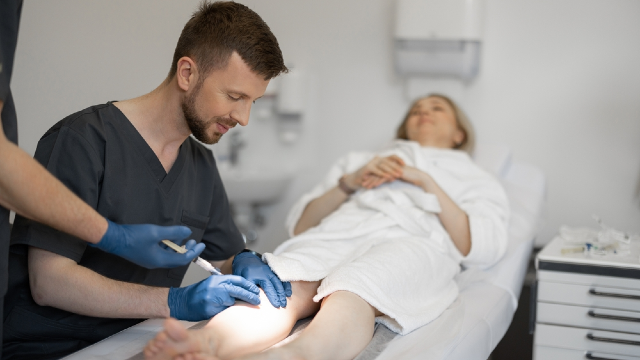
The steps are short and specific. The clinic lists them as examining and marking the treatment area, cleaning the skin, using a fine needle to inject the sclerosant into the selected vein, allowing the solution or foam to act on the vein wall so that the vein closes, and then allowing the treated vein to become gradually less visible as the body processes it. Compression may be recommended afterward when clinically appropriate.
A session commonly takes approximately 15 to 45 minutes, depending on the number and size of the veins being treated. Treatment is generally performed on an outpatient basis and patients can usually return home the same day. Some patients achieve the improvement they were looking for in one session; others need several, particularly when both legs or numerous veins are involved. Follow-up appointments may be needed to assess the response and decide whether further treatment is appropriate.
Most patients report relatively minor discomfort rather than significant pain. Stinging or burning at the injection site can occur, followed by temporary tenderness, bruising, or a feeling of firmness along the treated veins. How much you feel varies with the area treated, the technique, and individual sensitivity.
Who Is a Candidate, and Who Is Not
Candidacy is decided after assessment, not from a photograph. Adults with appropriately assessed spider veins, reticular veins, or selected small varicose veins may be suitable, and the most suitable candidates are determined through clinical and, when indicated, ultrasound assessment of the veins and the underlying circulation. The appropriate technique depends on the vein's size, location, depth, and the surrounding venous circulation.
Several conditions make sclerotherapy inappropriate or require it to be postponed. The clinic lists certain blood-clotting disorders, active infection at the treatment site, acute deep vein thrombosis, significant arterial circulation problems, and certain other medical conditions. Pregnancy may also affect suitability for elective treatment. A history of deep vein thrombosis, current medications, allergies, and overall vascular health should all be discussed during consultation, and the treating physician determines suitability after examination.
MedlinePlus explains that deep vein thrombosis is a blood clot in a deep vein, usually in the leg, and that a piece of such a clot can travel to the lungs and cause a pulmonary embolism. The Centers for Disease Control and Prevention (CDC) lists risk factors for blood clots including recent surgery, prolonged immobility, injury, pregnancy, certain medications, and a personal or family history of clotting. This is why the clotting history is asked about before an elective vein treatment rather than after.
Risks, Stated Plainly
Sclerotherapy carries risks that should be understood before treatment is agreed to. Common temporary effects include bruising, redness, tenderness, itching, swelling, and firmness or small lumps along the treated veins. Brownish skin pigmentation can develop around treated veins and may fade gradually, though with sclerotherapy discoloration can persist for several months in some patients. Small residual or new thread veins can occasionally appear near the treated area.
The clinic's documented complications go further. Potential complications include inflammation of a superficial vein, skin discoloration, injection-site irritation or ulceration, allergic reaction, skin injury, incomplete treatment or recurrence, and, less commonly, blood clots such as deep vein thrombosis. Foam sclerotherapy also has rare neurological or visual complications. Serious complications are uncommon, but they are not zero, and patients should understand them before treatment.
The clinic is explicit about what warrants urgent attention: seek medical care for symptoms such as significant leg swelling, severe pain, chest pain, or shortness of breath. MedlinePlus lists sudden shortness of breath, chest pain that worsens with a deep breath, and coughing up blood among the warning signs of a blood clot that has traveled to the lungs. Those symptoms are an emergency regardless of what procedure preceded them.
Recovery, Aftercare, and Air Travel
Recovery is generally quicker than after traditional varicose vein surgery, and downtime is minimal. Patients can usually walk shortly after treatment and return to many normal activities. Bruising, tenderness, swelling, and firm or lumpy areas along the treated veins may persist for days or weeks and gradually improve. Strenuous exercise and heavy lifting may need to be restricted temporarily according to the physician's instructions.
Aftercare instructions from the clinic include walking regularly, wearing compression stockings for a specified period when appropriate, following skin-care instructions, avoiding excessive pressure or irritation to treated areas, and attending recommended follow-up appointments. Contact the clinic if significant pain, swelling, skin changes, or other concerning symptoms develop.
Air travel deserves its own note for international patients. The clinic states that patients should not assume they can fly immediately after sclerotherapy, that recommendations vary by technique and by individual risk factors, and that several vascular centers advise avoiding air travel for approximately 4 weeks, with some recommending 4 to 6 weeks after foam sclerotherapy, particularly for longer flights. Because prolonged air travel itself increases the risk of deep vein thrombosis, the treating physician should give individualized clearance before an international flight. The CDC's travel health guidance likewise identifies long-haul flights as a setting where clot risk rises with immobility.
What Results Look Like Over Time
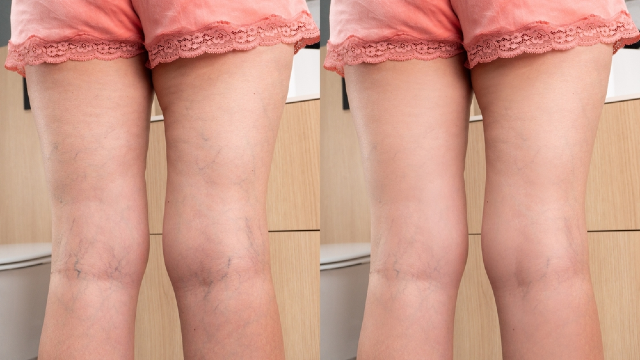
Results develop gradually rather than immediately. Treated veins may initially look bruised, darker, swollen, or more prominent than before, and firm areas can remain while the vein is being absorbed. Smaller veins may improve over several weeks while larger ones take longer, and improvement can continue for several weeks or months. The final appearance should be assessed after adequate healing rather than immediately after the injections.
Two honest limits apply. Some veins require additional sessions, and new spider or varicose veins can develop over time because venous disease can be progressive. Successfully treated veins generally do not reopen in the same way, but treatment of today's veins does not prevent tomorrow's. No vein treatment eliminates the underlying tendency, and any description that suggests otherwise is overstating what is known.
Who Performs the Treatment and How Follow-Up Works
The practice runs on a single-director model: diagnosis, treatment, and follow-up all sit with one physician. Dr. Dong-Hyuk Kim is the Medical Director of Ium Hazi Varicose Vein Clinic, holds board certification in general surgery, and completed his medical education at Sungkyunkwan University School of Medicine. The clinic describes over 15 years given to varicose vein care, and its own published count stands at 7,300+ saphenous vein surgeries between 2009 and 2024.
Certification as a Registered Medical Institution for Attracting Foreign Patients comes from the Ministry of Health and Welfare, and the clinic's business registration is 135-91-93104. In 2024 it took the Medical Asia Grand Prize for the varicose vein category. Aftercare following a procedure covers scheduled vascular ultrasound checks plus individualized advice on medical compression stockings, with English-language support throughout. More detail about the practice and its approach is on the clinic's about page.
MedlinePlus publishes guidance on talking with your doctor that applies well here: write your questions down beforehand, ask what the alternatives are, and ask what happens if you do nothing. Those three questions will tell you more about a proposed vein treatment than any brochure.
The Bottom Line
- Foam sclerotherapy injects a foamed sclerosant into a selected vein so the vein wall reacts and the vessel closes; the body then gradually reabsorbs it.
- Ultrasound guidance lets the physician identify the target vein and watch the foam distribute in real time, which is why imaging is used for veins that cannot be seen at the surface.
- At Ium Hazi Varicose Vein Clinic the technique is one option inside a plan built from duplex ultrasound findings, and the starting point for any patient is a diagnostic consultation.
- Documented risks include skin discoloration, injection-site irritation or ulceration, allergic reaction, superficial vein inflammation, incomplete treatment or recurrence, and less commonly blood clots; foam also carries rare neurological or visual complications.
- Results are gradual, multiple sessions are sometimes needed, and new veins can still develop because venous disease can progress.
Frequently Asked Questions
Why is ultrasound used during foam sclerotherapy?
Ultrasound shows the target vein and the injection in real time, which is necessary when the vein lies below the surface and cannot be seen or reliably felt. The clinic describes ultrasound guidance as helping identify and target the appropriate veins during foam sclerotherapy. The FDA notes that ultrasound imaging uses sound waves rather than ionizing radiation and can display blood flow as it happens.
How many sessions are usually needed?
It depends on the number and size of the veins being treated. Some patients achieve their desired improvement in one session, while others require several, particularly when both legs or numerous veins are involved. The physician assesses the response at follow-up and decides whether further treatment is appropriate.
Is foam sclerotherapy painful?
Most patients describe relatively minor discomfort rather than significant pain. Stinging or burning can occur at the injection site, followed by temporary tenderness, bruising, or firmness along the treated vein. Anesthesia is generally not required, and for ultrasound-guided foam treatment the patient is generally awake.
What are the serious risks I should know about?
Less common but serious complications include blood clots such as deep vein thrombosis, and foam sclerotherapy carries rare neurological or visual complications. Skin ulceration at an injection site, allergic reaction, and superficial vein inflammation are also documented. Seek medical attention for significant leg swelling, severe pain, chest pain, or shortness of breath.
How long should I wait before flying home?
Do not assume you can fly immediately. Recommendations vary by technique and by individual risk, and the clinic notes that several vascular centers advise avoiding air travel for roughly 4 weeks, with some recommending 4 to 6 weeks after foam sclerotherapy for longer flights. Get individualized clearance from your treating physician before booking a return flight.
What should I tell the physician before treatment?
Tell the physician about previous deep vein thrombosis or other vascular conditions, allergies, pregnancy or plans for pregnancy, all medications and supplements, and any previous vein treatments. Follow the clinic's instructions about blood-thinning medication rather than stopping a prescribed drug on your own. Loose, comfortable clothing makes the visit easier.
Will treated veins stay closed?
Successfully treated veins generally do not reopen in the same way, but new spider or varicose veins can develop over time because venous disease can be progressive. Incomplete treatment and recurrence are both listed among the possible outcomes. Follow-up assessment is how that is monitored rather than assumed.
This article is for general informational purposes and does not constitute individualized medical advice. Candidacy, technique, and expected outcomes can only be determined through a consultation with a qualified physician, and this article is not a self-diagnosis tool.
References
- MedlinePlus: Varicose Veins
- MedlinePlus: Deep Vein Thrombosis
- MedlinePlus: Blood Clots
- MedlinePlus: Anesthesia
- MedlinePlus: Talking With Your Doctor
- NHLBI: Varicose Veins
- CDC: Risk Factors for Blood Clots
- CDC Yellow Book: Deep Vein Thrombosis and Pulmonary Embolism
- FDA: Ultrasound Imaging
More Articles
Continue reading our clinical guides.
Will My Varicose Veins Come Back After Treatment?
A closed vein and a new varicose vein are different events. Here is what recurrence after vein treatment in Korea means and how follow-up imaging detects it.
Learn More
What to Pack Before Flying to Korea for Vein Surgery
What to pack before flying to South Korea for vein surgery: documents, medication and supplement lists, clothing, compression, and what to arrange at home.
Learn More
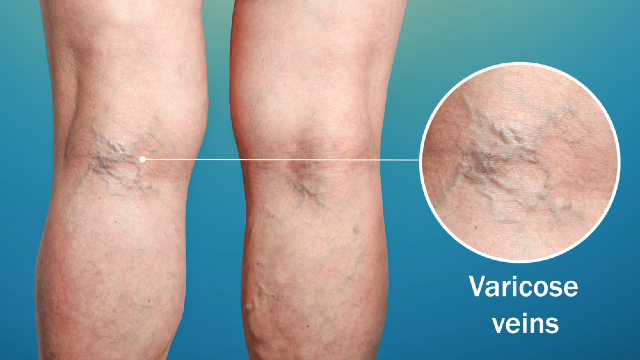
What Are Varicose Veins? Causes, Symptoms, and Signs
Varicose veins are enlarged, twisted leg veins caused by valve dysfunction. Learn the causes, the symptoms they produce, and when to see a vein specialist.
Learn More