Personalized Medical Care & Dedicated International Patient Concierge

Medical Guide
Same-Day Varicose Vein Procedure: A Step-by-Step Guide
A same-day varicose vein procedure runs from arrival and ultrasound to marking, anesthesia, walking, and discharge that afternoon. Here is the full sequence.
Schedule a ConsultationWhat Happens During a Same-Day Varicose Vein Procedure: A Step-by-Step Walkthrough
Medically reviewed by Dr. Dong-Hyuk Kim, Board-Certified General Surgeon, Medical Director of Ium Hazi Varicose Vein Clinic
A same-day varicose vein procedure means you arrive in the morning, are assessed and treated, walk before you leave, and go home the same afternoon without an overnight stay. Ium Hazi Varicose Vein Clinic in Seocho-gu, Seoul documents a same-day admission-and-discharge model and describes discharge on the afternoon of the surgery day with a follow-up examination within about one week. This walkthrough covers the visit itself in order, from the night before to the drive home, without re-explaining how any individual technique works.
The Night Before: Preparation You Are Responsible For
Most of what can go wrong on the day is settled the night before. The clinic instructs patients to fast before the procedure, to get sufficient rest, and not to take diabetes medication as directed, and asks them to inform medical staff about any relevant health conditions and about every other medication they are taking.
That disclosure list is longer than most people expect. It includes prescription medications, over-the-counter drugs, supplements, blood-thinning medicines, allergies, previous blood clots, and any previous vein treatment. The clinic also asks patients not to stop a prescribed medication on their own initiative, but to be told what to do with it by the treating clinician.
MedlinePlus, run by the National Library of Medicine in the United States, gives the same advice in general terms for any planned procedure: understand why you are having it, follow the fasting instructions exactly, and arrange in advance for someone to take you home. Its guidance on talking with your doctor suggests writing your questions down beforehand, because the morning of a procedure is not when you will remember them.
Arrival and Registration
Arrival is straightforward, but the clinic's schedule is worth checking against your plan. Ium Hazi Varicose Vein Clinic is open Monday, Tuesday, Wednesday, and Friday from 9:30 AM to 7:00 PM and Saturday from 9:30 AM to 2:00 PM, with a weekday lunch break from 1:00 to 2:00 PM and no lunch break on Saturday. Last registration is 6:00 PM on weekdays and 2:00 PM on Saturday.
It is closed on Thursdays, Sundays, and the fourth Friday and Saturday of every month, and on New Year's Day, Seollal, Children's Day, Chuseok, and Christmas Day, with specific schedules announced in advance. On open public holidays it operates without a lunch break. The clinic is located on the second floor of K-Tower at 320 Seocho-daero in Seocho-gu, Seoul.
Wear comfortable clothing that lets the leg be examined and treated without a struggle. If sedation is part of the plan, transportation home should already be arranged before you arrive.
The Assessment That Confirms the Plan
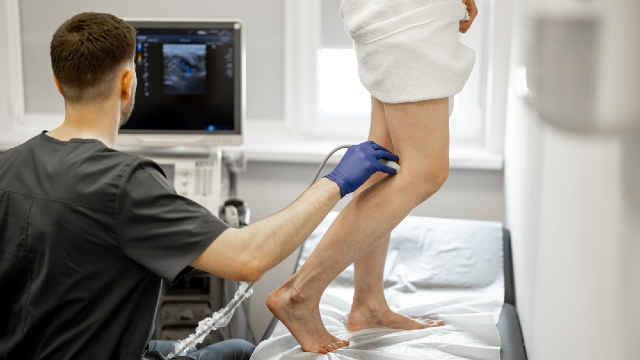
Nothing is treated before the leg is imaged. The clinic's vascular ultrasound examination goes over the deep veins, the saphenous veins, the subcutaneous veins, and the perforating veins, judging size, shape, and position while flow and reflux are watched live. The clinic goes through the findings with you using the pictures and the moving flow together, and a copy can be written to a USB drive if you ask.
This is the step that confirms the plan agreed at consultation still fits. Diagnostic ultrasound works with sound waves and carries no ionizing radiation, as the US Food and Drug Administration explains, so repeating the scan on the day raises no added exposure concern.
When surgery is planned, the clinic also performs preoperative evaluations such as blood testing and an electrocardiogram. Where those tests happen in the sequence depends on the individual plan, and the timing is set at consultation rather than improvised on the morning.
Marking the Leg
Marking is done before anything is treated and it deserves more respect than it usually gets. The clinic describes the treatment area being examined and marked, then the selected veins being treated using the planned surgical technique.
The reason marking comes first is simple physics. Superficial veins fill under gravity, so a vein that stands out clearly while you are standing can flatten and disappear once you lie down. The map drawn on your skin while you are upright is what keeps the plan accurate after you are horizontal.
Expect the leg to look heavily marked. That is a sign of planning, not of how much will be removed.
Anesthesia
Anesthesia for these procedures is local rather than general. The clinic lists local anesthesia and sedation anesthesia for its catheter-based treatments, and describes tumescent anesthesia placed around the treated vein for thermal ablation. For micro-phlebectomy it describes local anesthesia around the treatment area, with sedation considered when appropriate.
MedlinePlus explains that local anesthesia numbs one part of the body while you stay awake, that sedation can be used to help you relax during a procedure, and that the choice depends on the procedure being performed and on your overall health. That is what allows a leg vein procedure to be completed and discharged in a single day rather than requiring admission.
Ium Hazi Varicose Vein Clinic describes a "3-No" protocol covering its signature procedures: spinal anesthesia is avoided, no stitches need taking out afterward, and a compression stocking is not worn on the day of the operation itself. Which parts apply to your own plan is a question to put to the physician directly, because anesthesia, compression, and wound care are decided case by case.
What you will feel during the anesthesia step is needle and pressure sensations. The clinic notes that patients may feel brief needle or pressure sensations while anesthesia is placed.
The Procedure Itself: What You Will Actually Notice
From your side of the drape, the procedure is quieter than the word "surgery" suggests. You are awake unless sedation was planned, the leg is numb, and the physician works with an ultrasound probe in view. The clinic's stated treatment times for its catheter-based procedures run from about 30 minutes to an hour, with the exact time depending on which vein is being treated, how many veins are involved, and the technique chosen.
Sensations that the clinic documents during and after treatment include warmth, pulling, tightness, and mild discomfort. MedlinePlus notes that some discomfort during and after a procedure is normal and that pain control should be discussed with the care team rather than endured silently. If something hurts during the procedure, say so at the time.
The clinic caps its schedule at one or two surgical cases per day, which is a deliberate choice it publishes as part of its quality-control process, alongside doctor-led diagnosis and care, strict sterilization using autoclave and ethylene oxide gas systems, and a policy of not reusing disposable medical devices.
Standing Up and Walking Before You Leave
Walking is part of the procedure day, not something that starts tomorrow. The clinic's documented sequence for endovenous ablation ends with post-procedure assessment and walking before discharge when appropriate, and it states that many patients can walk shortly after treatment.
Do not interpret this as a test you have to pass at speed. It is a check that the leg is behaving as expected before you leave the building, and an early start on the movement that reduces the risk of a clot. MedlinePlus advises getting up and moving as soon as the care team allows after a procedure, precisely for that reason.
Discharge on the Afternoon of the Surgery Day
The clinic describes monitoring the patient after the procedure and discharging generally on the same day, and its varicose vein surgery pathway specifies discharge on the afternoon of the surgery day. Same-day discharge is documented for its catheter-based treatments, which it states can be completed with same-day admission and discharge.
Before you leave you should have clear instructions covering walking and activity, wound care, medications, compression if it is prescribed, and the date of your follow-up. If any of that is vague, ask for it in writing while you are still in the building.
One instruction is firm: do not drive yourself home on the day of the procedure. The clinic advises against driving on the day of surgery and recommends public transportation or another arranged ride.
The First Evening and the Next Day
Two things surprise patients most on the first evening. The first is fluid. The clinic notes that fluid used for anesthesia can ooze from the puncture site for a few days and advises a light shower rather than treating it as an emergency. The second is how ordinary the leg feels compared with what the word "surgery" led them to expect.
Take prescribed medication as directed. Avoid excessive walking or overexertion if it causes discomfort, and refrain from smoking and drinking alcohol for the period the clinic specifies. The clinic states that same-day discharge is possible and that most people can resume normal daily life the following day, while noting that recovery varies by technique and individual.
Temporary effects the clinic documents include bruising, swelling, tenderness, tightness, sensory changes, and a pulling sensation or lumps in the treated area that gradually settle. MedlinePlus notes that bruising is a normal response to injury of small blood vessels under the skin and typically changes color as it heals over days to weeks.
Follow-Up After the Day
Follow-up is scheduled rather than optional. A follow-up examination is recommended roughly one week after surgery, and ultrasound monitoring at about one to two months is used to check the treated veins along with any small ones that remain. The clinic also states that a follow-up examination the following day may be recommended when necessary, and that postoperative aftercare includes scheduled vascular ultrasound examinations and personalized guidance on medical compression stockings.
Contact the clinic promptly, rather than waiting for the scheduled visit, for severe or increasing leg pain or swelling, significant skin changes, fever, chest pain, or shortness of breath. The Centers for Disease Control and Prevention lists recent surgery and prolonged immobility among the factors that raise the risk of a blood clot, which is why those symptoms are worth acting on immediately.
Who You Will See on the Day
The same physician handles every stage. Ium Hazi Varicose Vein Clinic works on a single-director model, so the consultation, the diagnostic ultrasound, the treatment itself, and the follow-up are all carried out by Dr. Dong-Hyuk Kim in person. His credentials are board certification in general surgery, the role of Medical Director at the clinic, medical training at Sungkyunkwan University School of Medicine, and more than 15 years given to varicose vein care.
As its own published statistic the clinic reports 7,300+ saphenous vein surgeries personally performed over 2009 to 2024. Its business registration number is 135-91-93104. It is certified by the Ministry of Health and Welfare to operate as a Registered Medical Institution for Attracting Foreign Patients. Among its awards is the Medical Asia 2024 Grand Prize in the varicose vein category. The practice describes its wider approach on its about page.
If You Are Flying In for the Procedure
The day itself is short; the trip around it is not. The clinic advises international patients to allow enough time for the consultation, the procedure, recovery, and any recommended follow-up assessment before traveling home, with the treating physician confirming when air travel is appropriate rather than the schedule being planned around a set number of days. For micro-phlebectomy specifically it suggests planning on roughly a week in Korea.
For long flights the CDC recommends walking about the cabin where possible, stretching the legs, and keeping hydrated, since sitting still for hours raises clot risk. English-language support is available through the clinic's primary contact, and appointments can be arranged through the contact page. Coverage rests with your insurer and hinges on the documented diagnosis, so put the question to your plan before you fix a schedule.
The Bottom Line
- A same-day varicose vein procedure at Ium Hazi Varicose Vein Clinic runs from fasting and arrival through ultrasound confirmation, marking, local anesthesia, treatment, walking, and discharge on the afternoon of the same day.
- Preparation is your responsibility: fast as instructed, rest, follow the clinic's direction on diabetes medication, disclose every medication and supplement, and arrange a ride home, because driving on the day of surgery is advised against.
- The clinic's catheter-based procedures are documented at about 30 minutes to an hour, performed under local anesthesia with sedation when indicated, and it follows a "3-No" protocol of no spinal anesthesia, no stitch removal, and no compression stocking on the surgery day.
- Expect anesthetic fluid to seep from the puncture site for a few days, along with bruising, swelling, tenderness, tightness, or a pulling sensation; light showering is advised and most people resume normal daily life the next day.
- Follow-up is scheduled within about one week, with ultrasound monitoring at roughly one to two months, and severe leg pain, swelling, chest pain, or shortness of breath should prompt immediate contact rather than waiting.
Frequently Asked Questions
Do I need to fast before a same-day vein procedure?
Yes. The clinic instructs patients to fast before the procedure, to get sufficient rest beforehand, and not to take diabetes medication as directed. Confirm the exact cut-off time for food and drink with the clinic, since it depends on your appointment time and on whether sedation is planned.
Will I be asleep during the procedure?
Generally no. The clinic lists local anesthesia, with tumescent anesthesia around the treated vein for thermal methods, and sedation anesthesia when indicated. MedlinePlus explains that local anesthesia numbs one area while you remain awake and that sedation can be used to help you relax. Your own plan is set with the physician beforehand.
How long will I be at the clinic?
The clinic documents treatment times of about 30 minutes to an hour for its catheter-based procedures, but the visit is longer than the procedure because it includes assessment, marking, anesthesia, monitoring, and walking before discharge. Discharge is described as occurring on the afternoon of the surgery day.
Can I drive myself home afterward?
No. The clinic advises against driving on the day of surgery and recommends public transportation or another arranged ride. Arrange transportation in advance, particularly if sedation is part of the plan, so the question is settled before you are in a position to be tempted.
Is fluid leaking from the puncture site normal?
The clinic states that fluid used for anesthesia can leak from the puncture site and settles down after a few days, and it advises a light shower. It is a documented, expected effect rather than a sign of a problem. Persistent bleeding, spreading redness, or fever is a different matter and should be reported promptly.
When is the first follow-up appointment?
The recommended schedule is an examination at about one week after the procedure, then ultrasound monitoring somewhere in the one-to-two-month window to review the treated veins and any small residual ones. A check the day after surgery may also be recommended when the case calls for it.
What symptoms mean I should call rather than wait?
Contact the clinic promptly for severe or increasing leg pain or swelling, significant skin changes, fever, chest pain, or shortness of breath. The CDC identifies recent surgery and long periods of immobility as factors that raise the risk of a blood clot, so those symptoms warrant immediate attention rather than a wait-and-see approach.
Can I fly home the next day?
That is a decision for the treating physician rather than a fixed rule. The clinic advises international patients to allow time for recovery and any recommended follow-up assessment and to confirm air travel timing individually. Its travel guidance for long flights is to walk the cabin where you can, stretch the legs, and keep hydrated, because hours of stillness raise clot risk.
This article is for general informational purposes and does not constitute individualized medical advice. Candidacy, technique, and expected outcomes can only be determined through a consultation with a qualified physician, and this article is not a self-diagnosis tool.
References
- MedlinePlus: Surgery
- MedlinePlus: Anesthesia
- MedlinePlus: After Surgery
- MedlinePlus: Pain
- MedlinePlus: Bruises
- MedlinePlus: Talking With Your Doctor
- MedlinePlus: Varicose Veins
- FDA: Ultrasound Imaging
- CDC: Risk Factors for Blood Clots
- CDC Yellow Book: Air Travel
More Articles
Continue reading our clinical guides.
Will My Varicose Veins Come Back After Treatment?
A closed vein and a new varicose vein are different events. Here is what recurrence after vein treatment in Korea means and how follow-up imaging detects it.
Learn More
What to Pack Before Flying to Korea for Vein Surgery
What to pack before flying to South Korea for vein surgery: documents, medication and supplement lists, clothing, compression, and what to arrange at home.
Learn More
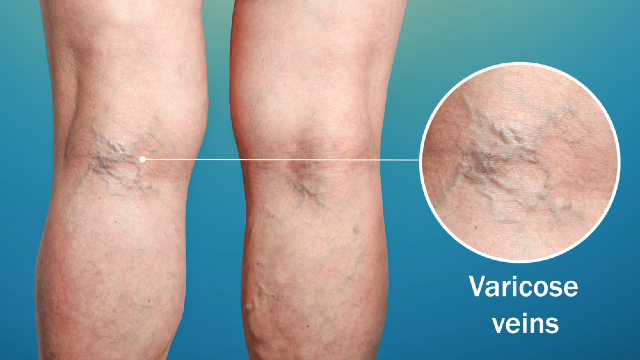
What Are Varicose Veins? Causes, Symptoms, and Signs
Varicose veins are enlarged, twisted leg veins caused by valve dysfunction. Learn the causes, the symptoms they produce, and when to see a vein specialist.
Learn More