Personalized Medical Care & Dedicated International Patient Concierge

Medical Guide
Is Endovenous Laser Ablation Safe? Risks Explained
Endovenous laser ablation is low-risk but not risk-free. Here are the side effects and complications Ium Hazi Varicose Vein Clinic lists, and who is unsuitable.
Schedule a ConsultationIs Endovenous Laser Ablation Safe? Common Questions Answered
Medically reviewed by Dr. Dong-Hyuk Kim, Board-Certified General Surgeon, Medical Director of Ium Hazi Varicose Vein Clinic
The honest answer to "is endovenous laser ablation safe" is that it is a minimally invasive procedure with a favorable risk profile and a short list of real complications that can still happen to you. Safe does not mean risk-free, and any clinic that tells you otherwise is selling rather than informing. Ium Hazi Varicose Vein Clinic publishes its own list of side effects and complications for this treatment, and that list is the more useful starting point than a reassurance.
What the Word "Safe" Can and Cannot Promise
Safety in a vein procedure is a statement about how often problems occur, not a statement that they never occur. The National Heart, Lung, and Blood Institute frames treatment decisions for varicose veins around symptoms and individual findings rather than around a blanket verdict. Your own risk depends on the vein being treated, your anatomy, your medical history, and your medications. Two people can have the same procedure name on their consent form and genuinely different risk profiles, which is why the useful question is what specifically could go wrong in your leg.
The Common, Temporary Effects
Most of what patients experience after laser ablation is expected and resolves on its own. Ium Hazi Varicose Vein Clinic lists temporary bruising, swelling, tenderness, tightness, and localized numbness along the treated vein, and notes these may persist for several days or weeks depending on which vein was treated.
These are side effects, not complications. MedlinePlus, published by the US National Library of Medicine, describes bruising as the result of tiny vessels breaking beneath the skin so that blood escapes into surrounding tissue, with the discoloration shifting as that blood is cleared away. Knowing that in advance keeps a normal, unattractive healing leg from feeling like an emergency.
The Less Common Complications, Named Plainly
Ium Hazi Varicose Vein Clinic lists infection, nerve irritation, skin injury, blood clots, and reopening of the treated vein as less common complications of Endovenous Laser Ablation. In its wider risk statement for laser ablation the clinic also names bleeding, skin changes, burns, inflammation of the treated vein, and recurrence of varicose veins, and states that individual risks should be discussed during the consultation.
Each of those deserves a plain reading:
- Nerve irritation or numbness. Sensory nerves run close to some leg veins. Irritation typically presents as a patch of altered sensation rather than weakness.
- Skin injury or burns. Laser ablation delivers heat inside a vein, and the clinic lists skin injury and burns among possible complications — the honest counterpart to a thermal technique.
- Infection. Any procedure that breaks the skin carries an infection risk, which is why sterile technique and wound care instructions exist.
- Blood clots. The complication that matters most, discussed separately below.
- Reopening of the treated vein. A vein that was closed can recanalize, meaning treatment did not hold. Follow-up ultrasound exists to detect this.
Blood Clots Deserve Their Own Paragraph
Blood clots are the complication worth understanding rather than skimming. MedlinePlus describes deep vein thrombosis as a clot forming in one of the deeper leg veins, and warns that a fragment breaking away can lodge in the lungs. That second event, a pulmonary embolism, is an emergency. The Centers for Disease Control and Prevention describes venous thromboembolism as the umbrella term covering both events, and lists prior clots, immobility, and certain medical conditions among the factors that raise an individual's baseline risk.
The practical consequences are simple. Walking early matters. So does telling the clinic about any personal or family history of clotting, hormone therapy, or a recent long-haul flight.
Warning signs are worth memorizing: new or increasing calf pain or swelling, chest pain, or shortness of breath. Ium Hazi Varicose Vein Clinic tells patients to make contact without delay if leg pain or swelling becomes severe or worsens, if the skin changes noticeably, or if fever, chest pain, or breathlessness develops.
Who Is Not a Suitable Candidate
A large part of safety is patient selection. Ium Hazi Varicose Vein Clinic names unsuitable vein anatomy as a disqualifier, along with a vein whose curves prevent the fiber from being positioned safely. An active infection at the intended entry site does the same, as do a number of other vascular and medical conditions. The clinic places the final judgment with a vascular specialist after examination and ultrasound.
The clinic's broader criteria add more situations calling for caution or delay. An active deep vein clot is one. So is infection, whether of the skin over the site or throughout the body. Severe peripheral arterial disease and certain clotting disorders round out the list. Treatment may also be deferred during pregnancy and, depending on circumstances, breastfeeding. MedlinePlus notes that peripheral arterial disease narrows the arteries carrying blood to the limbs — a separate circulation problem from vein reflux that changes what can safely be done to a leg.
What Makes One Leg Riskier Than Another
Several variables move the risk dial within the group of people who can have the procedure. A vein running close to a sensory nerve raises the chance of a numb patch. A severely tortuous vein is technically harder to treat with a fiber, and the clinic notes such veins may be difficult with this method. A history of clotting shifts attention to thrombosis prevention. Blood-thinning medication changes bleeding and bruising expectations, which is why the clinic asks for a complete medication and supplement list before treatment.
None of these automatically rules out treatment. They change the plan, and a plan built on an accurate map of your leg is the single biggest safety input.
What the Clinic Documents About Reducing Risk
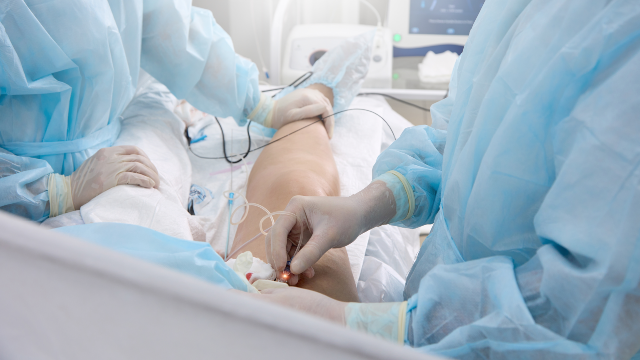
Ium Hazi Varicose Vein Clinic states that risk reduction for Endovenous Laser Ablation involves appropriate vascular assessment, ultrasound evaluation of the affected veins, careful catheter and laser positioning, sterile technique, and post-treatment monitoring, with the treatment plan tailored to the patient's vein condition. The FDA describes ultrasound imaging as using sound waves rather than ionizing radiation to produce pictures of structures inside the body, which is why it can be used continuously during a procedure.
The clinic also describes structural safeguards around the procedure day: doctor-led diagnosis, consultation, surgery, and post-operative care; a deliberately limited caseload of one to two surgeries per day; sterilization by autoclave and by E-O gas; a rule against reusing anything designed to be disposable; and ultrasound monitoring after the procedure. Under its single-director system, Dr. Dong-Hyuk Kim personally performs every consultation, diagnostic ultrasound, and procedure. The clinic reports 7,300+ saphenous vein surgeries performed between 2009 and 2024, a statistic it publishes about its own practice. You can read more on its about page.
What You Can Do to Lower Your Own Risk
Your share of the work is real. Give a complete medical history and medication list, including blood thinners and supplements. Follow the instructions about medications, eating and drinking, and skin preparation. Afterward, follow the guidance on walking, activity, wound care, and compression, and attend the recommended follow-up ultrasound examinations that confirm the vein actually closed.
Ask questions before you consent. The American Academy of Dermatology advises patients to ask who will perform a treatment, what training that person has, and what the risks and realistic results are. MedlinePlus similarly encourages preparing a written list of questions before an appointment. If you want to start that conversation, the clinic's contact page is the route to a diagnostic consultation.
The Bottom Line
- Endovenous laser ablation is minimally invasive with a short list of complications, but it is not risk-free, and no honest answer skips the list.
- Ium Hazi Varicose Vein Clinic names bruising, swelling, tenderness, tightness, and localized numbness as common temporary effects, and infection, nerve irritation, skin injury, blood clots, and reopening of the treated vein as less common complications.
- Blood clots deserve the most attention; the CDC and MedlinePlus both describe deep vein thrombosis and pulmonary embolism as serious and time-sensitive.
- People with unsuitable or severely tortuous vein anatomy, active infection at the site, active deep vein thrombosis, severe peripheral arterial disease, or certain clotting disorders may not be candidates.
- Safety is built before the procedure through ultrasound assessment and patient selection, and after it through follow-up imaging.
Frequently Asked Questions
What are the most common side effects of endovenous laser ablation?
Ium Hazi Varicose Vein Clinic lists temporary bruising, swelling, tenderness, tightness, and localized numbness along the treated vein. These usually resolve on their own, though the clinic notes bruising and tightness can persist for several days or weeks. They are expected effects rather than complications.
What is the most serious thing that can go wrong?
Blood clots are the complication that carries the greatest potential consequence. MedlinePlus explains that a deep vein clot can break loose and travel to the lungs, causing a pulmonary embolism, which requires emergency care. Report new calf pain or swelling, chest pain, or shortness of breath immediately.
Can the treated vein open again?
Yes. Ium Hazi Varicose Vein Clinic lists reopening of the treated vein among the less common complications of laser ablation. This is one reason the clinic uses follow-up ultrasound, which can confirm whether the vein remained closed rather than relying on how the leg looks.
Who should not have endovenous laser ablation?
Unsuitable vein anatomy is one exclusion. So is a vein whose twists make safe fiber placement impossible, an infection at the site where access would be gained, and a range of other vascular or medical conditions. An active deep vein clot, severe arterial disease in the legs, and certain clotting disorders also affect suitability.
How does the clinic try to make the procedure safer?
Ium Hazi Varicose Vein Clinic documents vascular assessment, ultrasound evaluation of the affected veins, careful catheter and laser positioning, sterile technique, and post-treatment monitoring. It also caps its surgical schedule at one or two cases daily, sterilizes by autoclave and E-O gas, and does not reuse disposable equipment.
What should I ask before agreeing to the procedure?
The American Academy of Dermatology suggests asking who will perform the treatment, what their training is, what the risks are, and what result is realistic. Add questions about your specific vein anatomy, your medications, and the follow-up schedule. MedlinePlus recommends writing your questions down beforehand.
This article is for general informational purposes and does not constitute individualized medical advice. Candidacy, technique, and expected outcomes can only be determined through a consultation with a qualified physician, and this article is not a self-diagnosis tool.
References
- NHLBI: Varicose Veins
- MedlinePlus: Deep Vein Thrombosis
- CDC: About Venous Thromboembolism
- CDC: Risk Factors for Blood Clots
- MedlinePlus: Bruises
- MedlinePlus: Peripheral Arterial Disease
- FDA: Ultrasound Imaging
- AAD: Questions to ask before a cosmetic treatment
- MedlinePlus: Talking With Your Doctor
More Articles
Continue reading our clinical guides.
Will My Varicose Veins Come Back After Treatment?
A closed vein and a new varicose vein are different events. Here is what recurrence after vein treatment in Korea means and how follow-up imaging detects it.
Learn More
What to Pack Before Flying to Korea for Vein Surgery
What to pack before flying to South Korea for vein surgery: documents, medication and supplement lists, clothing, compression, and what to arrange at home.
Learn More
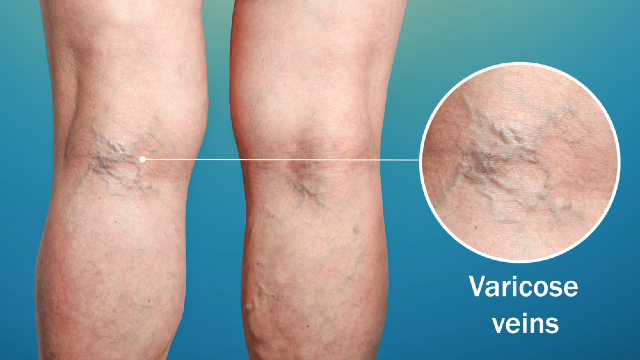
What Are Varicose Veins? Causes, Symptoms, and Signs
Varicose veins are enlarged, twisted leg veins caused by valve dysfunction. Learn the causes, the symptoms they produce, and when to see a vein specialist.
Learn More