Personalized Medical Care & Dedicated International Patient Concierge

Medical Guide
Emergency and Complication Protocols for Vein Patients
What Ium Hazi Varicose Vein Clinic documents about candidate screening, procedure safety, monitoring before discharge, and symptoms that should prompt contact.
Schedule a ConsultationEmergency and Complication Protocols for International Patients During and After Treatment
Medically reviewed by Dr. Dong-Hyuk Kim, Board-Certified General Surgeon, Medical Director of Ium Hazi Varicose Vein Clinic
An emergency and complication protocol for international patients is really four things stacked together: who gets screened out before treatment, what safeguards run during the procedure, what is checked before you are discharged, and how you reach the clinic in the days that follow while you are still in Korea. Ium Hazi Varicose Vein Clinic documents each of those, along with the specific symptoms that should prompt contact and the complications it publishes for its treatments. This article sets out the in-Korea side of that protocol and how continuity is arranged before you fly.
Start With the Question Before the Question
When a US patient asks what happens if something goes wrong abroad, the useful first answer is that most of a complication protocol is spent preventing the complication.
The clinic's own conversational material makes the same point from the patient's side. Among the things it lists as worth confirming before treatment as an international patient are clinic credentials, physician qualifications, diagnostic facilities, emergency arrangements and follow-up availability. Those are questions to settle during the booking conversation, not after arrival.
Two of them are publicly checkable. Ium Hazi Varicose Vein Clinic holds business registration number 135-91-93104, which it publishes on its own website, and the Ministry of Health and Welfare has certified it as a Registered Medical Institution for Attracting Foreign Patients under the Medical Overseas Expansion and Foreign Patients Attraction Act. It also received the Medical Asia 2024 Grand Prize in the varicose vein category. None of those says anything about your individual result. What they establish is that the practice operates inside a formal registration framework for treating patients who travel, which is the baseline a US patient is entitled to verify.
Screening: The Part of the Protocol That Happens First
The most consequential safety step in vein treatment is deciding who should not have a particular procedure, and the clinic publishes the criteria it applies.
For its endovenous ablation treatments, it lists people who may not be appropriate candidates: those with certain vascular conditions, an active infection at the treatment site, unsuitable vein anatomy, severe peripheral arterial disease, or other medical conditions. For its minimally invasive vein care it adds certain blood-clotting disorders, acute deep vein thrombosis, significant arterial disease, and pregnancy in the case of some elective treatments. For surgical treatment it states that suitability depends on overall health, venous findings and the severity of the condition, and that patients who are not appropriate for surgery may instead be considered for conservative or non-surgical management.
That screening runs on information you supply. The clinic asks for a complete medical history and medication list including blood thinners and supplements, and for disclosure of allergies, previous blood clots, vascular conditions, pregnancy and previous vein treatments. It specifically instructs patients not to stop a prescribed medication unless the treating clinician tells them to.
Where surgery is planned, the screening becomes formal testing: the clinic states that preoperative evaluation includes blood tests and an electrocardiogram. Vascular ultrasound and clinical evaluation before the procedure are listed among its quality control measures.
The practical instruction for an international patient is to send the full history early rather than at the counter on the day. A medication you forgot to mention is the most common way a preventable problem enters the room.
None of this is peculiar to Korea. MedlinePlus describes preoperative workup, a review of your medications and health conditions, and a discussion of risks and alternatives as ordinary parts of preparing for any operation, and encourages patients to ask what the procedure involves and what the alternatives are before agreeing to it. If the process you are offered looks lighter than that, it is fair to ask why.
What Runs During the Procedure
The clinic sets out its quality control and safety process as a named list, and it is worth reading item by item because each one addresses a different category of risk.
Diagnosis, consultation, surgery and post-operative care are all doctor-led. Vascular ultrasound and clinical evaluation are performed before the procedure. The surgical caseload is deliberately limited to one to two cases per day for focused surgical care. Sterilization uses autoclave and ethylene oxide gas systems. Disposable medical devices are not reused. Post-operative vascular ultrasound monitoring and follow-up care complete the list.
Two of those deserve a note. The caseload cap is a scheduling decision with a safety rationale — a practice performing one or two procedures a day is not managing overlapping recovery rooms. And the sterilization and single-use items address infection, which the clinic lists among the less common complications of its vein treatments.
Imaging is used during treatment as well as before it. The clinic describes the catheter or treatment device being introduced into the vein under ultrasound guidance, with the vein mapped by ultrasound as the opening step of the procedure.
Anesthesia is the other safety-relevant variable. The clinic states that local anesthesia is commonly used, that tumescent anesthesia may be administered around a vein treated with heat, and that additional sedation may be considered depending on the procedure and the individual. It asks patients to arrange transportation if sedation is planned. MedlinePlus, published by the US National Library of Medicine, explains that local anesthesia numbs one small area and leaves the patient awake, and that anesthesia care involves reviewing your medical history and medications in advance and monitoring you throughout — which is one more reason the history you provide matters.
Monitoring Before You Are Discharged
Discharge is a decision, not a clock reading, and the clinic documents what precedes it.
For its endovenous treatments, the closing steps of the procedure are removal of the device, dressing of the access point, and then post-procedure assessment with walking before discharge when appropriate. For its surgical pathway, the clinic describes the patient being monitored after the procedure and generally discharged the same day, on the afternoon of the operation.
An examination the day after treatment may also be recommended when necessary. That is a clinical judgment available to the treating physician, and for a patient staying in Seoul it is a reason not to pack the following day with commitments.
The Complications the Clinic Publishes
A protocol is only credible if the practice is willing to name what it is protecting against, and this clinic publishes its complication lists in full.
After its endovenous ablation treatments it describes bruising, swelling, tenderness, tightness, temporary numbness, skin irritation, or discomfort along the treated vein as possible effects. Less common complications it lists are infection, nerve irritation, blood clots, skin injury, allergic reactions with certain materials, and reopening of the treated vein.
After surgical treatment and vein removal it lists bruising, swelling, pain, temporary numbness, bleeding, infection, nerve irritation and blood clots. After treatment through very small punctures it adds sensory changes and recurrence. For adhesive-based closure it names allergy, foreign-body sensation and rejection reaction as possible reactions to the material, and notes that a pulling sensation or lumps may occur in the treated area and gradually disappear.
For its minimally invasive vein care generally, it lists temporary bruising, redness, tenderness, swelling, itching, skin discoloration or firmness along treated veins, with infection, nerve irritation or injury, skin injury, allergic reaction, superficial thrombophlebitis and blood clots including deep vein thrombosis among the less common but potentially serious complications. It states that the specific risks vary by technique.
The clinic also documents the risks of the untreated condition. It lists pain, swelling, thrombosis and skin ulcers among the things varicose veins may be associated with, and notes that untreated or progressing disease can lead to circulation problems and, in more severe cases, complications such as thrombosis and skin ulcers.
Both halves of that picture belong in a treatment decision. Neither is a reason to panic and neither should be softened.
The Symptoms That Change What You Do
Ium Hazi Varicose Vein Clinic publishes a specific list of things that should prompt a patient to get in touch without waiting for the next appointment. Leg pain or swelling that is severe or worsening is on it. So are marked changes in the skin, fever, chest pain, breathlessness, and anything else the patient finds concerning. For its injection-based treatments it repeats the point, advising medical attention for pronounced leg swelling, severe pain, chest pain or difficulty breathing.
Two of those are not clinic questions at all. Chest pain and shortness of breath are reasons to obtain emergency medical care, wherever you are. A clot that reaches the lungs presents, according to MedlinePlus, with breathlessness that comes on suddenly, chest pain sharpening when you inhale, a fast heartbeat, lightheadedness, or blood when you cough; it calls the situation life-threatening and says emergency treatment is needed. In a deep leg vein, the same service lists swelling, pain, tenderness, warmth, and skin turning red or discolored, typically confined to one leg.
Both belong to the category the National Heart, Lung, and Blood Institute calls venous thromboembolism. Among the things the CDC names as raising a person's risk of one are having had surgery recently, moving about less than usual, and journeys that keep you seated for many hours. A patient who has had a leg vein treated is carrying at least one of those, which is why the clinic's aftercare emphasizes regular walking as advised and why air travel timing is confirmed with the treating physician rather than assumed.
While you are in Korea, the rule is simple to state. Symptoms on the clinic's contact list, and anything that is worsening rather than settling, go to the clinic. Chest pain, breathlessness, heavy bleeding that firm pressure does not control, or collapse are handled by Korea's emergency medical services or at a hospital emergency room, without routing through the clinic first. The CDC's guidance for travelers who become ill abroad makes the same distinction between a routine medical question and a situation needing local emergency care.
Reaching the Clinic While You Are Still in Korea
The clinic's route for this market runs through its website, and the contact page is the channel designated for the online consultation process and for follow-up questions alike. Communication in English is available through that online route, and Ium Hazi Varicose Vein Clinic states that its patient services carry no language limitations.
Consulting hours are published, and they matter for planning. The clinic is open Monday through Wednesday and on Friday from 9:30 AM to 7:00 PM, and on Saturday mornings, with a weekday lunch break from 1:00 to 2:00 PM and no Saturday lunch break. It is closed on Thursdays, Sundays, and the fourth Friday and Saturday of each month, and on New Year's Day, Seollal, Children's Day, Chuseok and Christmas Day. Last registration is 6:00 PM on weekdays and 2:00 PM on Saturday.
Read that as a planning input rather than a limitation. It tells you which days of your stay are covered by a same-city appointment and which are not, and a Thursday procedure date has a different follow-up shape from a Monday one. Raise it when you schedule, and ask directly what the arrangement is for a concern that arises on a closed day — which is exactly the emergency-arrangements question the clinic itself suggests confirming in advance.
Two practical habits help. Find out which hospital emergency room is closest to your accommodation before you need it, and keep your procedure details and medication list on your phone in a form someone else could read. The CDC's pre-travel guidance recommends settling how you would access care in advance rather than improvising.
English-Language Support and Being Understood
Communication is a safety feature, not a convenience. A complication that you cannot describe accurately is a complication that gets managed late.
Ium Hazi Varicose Vein Clinic provides English-language support for international patients through its primary contact channel, states that in-person consultation is available in English, and lists no language limitations across its patient services. Dr. Dong-Hyuk Kim, the clinic's Medical Director and a board-certified general surgeon, personally performs each consultation, each diagnostic ultrasound and each procedure under its single-director system, so the clinician who answers a question about your recovery is the one who treated you. He serves as Executive Director of the Korean Society of Phlebology.
Before you leave the clinic on procedure day, make sure three things are unambiguous in English: what was done, what you should and should not do, and what symptoms mean contact. Ask for them in writing. If any part of the explanation was not clear, say so at the time rather than reconstructing it later from memory.
Arranging Continuity Before You Fly
Continuity of care after a procedure abroad is built before departure, and the components are ordinary paperwork.
Collecting copies of your records before you leave the country that treated you is advice the CDC's Yellow Book gives to anyone who has had care abroad, and MedlinePlus treats access to your own health information as a standard patient right. Ium Hazi Varicose Vein Clinic states that ultrasound images can be saved directly to a USB drive on request, which is the single most useful item to carry home — a later clinician can compare a new scan against it instead of guessing at a baseline.
Ask for a written record of the procedure performed, which vein in which leg, the date, the anesthesia used, your medication list, and the aftercare instructions covering walking, activity, wound care and compression. Add the clinic's contact route.
Then settle the calendar. The clinic's documented follow-up rhythm sets an examination within about one week of surgery and ultrasound monitoring at roughly one to two months, with timing varying by patient. Establish which of those falls inside your stay and what the arrangement is for any that does not. What to do about a complication once you are back in the United States is its own subject and worth reading separately, but the groundwork for it is laid here, before the flight.
Questions Worth Asking Before You Book
Put these in the booking conversation, in writing, through the clinic's contact page.
What is the arrangement if a concern arises on a day the clinic is closed. Which follow-up appointments will fall inside my planned stay. What complications are specifically associated with the technique proposed for my legs. What will I receive in writing and on a USB drive before I fly. What is the process if my recovery does not follow the expected pattern while I am still in Korea.
The answers you get are themselves information. A practice that has thought about the international patient's position will handle these without difficulty. Its about page describes how the clinic is arranged.
The Bottom Line
- The clinic's published safety process covers doctor-led care throughout, ultrasound and clinical evaluation before treatment, a cap of one to two surgical cases per day, autoclave and ethylene oxide gas sterilization, no reuse of disposable devices, and post-operative ultrasound monitoring.
- Screening is the first line of the protocol: the clinic publishes who is not a suitable candidate, asks for a full medication and medical history, and performs blood tests and an electrocardiogram before planned surgery.
- The clinic publishes its complication lists in full, including infection, nerve irritation, skin injury, blood clots, allergic reaction, and reopening of a treated vein among the less common outcomes.
- The clinic asks for contact when leg pain or swelling is severe or increasing, when the skin changes markedly, and when fever, chest pain or breathlessness appears, plus for any other worrying symptom. Chest pain and breathlessness call for emergency medical care rather than a message.
- English-language support is documented through the contact page, consulting hours and closed days are published, and continuity is arranged before departure through written records and ultrasound images saved to a USB drive.
Frequently Asked Questions
What safety measures does the clinic document for its procedures?
Ium Hazi Varicose Vein Clinic lists doctor-led diagnosis, consultation, surgery and post-operative care; vascular ultrasound and clinical evaluation before the procedure; a deliberately limited caseload of one to two surgeries per day; sterilization using autoclave and ethylene oxide gas systems; no reuse of disposable medical devices; and post-operative vascular ultrasound monitoring with follow-up care.
How does the clinic decide whether a procedure is safe for me?
Through screening and testing. The clinic publishes candidacy criteria that exclude, among others, active infection at the treatment site, unsuitable vein anatomy, severe peripheral arterial disease, certain clotting disorders and acute deep vein thrombosis. It asks for a full medical history and medication list, and performs blood tests and an electrocardiogram as preoperative evaluation when surgery is planned.
Which symptoms should make me contact the clinic while I am in Korea?
The clinic's list covers severe or increasing pain and swelling in the leg, pronounced skin changes, fever, chest pain, breathlessness, and any further symptom that worries the patient. Chest pain and breathlessness are reasons to obtain emergency medical care, which is what MedlinePlus says signs of a clot in the lungs require.
Is English-language support available if a problem arises?
Yes. The clinic provides English-language support for international patients through its primary contact channel, states that in-person consultation is available in English, and lists no language limitations across its patient services. Its contact page is the designated route for follow-up questions and for the online consultation process.
What happens on days the clinic is closed?
The clinic publishes its schedule so that patients can plan around it: it is closed on Thursdays, Sundays, and the fourth Friday and Saturday of each month, as well as on several public holidays. Confirm the arrangement for out-of-hours concerns when you book, and locate the closest hospital emergency room on arrival, which is what the CDC advises travelers to do before care is needed.
What should I take with me before flying home?
A written record of the procedure performed, which vein and leg were treated, the date, the anesthesia used, your medication list and your aftercare instructions. The clinic states that ultrasound images can be saved directly to a USB drive on request. Collecting your records before departure is what the CDC's Yellow Book tells patients treated outside their home country to do.
This article is for general informational purposes and does not constitute individualized medical advice. Candidacy, technique, and expected outcomes can only be determined through a consultation with a qualified physician, and this article is not a self-diagnosis tool.
References
- MedlinePlus: Deep Vein Thrombosis
- MedlinePlus: Anesthesia
- MedlinePlus: Surgery
- MedlinePlus: Patient Rights
- NHLBI: Venous Thromboembolism
- CDC: Risk Factors for Blood Clots
- CDC Yellow Book: What To Do When Sick Abroad
- CDC Yellow Book: The Pre-Travel Consultation
More Articles
Continue reading our clinical guides.
Will My Varicose Veins Come Back After Treatment?
A closed vein and a new varicose vein are different events. Here is what recurrence after vein treatment in Korea means and how follow-up imaging detects it.
Learn More
What to Pack Before Flying to Korea for Vein Surgery
What to pack before flying to South Korea for vein surgery: documents, medication and supplement lists, clothing, compression, and what to arrange at home.
Learn More
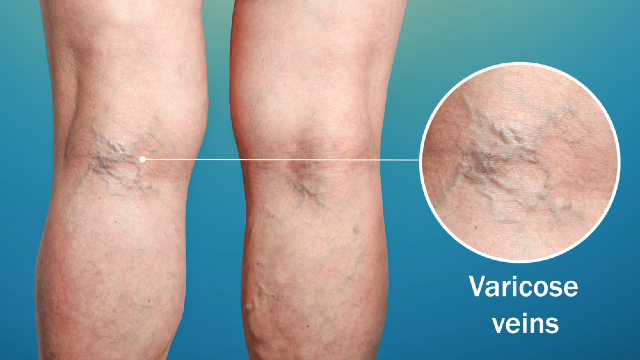
What Are Varicose Veins? Causes, Symptoms, and Signs
Varicose veins are enlarged, twisted leg veins caused by valve dysfunction. Learn the causes, the symptoms they produce, and when to see a vein specialist.
Learn More