Personalized Medical Care & Dedicated International Patient Concierge

Medical Guide
Compression Stockings vs. Procedural Varicose Vein Care
What compression stockings can and cannot do for varicose veins, when conservative care alone is genuinely enough, and what makes a clinician move to a procedure.
Schedule a ConsultationCompression Stockings Alone vs. Procedural Treatment: When Conservative Care Is Enough
Medically reviewed by Dr. Dong-Hyuk Kim, Board-Certified General Surgeon, Medical Director of Ium Hazi Varicose Vein Clinic
Compression stockings and procedural vein treatment answer different questions. Compression manages the symptoms produced by a refluxing vein for as long as the garment is worn; a procedure closes or removes the vein itself. For some patients, conservative care alone is genuinely sufficient and there is no reason to escalate. For others, symptoms persist despite consistent compression, or skin changes appear, and the decision moves. This article sets out where that line sits and what puts a patient on either side of it.
What Compression Actually Does
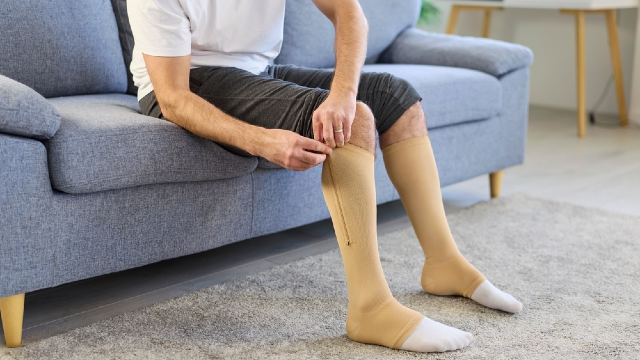
Compression stockings work mechanically: graduated pressure supports venous blood return toward the heart and reduces pooling in the lower legs. Ium Hazi Varicose Vein Clinic describes the pressure as generally strongest around the ankle and gradually decreasing higher up the leg.
Properly fitted compression stockings can help reduce venous pooling and may relieve leg swelling, heaviness, aching, and discomfort associated with certain venous conditions. The clinic lists the people most likely to benefit: those with particular venous circulation problems — varicose veins, chronic venous insufficiency, leg swelling that arises from venous disease — and patients in certain situations following a procedure.
Two features make compression attractive as a first step. It is non-invasive, so there is no recovery period and normal activities continue while the stockings are worn. And it is reversible — if it does not help, nothing has been done that cannot be undone.
The National Heart, Lung, and Blood Institute describes varicose veins as arising when valves inside leg veins stop keeping blood moving in one direction, so blood collects in the vein. Compression counteracts the consequence of that failure. It does not repair the valve.
What Compression Does Not Do
Compression controls symptoms rather than permanently correcting the underlying venous problem. Ium Hazi Varicose Vein Clinic states this directly, and it is the single most important sentence in this comparison.
Three specific limits follow from it. First, the refluxing vein remains present and continues to reflux; the stocking changes the pressure environment around it but not its structure. Second, the benefit is tied to wear — symptom relief generally occurs while the stockings are being worn, and the response varies between patients. Third, compression stockings do not eliminate varicose veins and do not prevent new vein problems from developing.
There are practical limits too. A stocking does not last indefinitely; as its stretch and its pressure fade, a replacement is needed. Stockings can be difficult to put on, particularly for patients with reduced hand strength or limited mobility, and they can be uncomfortable in hot weather. Ium Hazi Varicose Vein Clinic lists possible problems including discomfort, excessive tightness, skin irritation, itching, pressure marks, or difficulty putting the garment on.
An incorrectly fitted or inappropriate compression garment can cause skin injury or compromise circulation. The clinic advises that severe pain, numbness, discoloration, or coldness of the foot requires prompt medical assessment.
Who Should Not Use Compression Without Assessment
Compression is not appropriate for everyone, and this is the point at which self-prescribing from a pharmacy shelf becomes a real risk.
Ium Hazi Varicose Vein Clinic states that people with significant peripheral arterial disease or severely reduced arterial circulation may require alternative management. Caution, or a specialist opinion, is also advised where there is neuropathy of a severe degree in the limbs, where skin is fragile or already damaged, where particular ulcers or a recent skin graft are present, where swelling is severe, where the shape of the leg is unusual, or where a safe fit proves hard to achieve. Patients with suspected acute vascular problems should be medically assessed before using compression garments.
The arterial exclusion is the critical one. MedlinePlus, published by the US National Library of Medicine, explains that peripheral arterial disease narrows the arteries carrying blood to the limbs, reducing blood supply to the legs and feet. Applying external pressure to a leg whose arterial inflow is already reduced can worsen the problem. The clinic states that assessment for peripheral arterial disease is particularly important because compression may be unsafe when arterial pressures are significantly reduced.
This is why compression is a clinical decision rather than a retail one. The clinic describes its process as reviewing symptoms, medical history, circulation, and skin condition, performing vascular assessment such as Doppler or duplex ultrasound where clinically indicated, and then determining whether compression is appropriate and which compression level and garment type to use.
When Conservative Care Alone Is Genuinely Enough
Conservative care alone is often sufficient when symptoms are mild, controlled by the stockings, and unaccompanied by any sign that the tissue is being damaged. Several conditions tend to hold together.
Your symptoms are limited — some aching or heaviness after prolonged standing, mild end-of-day swelling — and they resolve with elevation overnight. Wearing compression during the day keeps them at a level you barely notice. Your skin is normal: no darkening or thickening around the ankle, no eczema-like irritation, no area that has broken down. There is no history of bleeding from a vein and no episode of a hard, hot, painful segment along a surface vein. And you are able to wear the stockings consistently and comfortably.
Lifestyle measures belong in this picture as well. MedlinePlus's resource on exercise and physical fitness describes regular activity as supporting circulation and general cardiovascular health, and walking in particular engages the calf muscle pump that helps move venous blood upward. Avoiding long uninterrupted periods of standing or sitting, elevating the legs when resting, and maintaining a healthy weight all reduce the load on the venous system.
For a patient in this position, there is no clinical urgency to travel for a procedure. Conservative management with periodic review is a legitimate long-term plan, not a delay tactic.
What Moves a Clinician to Recommend a Procedure
A clinician moves toward a procedure when the venous problem is producing consequences that compression is not controlling. Six triggers do most of the work.
Symptoms persisting despite consistent compression. If you are wearing appropriately fitted stockings as advised and still have swelling, heaviness, aching, or cramping that interferes with your day, compression has been given its opportunity.
Skin changes. Darkening, thickening, or eczema-like irritation around the lower calf and ankle indicates that raised venous pressure is affecting the tissue. This is a change in kind, not a change in degree.
Ulceration. An open area that will not heal is the most advanced expression of venous disease. In Ium Hazi Varicose Vein Clinic's own account, this condition can bring pain and swelling with it, along with thrombosis and ulceration of the skin, and the clinic names thrombosis and skin ulceration again among the complications that can follow when the disease goes untreated or continues to advance.
Bleeding from a vein. A varicose vein close to the skin surface can bleed, and this is a reason for assessment rather than observation.
Superficial thrombophlebitis. A vein segment that becomes hard, hot, red, and painful needs medical evaluation.
Inability to use compression. If arterial disease, skin fragility, leg shape, or hand strength makes compression unsafe or impractical, the conservative option is effectively unavailable, and the conversation moves to what else can be done.
One trigger that is not on the list is appearance alone. Appearance is a legitimate reason to seek assessment, but it does not by itself indicate that the venous circulation is failing — which is exactly what the assessment is for.
Compression as Part of Procedural Care, Not Only an Alternative to It
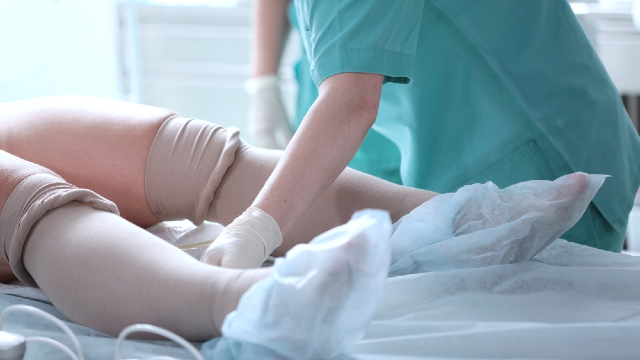
Compression does not disappear when a procedure is chosen; it often becomes part of the treatment plan around it. Ium Hazi Varicose Vein Clinic states that compression stocking therapy may be recommended as part of management following certain vein procedures, and that post-operative aftercare includes personalized guidance on medical compression stockings.
Framing compression as an either/or against procedural treatment therefore misstates how it is used. The realistic sequence for many patients is conservative management first, assessment when triggers appear, a procedure if the assessment supports one, and compression again as part of aftercare.
A detail worth noting: for its signature procedures the clinic sets out a '3-No' protocol, and the third of those three is that a compression stocking is not worn on the operative day itself. The other two are the absence of spinal anesthesia and the absence of stitch removal, and the clinic presents the set as a way of reducing discomfort. Compression guidance after that first day is individualized.
What an Assessment Adds to the Decision
An assessment converts a question about how your legs feel into information about what your veins are doing. That is the difference between guessing and deciding.
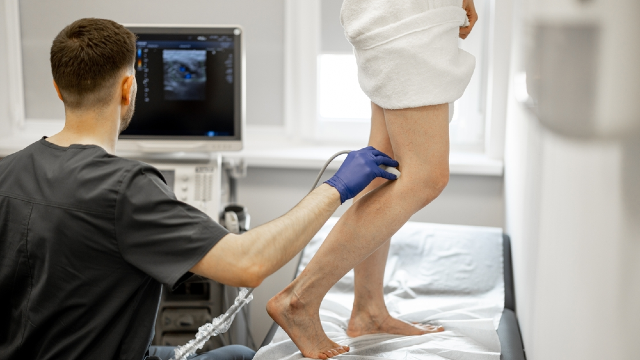
Ium Hazi Varicose Vein Clinic's vascular ultrasound examination assesses the deep veins, saphenous veins, subcutaneous veins, and perforating veins, evaluating their size, shape, and location while observing blood flow and reflux dynamically in real time. The US Food and Drug Administration describes diagnostic ultrasound as producing images of internal structures using sound waves rather than ionizing radiation.
The examination answers questions compression cannot: whether reflux exists, which vein is responsible, how extensive it is, and whether the deep venous system is involved. A leg whose symptoms respond well to compression and whose scan shows limited reflux is in a different position from a leg whose symptoms respond well but whose scan shows a substantial refluxing trunk.
At Ium Hazi Varicose Vein Clinic, the scan is carried out by the Medical Director, Dr. Dong-Hyuk Kim, a board-certified general surgeon; the clinic's single-director arrangement keeps diagnosis, treatment, and later review with that one physician. Varicose vein work has been the practice's sole focus since 2009, by its own account. The stated approach is to find the cause on ultrasound and then deliver only what that finding requires, leaving out anything unnecessary — a principle that includes concluding that no procedure is needed at present.
If you are unsure which side of the line you are on, the appropriate step is a diagnostic consultation. You can arrange one through the clinic's contact page, and read more about how the practice approaches assessment on its about page.
A Note on Travel and Compression
If you do travel for treatment or for any other reason, compression and movement matter during the journey itself. The CDC notes that prolonged immobility during long-distance travel is associated with an increased risk of deep vein thrombosis, and recommends moving regularly, staying hydrated, and considering appropriately fitted compression hosiery for travelers with risk factors. Ium Hazi Varicose Vein Clinic makes the same point: long-haul travel carries its own venous thrombosis risk, and patients with varicose veins or other risk factors should discuss travel plans with their doctor.
Symptoms that require urgent attention during or after travel include marked swelling of one leg, severe calf pain, chest pain, and shortness of breath. Chest pain and breathlessness are emergencies.
The Bottom Line
- Compression stockings manage the symptoms of venous disease while they are worn; they do not repair the failed valve or eliminate the refluxing vein.
- Conservative care alone is genuinely enough when symptoms are mild and controlled, the skin is unchanged, and the stockings can be worn consistently.
- Clinicians move toward a procedure when symptoms persist despite compression, or when skin changes, ulceration, bleeding, or superficial thrombophlebitis appear.
- Compression is not safe for everyone: significant peripheral arterial disease is a key reason it requires assessment before use rather than purchase off a shelf.
- Compression and procedural treatment are not rivals — compression guidance is part of aftercare at Ium Hazi Varicose Vein Clinic after certain vein procedures.
Frequently Asked Questions
Can compression stockings make varicose veins go away?
No. Ium Hazi Varicose Vein Clinic states that compression stockings generally control symptoms rather than permanently correcting the underlying venous problem, and that they do not eliminate varicose veins or prevent new vein problems from developing. They can help reduce venous pooling and relieve swelling, heaviness, and aching while worn. The refluxing vein itself remains.
How do I know if compression alone is working well enough?
Judge it by symptoms and by the skin. If aching, heaviness, and swelling are controlled during a normal day, resolve with overnight elevation, and the skin around your ankle remains unchanged, compression is doing its job. Persistent symptoms despite consistent wear, or any new darkening, thickening, or breakdown of the skin, is a reason to be assessed.
Is it safe to buy compression stockings without seeing a clinician?
Compression requires assessment first, because it is not appropriate for everyone. Ium Hazi Varicose Vein Clinic states that people with significant peripheral arterial disease or severely reduced arterial circulation may need alternative management, and that accurate leg measurement and appropriate compression level selection matter. MedlinePlus explains that peripheral arterial disease reduces blood flow to the legs, which is why arterial status must be considered before external pressure is applied.
How long do compression stockings last?
A stocking wears out. Once its elasticity has faded and the pressure it delivers has fallen off, it needs replacing — judged by the state of the garment and by what the manufacturer or your clinician recommends. Ium Hazi Varicose Vein Clinic also advises inspecting the skin regularly for irritation or pressure areas and keeping the stockings clean. Follow-up may be recommended to check comfort, fit, skin condition, and symptom response.
What does a compression fitting visit involve?
Ium Hazi Varicose Vein Clinic describes assessing and measuring the legs, selecting the appropriate stocking size and compression level, fitting the stocking carefully, and providing instructions on putting it on, removing it, washing it, and wearing it. The initial consultation and fitting may take approximately 20 to 45 minutes depending on the assessment required. Follow-up may be recommended to review fit and symptom response.
Do I still need compression after a vein procedure?
Often yes, as part of aftercare. Ium Hazi Varicose Vein Clinic states that compression stocking therapy may be recommended as part of management following certain vein procedures and that post-operative aftercare includes personalized guidance on medical compression stockings. The clinic also describes a protocol in which no compression stocking is used on the day of surgery for its signature procedures.
Should I wear compression stockings on a long flight?
For travelers with venous risk factors this is worth discussing with your doctor before you fly. The CDC advises that prolonged immobility during long-haul travel raises deep vein thrombosis risk and recommends regular movement and hydration, with appropriately fitted compression hosiery considered for suitable travelers. Ium Hazi Varicose Vein Clinic gives the same guidance for patients with varicose veins planning long journeys.
This article is for general informational purposes and does not constitute individualized medical advice. Candidacy, technique, and expected outcomes can only be determined through a consultation with a qualified physician, and this article is not a self-diagnosis tool.
References
- MedlinePlus: Varicose Veins
- MedlinePlus: Peripheral Arterial Disease
- MedlinePlus: Exercise and Physical Fitness
- MedlinePlus: Vascular Diseases
- NHLBI: Varicose Veins
- FDA: Ultrasound Imaging
- CDC Yellow Book: Deep Vein Thrombosis and Pulmonary Embolism
More Articles
Continue reading our clinical guides.
Will My Varicose Veins Come Back After Treatment?
A closed vein and a new varicose vein are different events. Here is what recurrence after vein treatment in Korea means and how follow-up imaging detects it.
Learn More
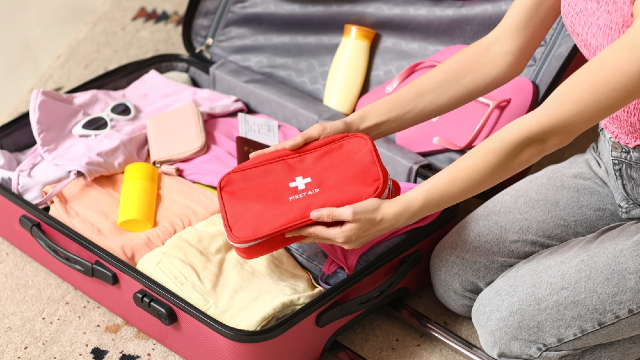
What to Pack Before Flying to Korea for Vein Surgery
What to pack before flying to South Korea for vein surgery: documents, medication and supplement lists, clothing, compression, and what to arrange at home.
Learn More
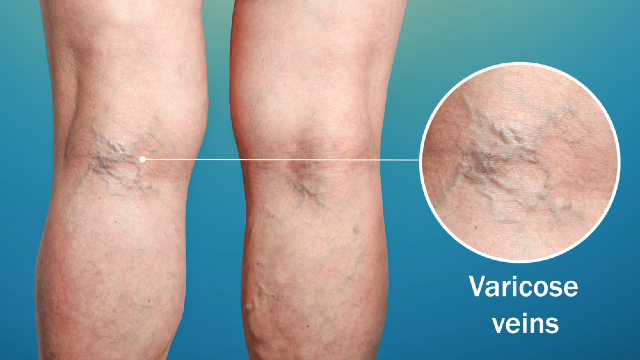
What Are Varicose Veins? Causes, Symptoms, and Signs
Varicose veins are enlarged, twisted leg veins caused by valve dysfunction. Learn the causes, the symptoms they produce, and when to see a vein specialist.
Learn More